





Oman Air had already flagged Hamam al-Hammami in 2024. Extremist material found in the co-pilot’s possession while he was a trainee led officials to move him to a desk job.
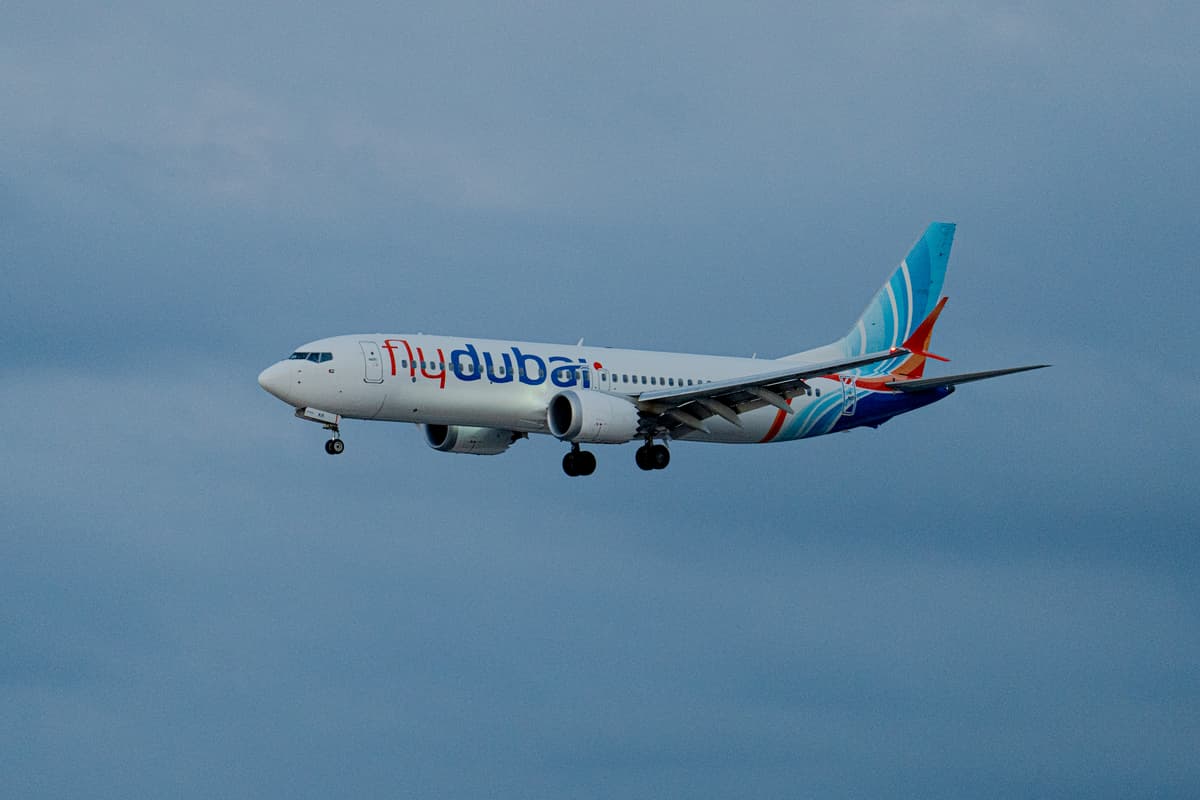
Yet, just two years later, Mr. al-Hammami was aloft and going for the crash axe aboard a UAE-owned flydubai jet bound for Tel Aviv. On September 30, the British-trained co-pilot wounded his captain, Smit Machchhar, and tried to seize control of the Boeing 737 Max 8 with the intention, according to his own admission, of crashing it into Israel’s Ben Gurion International Airport.
Officials briefed on the case say nobody from Oman or elsewhere told the Emiratis about the earlier warning signs. It wasn’t required as a matter of policy.
The cockpit betrayal is the latest in a grim run that includes a Germanwings co-pilot who flew an Airbus into the French Alps in 2015, killing all 150 aboard, and an off-duty Alaska Airlines pilot who tried to cut a jet’s engines in 2023. Both pilots hid the mental health breakdowns that led them to such actions.
Mr. al-Hammami’s motive, however, was more sinister and not hard to trace. But even with the warning signs, no one raised a red flag. The explanation for that failure is thinner than most passengers would guess.
“Presently, there is no requirement for an airline to pass along information to a future potential employer regarding a pilot being grounded in another country,” an aviation security and airport management expert and professor of aviation and aerospace science at Metropolitan State University of Denver, Jeffrey Price, tells The New York Sun.
Mr. Price says changing that policy would raise “a plethora of legal issues,” along with the cost of maintaining a database, not to mention the sticky questions of what kind of behavior would earn someone a spot on the do-not-hire list.
Responsibility for asking the right questions falls on the hiring team at each individual airline and their regulator, but “there’s no global registry of grounded pilots that they can check. That gap is the real story,” a retired captain with Sagun Aviation Consulting, Ross Sagun, tells the Sun.
How Closely Are Pilots Checked?
In the United States, newly qualified pilots go through a criminal history check covering a set list of 28 crimes, such as murder, espionage, kidnapping, aircraft piracy and possession of a weapon or explosive aboard a plane.
New pilots also undergo a Transportation Security Administration threat assessment, which checks a name against terrorism databases, verifies immigration status, and runs the applicant’s record through the FBI.
The rest of the federal screening is the flight medical, which includes a questionnaire on mental health history and medications. The hiring airline must ensure the fingerprint-based criminal check is completed. Federal rules bar anyone from the cockpit until that check shows no disqualifying offense in the past decade.
The mental health side, however, has a far looser standard, experts underscore. “There is a level of mental health screening but probably not as in-depth as people may assume,” Mr. Price says.
Extremist views, arguably a sign of mental instability, are not part of the exam. Airlines may run social media checks or psychological tests, Mr. Price points out, but federal law requires neither. Additionally, government watchlists flag someone only after a threat.
For airlines, the security check is largely about completing paperwork, Mr. Sagun says. Before a pilot flies for an airline, it must review a federal database of the pilot’s certificates, failed proficiency tests, enforcement actions, accident involvement, and drug and alcohol test history, plus training and discipline records from past employers. The airline must also compare five years of listed employment against official files.
Pilots renew the medical every 12 months, or every six months after age 40, Mr. Sagun says, noting that pilots self-report the medical answers throughout their careers, and the examining doctor is usually not a psychiatrist.
“So it screens for honesty more than for mental illness,” he says.
Whether pilots answer that form honestly is another unknown. “As far as the medical community is concerned, there are only 100 percent perfectly mentally healthy pilots out there, because no one reports anything for fear of reprisal,” Mr. Price says.
About one in five pilots and controllers who report a mental health diagnosis is initially disqualified, according to a federal advisory committee, and a pilot who starts taking an antidepressant can wait more than a year for approval to fly. Only about 0.1 percent are ultimately denied. Regulators say it is false that reporting a mental health break results in permanent grounding.
All those checks apply only to pilots licensed in America. Foreign crews flying into the country fall under a different set of rules.
The Federal Aviation Administration does not vet foreign pilots one by one, Mr. Sagun says. Rather, the FAA audits whether each country’s regulator meets international standards while the Transportation Security Administration checks crew names against terrorism watchlists. As it relates to the flydubai case, Mr. Sagun notes that “a pilot can be flagged at home without ever appearing on a watchlist, and nothing requires that flag to follow him.”
Why Israel Missed al-Hammami
Israel says it has long-standing arrangements barring pilots from countries without diplomatic relations, which includes Oman, from flying its routes. Israel’s Tax Authority confirms that Israeli authorities receive the names of everyone aboard incoming and outgoing planes before takeoff.
Yet, in this latest case, the Shin Bet security agency claimed the Transportation Ministry was responsible for vetting the names of passengers and crew flying in from the UAE. Transportation Minister Miri Regev contends her ministry received neither a list nor a warning.
Speculation is bubbling that Mr. al-Hammami may hold dual citizenship, which could explain how he rode under the country’s security radar. A second country has not been identified, though he has lived in and traveled to several nations.
Even if Israeli officials had the passenger manifest, the problem remains that a watchlist is only effective when suspects are on it. Mr. Price describes the same limit in the American system.
“Unless a pilot has demonstrated some sort of behavior to get them on a list, then they are generally allowed to come into the U.S., as would anyone else,” he says.
What Is Known About al-Hammami
A fast-acting pilot and citizen of India, Mr. Machchhar, was bleeding from his head and hands when he unlatched the cockpit door, enabling passengers and a crew member to subdue Mr. al-Hammami before he could put the plane into a final deadly descent. Two off-duty pilots fortuitously onboard landed the plane at Tabuk, Saudi Arabia.
Israeli officials say Mr. al-Hammami told interrogators he meant to crash the jet at Ben Gurion and planned the attack before flydubai hired him. How he found work after Oman is a central question for investigators.
The Telegraph reports that the pilot earned his credentials at a British flight school. A LinkedIn profile bearing Mr. al-Hammami’s name lists Royal Air Maroc from June 2025 to January 2026, though the Moroccan carrier says he only completed a three-month training course.
Israeli officials give differing accounts of when flydubai hired him, from about eight months ago to more than a year before the attack. It is believed he was likely hired without any formal background vetting through the Omani government.
American officials briefed on the current investigation say they believe Mr. al-Hammami acted alone. Oman Air has not commented publicly, and flydubai, which the UAE owns through the Investment Corporation of Dubai, has suspended its Tel Aviv flights.
Second-Guessing Deterrence
On September 25, five days before the flydubai attack, the Senate unanimously passed two bills sponsored by Senators Tammy Duckworth, an Illinois Democrat, and John Hoeven, a North Dakota Republican. The bills would modernize the FAA’s mental health guidance, encourage earlier disclosure, and require a published list of medications pilots can safely take. Both bills now go to the House, which passed its own version of a pilot mental health bill by voice vote in September 2025.
While changes to the FAA’s mental health reporting would still not have raised flags in this case, not everyone sees a weakness in how pilots are vetted. “The airlines and government are pretty thorough in their vetting. I don’t know that much more can be done without risking crossing legal boundaries,” a commercial aviation expert and professor at the University of Nevada, Las Vegas, Daniel Bubb, tells the Sun.
“While airlines and governments already do much of this, they also have to be mindful of legal boundaries,” Mr. Bubb adds.
A grounding for a flight infraction usually goes on a pilot’s flight record, and “the Civil Aviation Authority in that country is responsible for reporting that infraction to the Civil Aviation Authority in another country,” he notes.
No technology can reliably detect intent to commit a crime, Mr. Price stresses, so beyond the checks remains the only thing left — a final layer of trust.
“We rely on trust in others to not harm us in numerous areas of our lives, such as doctors and police officers,” Mr. Price says. “Sometimes people betray that trust and bad things happen. It’s the same with pilots.”