




“Resident Evil,” the recently-released horror movie and the eighth film in the series based on the video game series, was made for a generation within a generation — the one that actually knows how to kick back and have fun.
Growing up, I wasn’t allowed to play video games. My childhood, like many younger millennials, was instead spent neurotically jamming extracurriculars onto a college resume. So, when I was invited off-hand by a group of men in their 40s to see the new adaptation of “Resident Evil,” I was surprised. I always thought I was the video game generation, but seeing their excitement, I realized this movie, which blurred the lines between film and game, wasn’t made for me.
The “Resident Evil” video game, released in 1996, was a quintessential zombie slasher: pure, violent excitement. The original film adaptation was released in 2002 in the haze of post-Y2K cynicism; it was a product of its era. Sequels in the franchise, which saw a corporate bioweapon bring about the apocalypse, could never quite decide if they were irreverent thrillers or reflections on greed and ecological disaster. Director Zach Cregger’s reboot, however, brings the series back to its gamer roots.
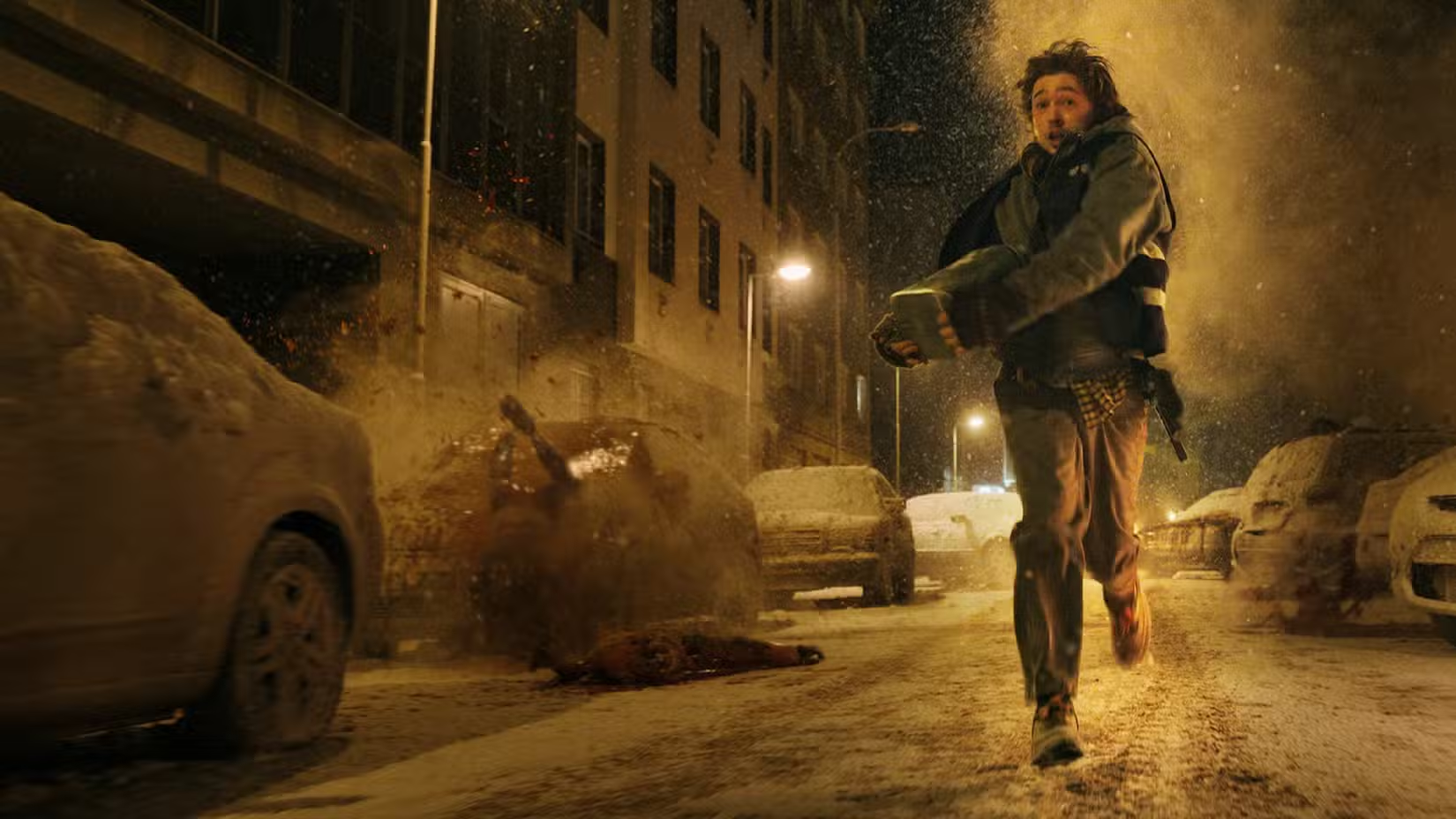
At an exceptionally tight 95 minutes, Cregger, himself an elder millennial at 45, crafts a film that feels every bit like playing the game he grew up on. We follow Bryan, a medical courier, tasked with bringing a package to the game’s infamous Raccoon City. He faces increasingly grotesque mutant-zombies before realizing he’s carrying the only cure. That’s about it as plot goes, hardly enough to craft an allegory. Yet the lack of substantial narrative only heightens the feeling of gameplay.
Bryan experiences his world as a gamer learning the game. He sets off on a predetermined mission. His enemies become more challenging along the way. He must figure out how to get through gates and doors, how to jump up and where to climb down, to find ammo and upgrade his weapons. Through experimental rapid fire, he discovers more strategic ways of killing. It feels as though we’re looking over his shoulder — exactly the type of gun-on-shoulder gameplay the original “Resident Evil” pioneered.
Despite its violence, the film never takes itself too seriously. Bryan’s predicament is never treated with the earnestness that the original film franchise. Monsters, like the rolling bundle of fused human extremities, could be terrifying, absurd, or both. Minor characters meet hideous but hilarious deaths as they’re exaggeratedly smashed, dragged, and ripped apart. With every jump scare, Cregger, whose background is in comedy, again lightens the mood. The audience laughs as much as it recoiled.
It was a welcome relief in this late stage of Hollywood moralizing, which is perhaps most salient in the horror genre. Films of the 2010s — “The Babadook,” “Get Out,” “Hereditary,” to name just a few — used horror as a lesson. The real monster was always trauma, grief, or injustice. It was violence as a form of social commentary. These were the films that resonated with my anxious, self-serious generation.
Sitting with the men next to me, the generational divide could not be more apparent. “Resident Evil” is wholly a product of the 90s: Gratuitous violence, irreverent humor, and the unapologetically stupid entertainment value of an era when it was perfectly acceptable for films to offer just that. What resonated with them was simply the film’s cheeky thrill.
Young and elder millennials often get lumped into a monolith. Yet in the roughly 15 years between them and me, movies, along with broader American culture, came to confuse seriousness with sophistication. Every social issue had to be viewed through a moral lens, or one risked losing one’s own moral standing. But in 2026, can we really still pretend silly movies like 2017’s “Get Out,” which made white liberal racism into a stalking demon, deserve the gravitas of high art that critics afforded it? Quite often, preening self-seriousness is used only to obscure an utter lack of sophistication. “Resident Evil” showed that we may be starting to realize what should have been culturally obvious all along.
This is reflected in the stellar box office reception to the latest film. With $148.5 million domestic and $361.2 million worldwide, this “Resident Evil” is far and away the highest-grossing film in the franchise’s history.
Elder millennials may have been forced to go along for this moral ride over the past decade, but these 95 minutes showed they still retain a cultural nostalgia that I can only imagine. They left the theater having revisited something from their childhood; I left feeling like I missed out on something from mine. Sometimes the zombies might be coming, the world might feel like its ending, and still the best thing that you can do is enjoy the show.