738 Days in Hell: The Torture and Triumph of Israel’s Last Living Hostages

Twenty men emerge from Hamas captivity with harrowing accounts of starvation, torture, and the extraordinary endurance that kept them alive.
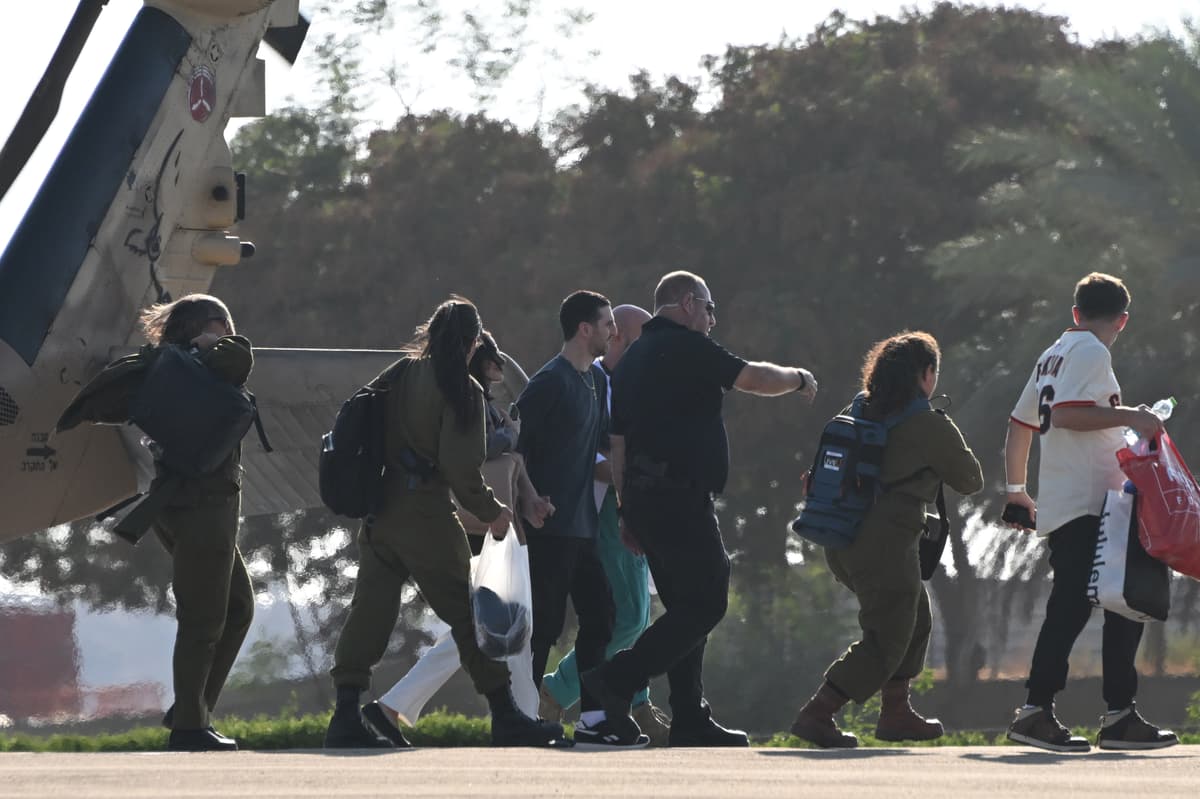

Alexi J. Rosenfeld/Getty Images
Released hostage Elkana Bohbot disembarks from a helicopter as he arrives at Chaim Sheba Medical Center at Tel HaShomer on October 13, 2025. Alexi J. Rosenfeld/Getty Images

As the last 20 surviving Israeli hostages transition back to life after captivity, disturbing details surface about the torture they suffered — and the incredible resilience that enabled their survival.

On October 13, 2025, after 738 days in Hamas captivity, the last living Israeli hostages were released from Gaza under a ceasefire agreement brokered by America. Their liberation marked the end of an ordeal that began on October 7, 2023, when Palestinian terrorists invaded Israel, slaughtering, raping, and torturing an estimated 1,200 men, women, and children, and abducting 251 prisoners. 

Now, the 20 men, who range in age from 21 to 48, begin the long process of recovery. Their testimonies paint a harrowing picture of the severe physical abuse, malnutrition, and psychological torment that they endured in the tunnels beneath Gaza. 

‘Poster Children of Skin and Bones’ 

Most hostages emerged from the underground tunnels gaunt and pale, their bodies ravaged by prolonged starvation and complete absence of sunlight. Among the most shocking transformations was that of Evyatar David, whose severely malnourished frame appeared in a Hamas propaganda video, released in August, where he was forced to dig his own grave.

Hostage Evyatar David is shown in a video released by Hamas in August 2025. Al-Qassam Brigade Footage
Former hostage Evyatar David gestures to the crowd outside Beilinson Hospital in the Rabin Medical Centre after the surviving Israeli hostages were released from Gaza on October 13, 2025; Dima Vazinovich/Getty Images

Mr. David was kidnapped from the Nova music festival alongside his childhood friend, Guy Galboa Dalal, who was also released on Monday. Held together for most of their captivity, they were told explicitly by their captors that the goal was to make them “poster children of skin and bones.”

Avinatan Or, 32, who was abducted with his girlfriend Noa Arganami at the Nova festival, suffered similarly severe weight loss. Medical examiners reported he lost between 30 to 40 percent of his body weight during captivity. Mr. Or endured one of the cruelest forms of isolation: he spent the entire two years completely alone, with no contact with other Israeli captives. For over a year, he was confined to a cage barely wider than a mattress, chained to the bars.

Former hostage Avinatan Or gestures to the crowd outside Beilinson Hospital in the Rabin Medical Centre after the surviving Israeli hostages were released from Gaza on October 13, 2025. Dima Vazinovich/Getty Images

In the days before their release, many hostages were force-fed by their Hamas captors to make them appear healthier. Rapid feeding after prolonged nutrition is known to result in refeeding syndrome, a dangerous medical condition that occurs when food is reintroduced too quickly. Several of the hostages who were force fed experienced stomach issues and blood sugar swings. 

Systematic Physical and Psychological Torture

The hostages endured relentless physical abuse, with those kidnapped while on active military duty facing particularly brutal treatment. The mother of 22-year-old soldier, Matan Angrest, said her son experienced “very severe torture” during his initial months in captivity and was at times “beaten so badly that he lost consciousness.”

Twenty-one-year-old Rom Braslavski, who was working as a security guard at the Nova festival when Palestinian Islamic Jihad terrorists abducted him, was repeatedly whipped, kept in shackles, and at times held alongside the bodies of murdered hostages, his mother told Ynet News. 

Rom Braslavski is returned to freedom on October 13, 2025. Getty Images

Many hostages suffered from untreated injuries sustained during their kidnapping. Alon Ohel, an Israeli-Serbian pianist, was wounded by shrapnel in his eye while trying to escape terrorists at the Nova festival. He returned to Israel with severely impaired vision and shrapnel still embedded in his hands, chest, and head. He now faces the risk of permanent vision loss.

In the rare instances when captors provided medical care, it was administered cruelly. Mr. Angrest received treatment for injuries to his hands and fingers without anesthesia, worsening his condition.

The psychological torment was equally unrelenting. Throughout their captivity, hostages were fed lies about their loved ones and the state of Israel, only learning the truth upon their release.

Mr. Braslavski’s captors sought to break his spirit by claiming his family had abandoned efforts to free him. “They told him no one was talking about him, that we were broken and had no strength to protest,” his mother said.

Rabbi Doron Peretz (R) hugs and comforts released hostage Matan Angrest (C) as he arrives for the funeral for Daniel Peretz, an Israeli soldier who was captured on October 7, 2023 and whose remains were returned to Israel this week, at Mount Herzl National Cemetery on October 15, 2025. Alexi J. Rosenfeld/Getty Images

He was also pressured to renounce his Jewish faith, with captors offering better food and conditions if he converted to Islam. During Ramadan, they attempted to persuade him to observe the holiday in exchange for extra rations and soap. Mr. Braslavski refused.

Extraordinary Acts of Resilience

Despite unimaginable circumstances, the hostages maintained their humanity and will to survive through astonishing acts of resilience and ingenuity.

Nova festival organizer, Elkana Bohbot, lost most of his sense of time and space while chained in the tunnels. Yet he remembered his wedding anniversary and successfully convinced his captors to allow him to shower — a small victory that preserved his dignity.

Released hostage Elkana Bohbot forms a heart shape with his hands as he arrives at Chaim Sheba Medical Center at Tel HaShomer on October 13, 2025. Alexi J. Rosenfeld/Getty Images

Perhaps most remarkable was the resourcefulness of captives Yosef-Chaim Ohana and Mr. Bohbot, who found a way to connect with the outside world when their captors gave them a small radio to listen to the Muslim call to prayer. They managed to use electric cables in the tunnels to tune into an Israeli army radio channel and in an extraordinary moment, Mr. Ohana heard his father being interviewed. 

The Path Forward

Many of the 20 hostages have been discharged from hospitals and returned home, with others expected to be released in the coming days. Their families and friends describe their survival as nothing short of miraculous.

“We always knew he had the emotional ability to survive, but honestly, his abilities were beyond anything we could imagine,” said the mother of Mr. Ohel. 

Some are already looking to the future. Just hours after returning to Israel, Matan Angrest told IDF Chief of Staff Eyal Zamir that he was ready to return to the army. When Mr. Zamir suggested a training role, Mr. Angrest smiled and politely declined. “No,” he said. “I want to return to operational duty.”


The New York Sun

© 2025 The New York Sun Company, LLC. All rights reserved.

Use of this site constitutes acceptance of our Terms of Use and Privacy Policy. The material on this site is protected by copyright law and may not be reproduced, distributed, transmitted, cached or otherwise used.

The New York Sun

Sign in or  create a free account

or
By continuing you agree to our Privacy Policy and Terms of Use