A ‘Roasting the Japanese Government Deserves’

The election Sunday is about inflation that has been running between 3.5 percent and 4 percent.
AP/Alex Brandon
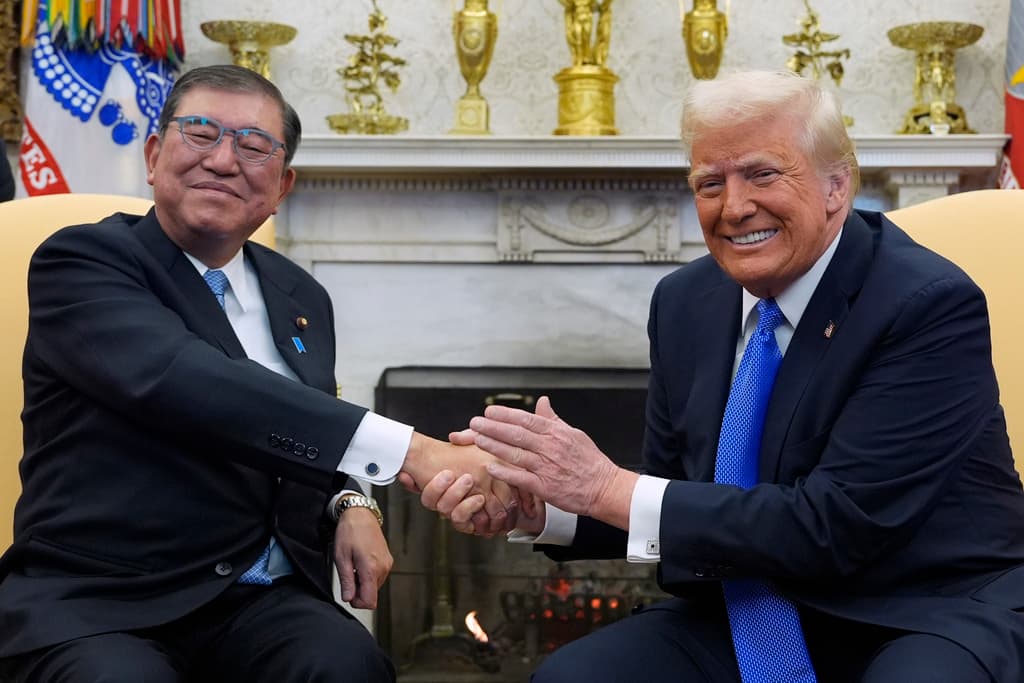
President Trump meets with the Japanese prime minister, Shigeru Ishiba, at the Oval Office, February 7, 2025. AP/Alex Brandon

The voters’ rebuke of Japan’s ruling party in an election that centered on inflation could be a warning sign for President Trump and the GOP. The “election is about public anger, apportioning blame over wealth-crushing inflation,” says a Japan analyst at Credit Lyonnais Securities Asia, Nicholas Smith. The caution comes amid this month’s higher-than-expected inflation numbers here, along with uncertainty over the impact of tariffs on prices.

“The whole election is about inflation,” Mr. Smith told CNBC before the voting. “People are hopping mad.” The price of rice, he explained, was up 100 percent over the prior year. So far this year, annual inflation has been running between 3.5 percent and 4 percent. Yet the Bank of Japan has shown no inclination to raise its policy interest rate of 0.5 percent, where it has stood since January. That followed nearly 20 years of flat or negative interest rates.

Japan’s policy of holding interest rates at artificially low levels was an attempt to revive an economy whose rapid expansion in the 1980s and 1990s amounted to an asset bubble. Instead of letting prices deflate, Japan’s central bank embraced a Quantitative Easing program that exceeded in scope the one launched by America’s Federal Reserve. Despite Japan’s stimulus, the 21st century there has featured what are called “lost decades” of moribund growth.

Inflation is being fueled, too, by a weak yen, which has fallen to lows against the dollar not seen in more than 30 years. Further clouding the economic picture, and feeding inflation, is what even the Nikkei’s London Financial Times in an editorial calls “troubling fiscal laxity” on the part of the government. This laxity is exemplified by a proposed cash handout to voters by the ruling party of some 20,000 Yen, costing taxpayers some $20 billion.

This envisioned handout, which appears to have failed as an election gambit, comes amid Japan’s budget deficits and a debt level that is the highest in the developed world. Government debt amounts to some 195 percent of Japan’s gross domestic product. That fuels inflation too. No wonder Mr. Smith speaks of the election being “the roasting the Japanese government deserves,” amid “the anger of the voting public over inflation.”

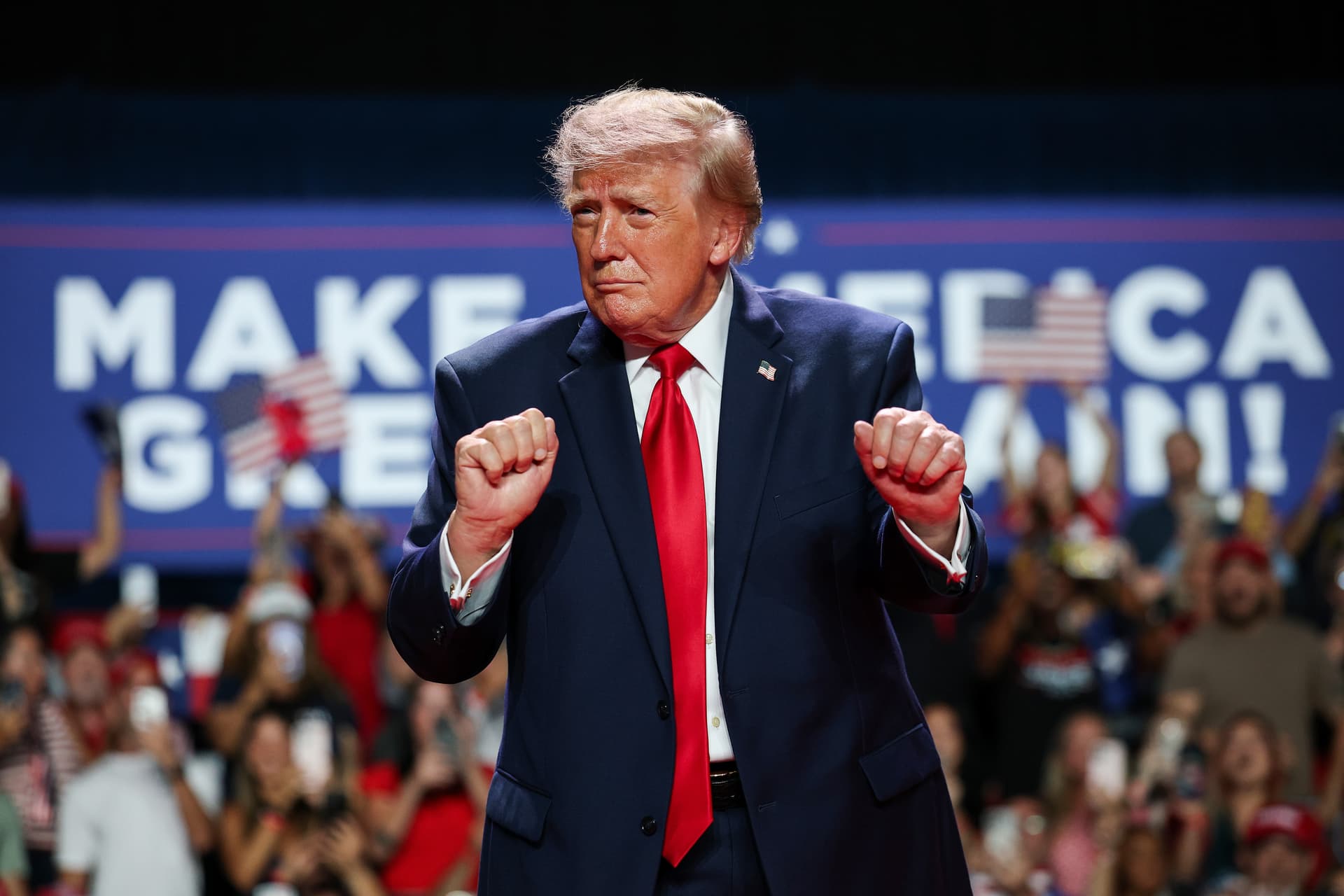
Japan’s prime minister, Shigeru Ishiba, is vowing to keep his job despite losses in Sunday’s voting. It’s not clear if he and his party will be able to hold power, though, as our Donald Kirk reports. It’s a question that is likely to interest America’s GOP. Though the economic picture is brighter here, price inflation — frustration over which helped hoist Mr. Trump into office — is showing worrisome signs in the latest economic numbers.

June’s reading of the consumer price index, say, was up 0.3 percent for the month, but 2.7 percent over last year, in contrast to the Fed’s target of 2 percent. Core inflation on an annual basis was slightly higher, at 2.9 percent over the prior year. These numbers are all the more sobering in light of the inflationary context of the past several years, which saw prices jump some 20 percent during President Biden’s tenure. Yet prices show no sign of retreating. 

The stubbornness of inflation and elevated costs is partly a function of the fiat money era which sees prices only ratchet up, never falling as they did under the gold standard system. The discipline of gold convertibility, under which dollars were defined in terms of the monetary metal, helped to keep inflation low over the long term. When prices did rise, as they did, say, during wars, they soon fell again in line with the steady valuation of the dollar in terms of gold.

There are concerns, too, that inflation could end up being fueled by Mr. Trump’s tariff regime, which promises to impose import levies ranging between 25 percent and 35 percent on some of our biggest trading partners. Even if some of those costs get absorbed by companies and suppliers, the tariffs are likely to hit consumers to some degree, too. Should that prove to be the case, the GOP could bear the brunt of voters’ anger, akin to the election in Japan.


The New York Sun

© 2025 The New York Sun Company, LLC. All rights reserved.

Use of this site constitutes acceptance of our Terms of Use and Privacy Policy. The material on this site is protected by copyright law and may not be reproduced, distributed, transmitted, cached or otherwise used.

The New York Sun

Sign in or  create a free account

or
By continuing you agree to our Privacy Policy and Terms of Use