An Early Warning for the GOP
A new survey suggests that the party’s newest members are bringing in antisemitism and racist views and openly expressing them.
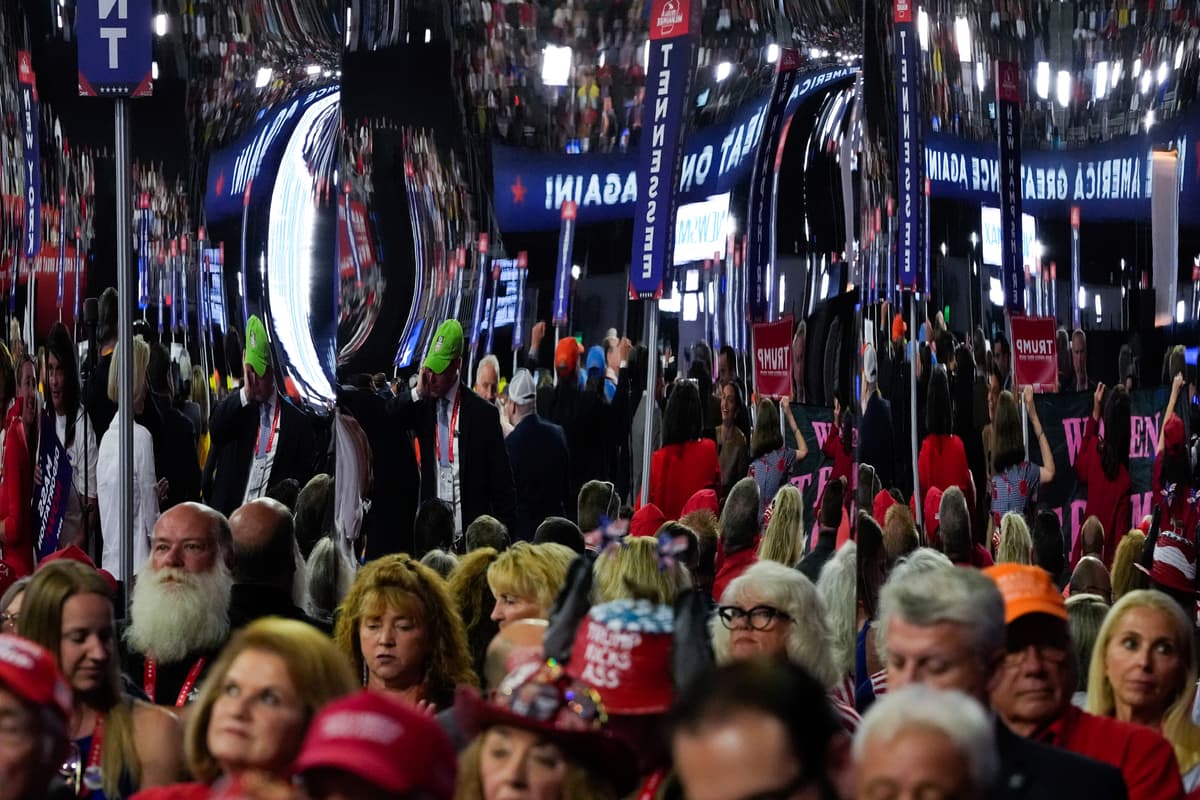
The question of what the Republican Party will look like in a post-Trump future demands attention in light of a new Manhattan Institute survey. It suggests the answer may be a troubling one. Of particular concern are findings related to the party’s newest members, many of whom joined the Republican coalition during President Trump’s first campaign. These voters exhibit higher rates of antisemitism than traditional conservatives.
These so-called “New Entrant Republicans,” the survey finds, are a cohort of younger, more racially diverse voters who constitute an estimated 30 percent of the coalition. One in three report holding antisemitic or racist views — and are open about it. When asked their positions on persons who “openly express” either “racist views” or “antisemitic views (hostility to, or prejudice against, Jewish people),” they respond: “I am such a person.”
Predictably, one in four of those voters also report negative attitudes toward Israel, viewing the country either as a “settler colonial state” that “drags us into wars we have no business in” and antagonizes “the world with its violence” or, worse, “a hostile rival” and “adversary” that “seeks to undermine” America. Such thinking extends to their embrace of conspiracy theories, including the claim that the horrors of the Holocaust are exaggerated.
Worries about antisemitism’s creeping presence in the party have been mounting for some time. A self-avowed antisemite and Holocaust denier, Nick Fuentes, with growing influence in right-wing circles, signals something amiss. The Heritage Foundation’s refusal to condemn Tucker Carlson for hosting Mr. Fuentes for an uncritical interview confirmed that the problem runs deeper than one provocateur.
The survey offers another newsworthy finding — that these new members, many first-time voters or recently backed Democratic candidates, are hardly conservative in the long-standing sense of the term. Their views on foreign and domestic policy more closely resemble the left than the traditional conservatives who comprise two-thirds of the base. Their liberal positions span issues from taxes and DEI programs to immigration and Communist China policy.
“The newer voters who entered the coalition under Trump aren’t ideologically consistent paleoconservative populists — they’re all over the map politically, often more progressive across major policy areas, yet also more conspiratorial and — among a considerable number — more tolerant of bigotry,” the report’s author and the vice president of external affairs at the Manhattan Institute, Jesse Arm, tells our Novi Zhukovsky.
Mr. Arm reckons the survey presents “both an opportunity and a vulnerability for Republicans.” Mr. Arm notes that the party’s core constituency remains “traditionally conservative on policy matters, and firmly opposed to racism and antisemitism.” The challenge will be for the right to keep the coalition “grounded in order, strength, and seriousness” instead of “letting the most chaotic voices with ulterior incentives define the movement.”
Senator Ted Cruz of Texas comes to mind as a Republican leader treating this threat with the seriousness it deserves. He recently observed that he has witnessed more antisemitism on the right in the past six months than in his entire life — and warned of an “existential crisis” facing the GOP and the country at large. This survey vindicates his alarm. The question now is whether other party leaders will heed it.