Bringing Back Burke
In a brilliant biography, James Grant sheds new light on an intellectual forefather of conservatism.
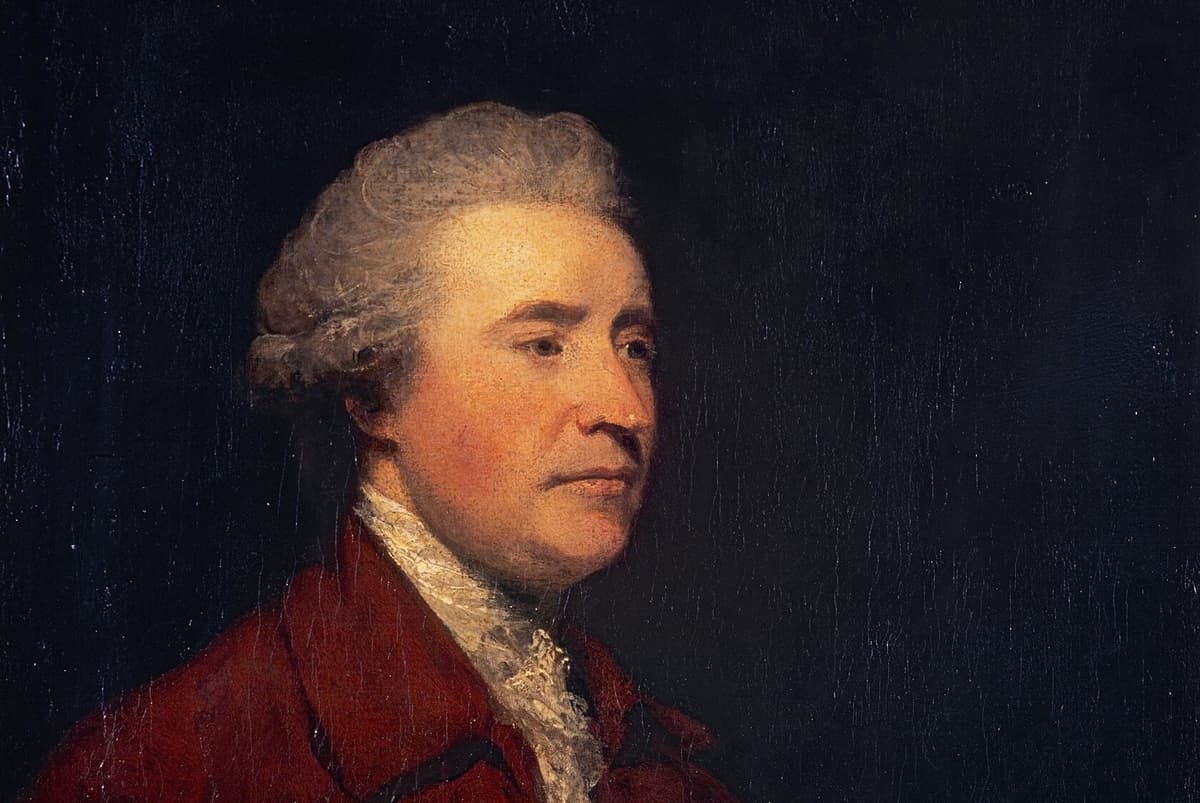

Talk about timing. James Grant’s new joint biography of Edmund Burke and Charles Fox coming as it does on the eve of the 250th anniversary of American independence is a book to read. It’s by the editor of the Interest Rate Observer. It arrives, too, at a moment of tumult in American conservatism. It’s a time when the right could well use a bracing dose of wisdom from Burke, one of the framers, so to speak, of political conservatism as an intellectual movement.
Mr. Grant, in “Friends Until the End,” chronicles the careers of what he calls “the greatest orators of the eighteenth century.” He avers: “I love them for what they said and the way they said it; for what they believed and for what they did.” The unlikely friendship of Fox and Burke, in Mr. Grant’s telling, is testament to the value of “fellowship” across the political divide — even if their long association fell prey to irreconcilable differences of opinion.
Early on, though, Fox and Burke had made common cause on the fate of the American colonies. Their careers in parliament coincided with the rise of pro-independence sentiment on the Atlantic seaboard, with the querulous colonists riled by what seemed like arbitrary taxation by the Crown. Yet Burke, who served as New York’s agent at London, counseled “conciliation and practicality,” Mr. Grant relates. Burke urged Britain to “seek peace and ensue it.”
The revolution that erupted in France, though, would sunder Fox and Burke’s friendship. “Bliss was it in that dawn to be alive,” Wordsworth crooned of the uprising, “But to be young was very heaven.” Fox, too, was swayed by the siren song of the sans-culottes. As Fox saw it, the monarchy’s end meant that France had “regained her freedom.” The revolt was “the greatest event,” Fox enthused, “that ever happened in the world.”
Burke’s reckoning would prove the clearer-eyed, and go on to inspire generations of small-c conservatives with his caution toward the uprising. Its “ferocity” was “shocking” to Burke, Mr. Grant relates. A fatal defect of the revolutionaries was the push to remake society guided by reason alone, ignoring custom. Perfection, per Burke, was but God’s, “while to us poor, weak, incapable mortals, there was no rule of conduct so safe as experience.”
Feature the Revolution’s deposition, along with the king, of gold in favor of a “new paper currency, the assignat,” Mr. Grant reports. The money was backed not by specie, but by the value of “the confiscated real estate of the Catholic Church,” Mr. Grant says, yet “the stolen collateral conferred no honest value on the new paper money.” Indeed, the “worst and most pernicious part of the evil of a paper circulation,” Burke said, was the “uncertainty in its value.”
It was typical of the errors of the leftist revolutionaries to think, Mr. Grant reports, that just “as perfectible man needed no religion or king,” neither “did he require gold.” Yet Burke saw “coercion as the essential element” of the revolution’s monetary system, Mr. Grant writes. “The assignat was legal tender; the creditor had no choice but to accept it.” By contrast, the British banknote, Mr. Grant adds, “was not money,” but the promise to pay a defined weight of gold.
It was no accident, Mr. Grant reckons, that “a great inflation and the guillotine” — the hallmark of the Terror — would soon emerge as the Revolution devolved. Even if Burke had “idealized” the “prerevolutionary French church,” Mr. Grant contends, “Sound money would have forestalled the first evil, while Christian charity could have mitigated the second.” France’s descent into chaos would vindicate Burke’s fears of political experimentation.
“Fox veered to the left and Burke clung to the right, and that was that,” Mr. Grant relates of his subjects’ friendship. If that can be accounted a personal tragedy, it prefigures a broader political divide that would roil the West’s politics between advocates of innovation and exponents of experience. Amid that ongoing debate, Burke’s sage counsels speak with authority from across the years, and Mr. Grant presents them anew just when we need them most.