Britain Blunders in the New World
Prime Minister Sir Keir Starmer abandons cooperation with America in the Caribbean.
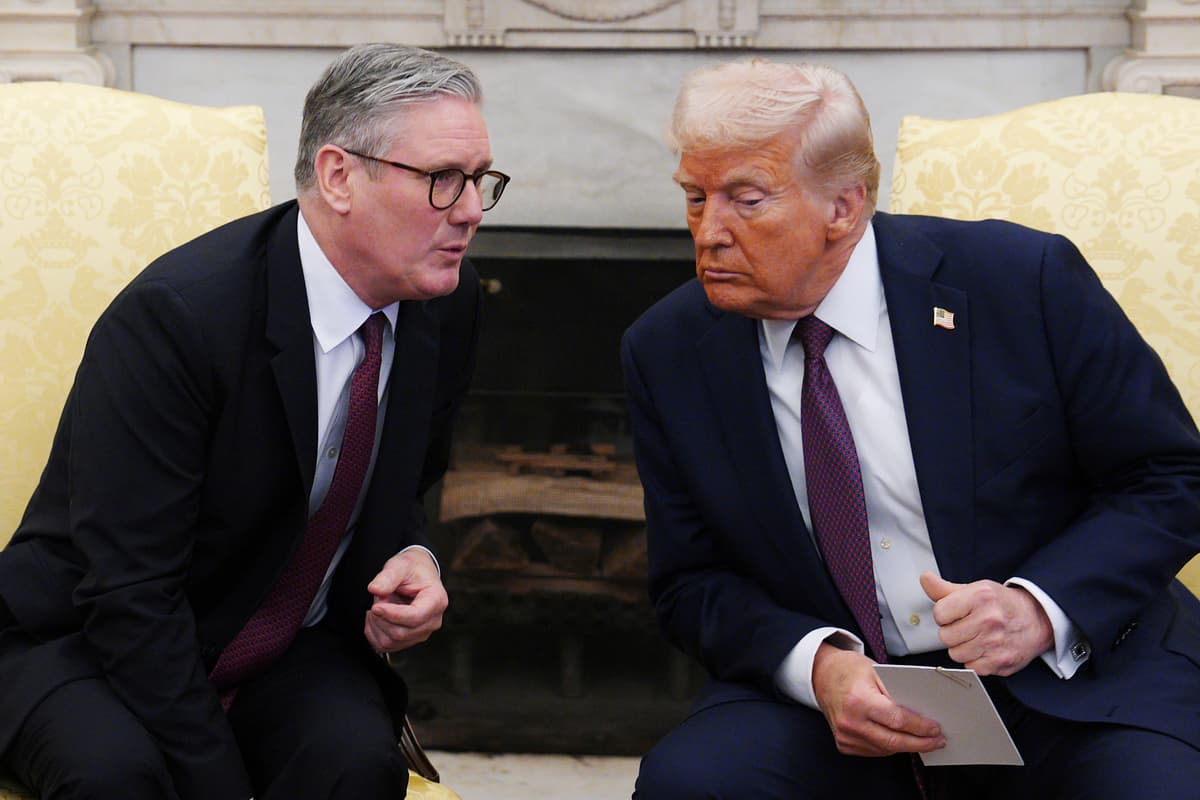
Prime Minister Keir Starmer seems intent on making the special relationship ever less special. Britain will no longer share intelligence with America on the Caribbean region, CNN reported on Tuesday with great fanfare. The London Labourites are lily-livered over the legality of President Trump’s strikes on Venezuelan boats, which Washington avers carry drugs that kill Americans. Ten Downing Street’s concerns are of the international law variety.
Imagine MI-6’s legal department instructing James Bond that according to the latest opinion of the United Nations department of alcohol control, the storied spy must now only order gin martinis, and specify they be stirred, not shaken. Back in the real world, we wonder: Does Britain’s world-class spookdom really gather so much valuable intelligence near America’s shores that its absence could compromise attacks on Venezuelan criminals?
The greatest American-Briton of all times, Winston Churchill, coined the term “special relationship” in 1946. He envisioned close political, diplomatic, military, and cultural ties between the United Kingdom and America. One of the most significant aspects of that relation was tight cooperation, and much sharing, in the field of intelligence. Together, British spies of the WWII-era and their OSS counterparts eventually midwifed the CIA.
Intel sharing remained tight throughout the Cold War, as it widened to other English-speaking countries. Beyond America and Britain, the group known as the Five Eyes include Canada, Australia, and New Zealand. London’s latest sourpuss act seems designed less to damage America’s operations in the Caribbean, and more to turn the backs of the rest Five Eyes members and others on America, and deem our actions out of accepted norms.
There are good reasons to question the legal merits of the strikes on alleged drug smugglers, which Mr. Trump seems intent on escalating. The Department of Justice opines that military action is justified as the cartels’ drug trafficking is an imminent threat to Americans. The Trump administration designated the large cartels a terrorist organization. Can we simply kill people without trial? If this is war, is an act of war necessary?
Earlier this month Senate Democrats and at least two Republicans attempted to block further strikes in the absence of Congressional approval. By a narrow 51-49 majority, the motion was defeated. The debate might continue, and the Supreme Court might even weigh in on the constitutionality of the strikes. While both sides in that debate merit consideration, it has been, at least until now, weighed by Americans.
Now Mr. Starmer is injecting himself into that debate, and not on America’s side. London officials, CNN is reporting, agree with the UN’s human rights chief, Volker Türk, who said last month that the strikes “violate international law and amount to extrajudicial killing.” Regardless of the outcome of the Iraq war, we long for the day when Prime Minister Tony Blair ignored the faux-legal kibbitzing of the UN secretary general, Kofi Annan.
Mr. Starmer seems eager to use such arguments to distance himself from America, on which he believes Britons have soured. He might hope to fend off Labourites who are reportedly plotting to oust him. Earlier, the unpopular premier sided with France, to America’s chagrin, and recognized a fictitious Palestinian state. While “international law” increasingly emerges as the last refuge of the teetering European leader, we fondly remember Sir Winston.