
Britain’s Starmer Tries To Blame Brexit
What is it about British independence that so alarms the Left?
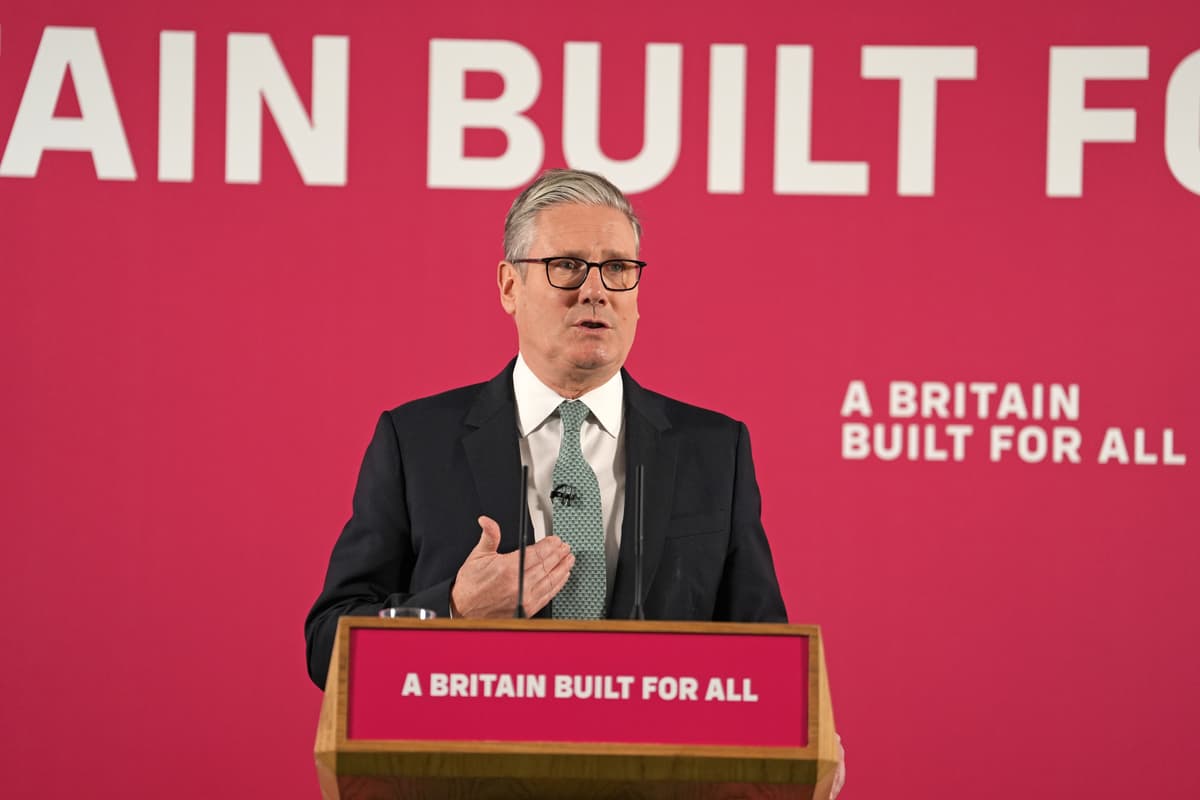
Imagine American leaders of the founding era piping up every few years and encouraging their constituents to rejoin the British Empire. Something like that seems to be the fate of the British. Witness the remarks Monday by Britain’s prime minister, Sir Keir Starmer. He called, per the Financial Times, for closer relations with the European Union and warned that undoing some of the damage of Brexit would “require trade-offs.”
What is it about British independence that so alarms the British left? Independence, after all, is the essential point of Brexit, which The New York Sun may be the only American newspaper to have endorsed on the eve of the referendum in 2016. Even were there at least some damage to Britain’s economy occasioned by Brexit, is it not possible that independence from Europe was — net net — preferable to Britons than membership in the EU?
Who, for that matter, reckons that the road to a better Brexit lies in such nostrums as, say, tax increases, for which Sir Keir made clear the Labor Party is scheming? In his remarks Monday, Sir Keir, as the FT put it, “admitted for the first time that he was planning a manifesto-busting increase to income tax rates in the run-up to the Budget, as he denied misleading voters about the public finances.” No wonder he wants to align Labor with the EU.
Sir Keir’s denunciation of Brexit was broad-brushed. He said in his speech, which was at the Guildhall at London, that “wild promises” had been made to Britons ahead of the Brexit referendum and had been unfulfilled, Sky News reported. “How it was sold and delivered was simply wrong,” he added. “We are still dealing with the consequences today.” He suggested it would be “utterly reckless” to consider Brexit as a template for future foreign policy.
Sky News reports that Sir Keir “singled out” the Conservative Party leader, Kemi Badenoch, and the leader of the independence movement in 2016, Nigel Farage. Sir Keir criticized both for their calls for Britain to leave the European Commission on Human Rights. Leaving the rights commission is another reach for independence. It’s hard to imagine any issue on which the European Commission on Human Rights has the jump on Britain.
In any event, what we took from the referendum to leave the EU is that British voters know what they want better than the mandarins who supposedly act for them. When they went to the polls in 2016 and again in 2019 they knew all the risks, which the remainers had been bewailing for months. Yet they decided nonetheless to shoulder the risks and proceed with independence. That’s how one gets to be an independent country.
It turns out that Sir Keir speaks for a Labor Party whose support for the next election, the polls suggest, has collapsed. A lot can happen between now and the next vote, of course. The latest from Politico’s Poll of Polls, which polls voting intentions, shows Labor at 18 percent, Conservatives at 17 percent and Mr. Farage’s Reform party on top, with 29 percent. It’s hard to imagine how the voters could be seen as looking to Europe for salvation.