Buoyed by Congressional Victory, Argentina’s Milei Seeks To Lift Economy to Occasion

With widespread validation in congressional elections for the libertarian president’s austerity measures, Argentina gets American support to stabilize currency and drive down inflation.

AP Photo/Rodrigo Abd
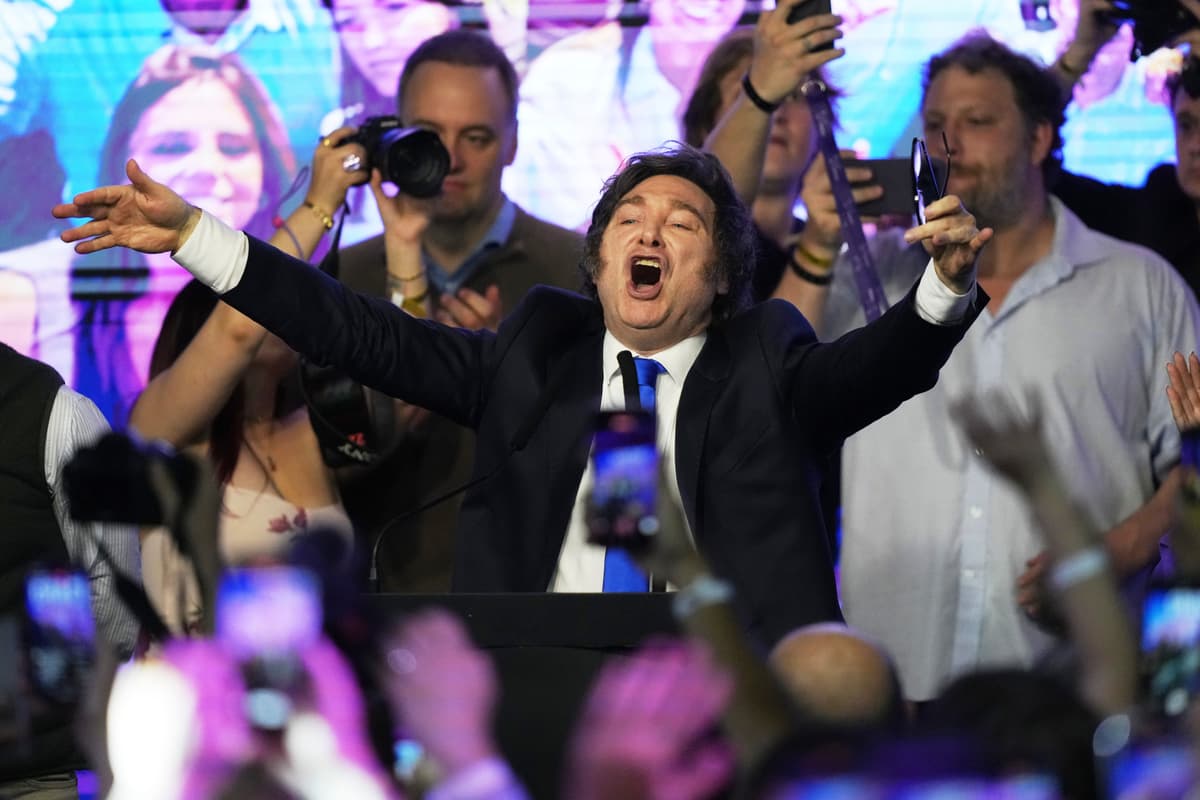
President Javier Milei celebrates after winning in legislative midterm elections at Buenos Aires, Argentina, October 26, 2025. AP Photo/Rodrigo Abd

President Trump pledged that if President Javier Milei succeeded in Argentina’s congressional election, he would be willing to back his austerity program with $20 billion from America’s Exchange Stabilization Fund. Mr. Milei can now come collecting. 

After a better-than-expected victory in Sunday’s election, two years of Mr. Milei’s austerity measures are getting the seal of approval he needs to move Argentina’s economy forward from decades of debt and devaluation.

In midday trading Monday, Argentinian stocks, bonds, and currency rallied, with the peso rising nearly 10 percent against the American dollar to its highest level in more than two decades. The 20-year bond rose 20 percent. Argentina’s stock market, the Merval, gained 19 percent compared to the previous session. 

“The country risk is going to drop very quickly! We’ll return to the markets, investments will come, there will be jobs!” the director of research for Traders, Dario Epstein, whose company advises on capital markets, wrote on X.

The rally offered reassurance to the Trump administration as well as private investors. Aside from the $20 billion pledged currency exchange, JPMorgan Chase and other banks have suggested they could match that amount with private debt.

Treasury’s $211 billion Exchange Stabilization Fund, previously used to back Federal Reserve lending during the Covid-19 pandemic and the 2023 banking stability crisis, poses no financial risk to American taxpayers, Secretary Scott Bessent says, as it is not a loan but a $20 billion currency swap agreement. 

“There will be no taxpayer losses. This is a swap line. This is not a bailout, and it is from the Exchange Stabilization Fund, which I control at Treasury,” Mr. Bessent told NBC’s “Meet the Press” on Sunday. “It has never registered a loss. It is not going to register a loss.”

Unlike traditional foreign aid, the swap only becomes active when one party chooses to draw on the funds — converting it into debt that must be repaid with interest. The fund’s largest asset consists of International Monetary Fund reserve assets known as Special Drawing Rights. 

The deal enables countries to exchange equivalent amounts of their currencies when needed, positioning Argentina to expand its access to capital markets.

“Bessent helped Argentina and thanks to that the Treasury makes $200 or $300 million in a week?” Mr. Epstein said. “Great trade for the U.S. Treasury. How much fear and negativity they instilled in us Argentines in these 2 months.”

Beyond the swap line, Treasury has been purchasing Argentine pesos on the open market to support the currency’s value against the dollar, despite traders and some economists viewing the peso as overvalued.

Mr. Milei’s libertarian party won a landslide victory on Sunday. His party, La Libertad Avanza, earned more than 40 percent of the vote, winning 13 of 24 senate seats and 64 of the 127 lower-house seats up for election. That’s a 172 percent increase in senate seats, which while not a majority, gives Mr. Milei the plurality he needs to pursue his deregulation policies and protect him from attempts to override his vetoes.

Mr. Milei has indicated Argentina would use the swap to make 2026 debt payments if the country cannot access forex markets due to unfavorable financial risk ratings. The specific conditions of the agreement — including interest rates and repayment deadlines — remain confidential to prevent market speculation.

Argentina’s Central Bank has said the agreement will help stabilize the country’s macroeconomic situation and reduce price volatility for everyday goods as the nation faces ongoing economic challenges, including a weakening peso and depleted dollar reserves.

America’s support package has been interpreted as part of the American effort to counter Chinese influence in the region. While Treasury has disclosed few details about the swap line and peso interventions, Mr. Bessent confirmed the arrangement serves explicitly strategic interests.

“We are supporting a U.S. ally in Latin America and we want to set the tone in Latin America,” Mr. Bessent said. He added that the Trump administration did not want Argentina to suffer the same fate as Venezuela, which he described as a “failed narco-state.”

“So we think it is much better to use American economic power up front to stabilize a friendly government and lead the way, because we’ve got many other governments in Latin America, Bolivia, Ecuador, Paraguay, who all want to follow,” he said.


The New York Sun

© 2025 The New York Sun Company, LLC. All rights reserved.

Use of this site constitutes acceptance of our Terms of Use and Privacy Policy. The material on this site is protected by copyright law and may not be reproduced, distributed, transmitted, cached or otherwise used.

The New York Sun

Sign in or  create a free account

or
By continuing you agree to our Privacy Policy and Terms of Use