
Can Trump Cut a Grand Deal With the Saudis?
With the Saudi Prince due to arrive at Washington, the desert kingdom wants the latest fighter jets, but Israel worries about a state for the Palestinian Arabs.
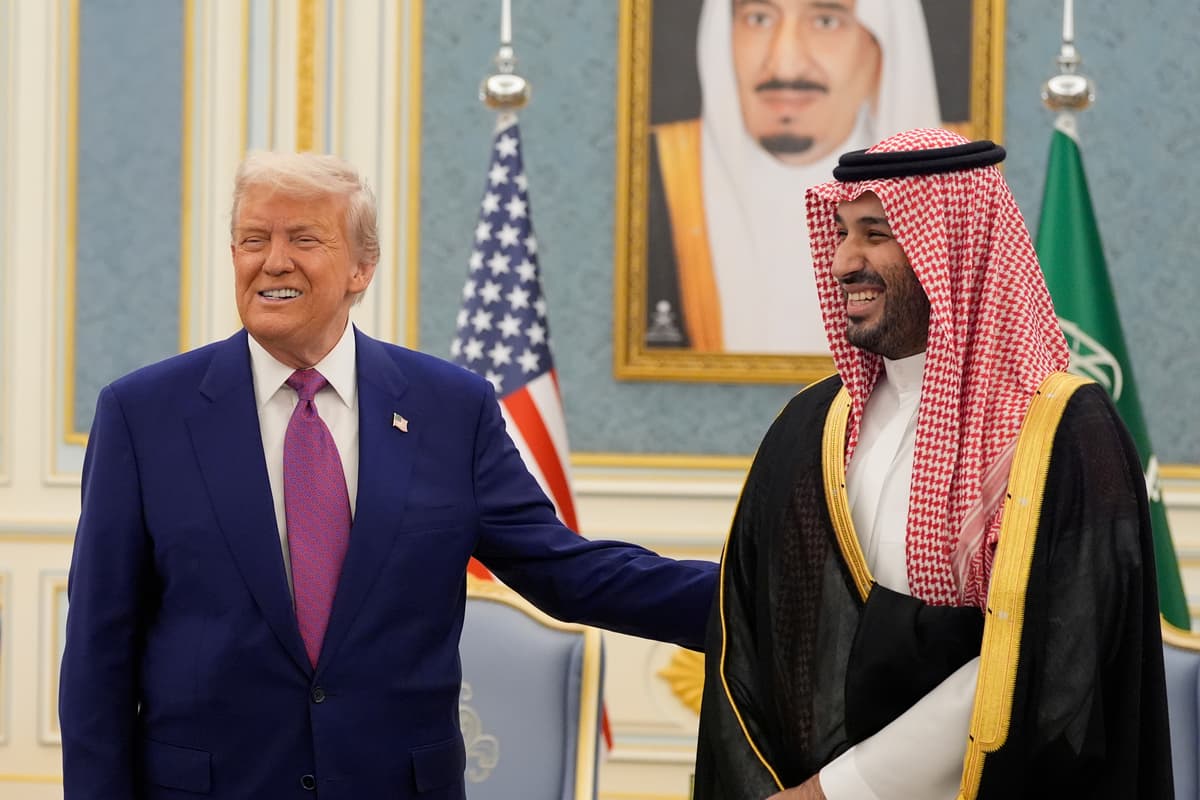
Riyadh covets America’s most advanced fighter jets, and President Trump wants to widen the Abraham Accords. Sounds like a fair exchange. Is it? The Saudi crown prince, Mohammed bin Salman, who is the de facto ruler at Riyadh, will arrive at the White House on Tuesday. To upgrade his military, and his regional prestige, his shopping list includes dozens of F-35s. He faces quite a few complications, though, before a deal can be struck.
The Saudis “wanna buy a lot of jets,” Mr. Trump told reporters Friday. “I’m looking at that. They’ve asked me to look at it. They want to buy a lot of ’35,’ but they want to buy actually more than that.” At the same time, the president added, “I hope that Saudi Arabia will be going into the Abraham Accords very shortly.” Can these two goals be tied together? After all, the prince, known as MbS, has become one of Mr. Trump’s closest Mideast allies.
As the president weighs his options, though, he must consider issues that weigh against both sides of this swap. The technology that makes Lockheed Martin’s F-35 the world’s top stealth jet is sensitive. Riyadh has close, and tightening, relations with Communist China, which has turned the stealing of intellectual property into an art form. A 2021 deal for F-35 sale to the United Arab Emirates unraveled because of ties to Beijing.
Plus, too, America’s law guarantees a “qualitative military edge” to Israel over all Mideast countries. Israeli engineers took part in the development of the F-35, and as yet its airforce is the only military that has used the plane in battle. Yet unidentified top Israeli officials told several Israeli news outlets on Friday that “we told the Trump administration that the supply of F-35s to Saudi Arabia needs to be subject to Saudi normalization with Israel.”
Not so fast, says Prince Mohammed. In leaks to favored websites, Riyadh officials stress that unless Israel agrees to a “clear path” to a Palestinian state, no normalization with the Jewish state will be possible. As Israel enters a hotly contested election year, it is unlikely that Prime Minister Benjamin Netanyahu would agree to even the slightest hint that one day he would agree to the establishment of such a state.
One way Washington seems to believe it could cut this Gordian Knot might be enacted Monday afternoon at the United Nations. There, an American proposal would have the Security Council vote on a resolution to back Mr. Trump’s 20-point Gaza plan. It leaves the leadership of the postwar mechanism there in American hands, rather than the UN. Yet under Arab and French pressure, American diplomats were forced to tweak a paragraph on “statehood.”
According to the final version of the proposed resolution, Gaza would be handed to Palestinian leadership in accordance with Mr. Trump’s plan “and the Saudi-French proposal,” as delineated at the UN in September. Worse: after a plan to reform the Palestinian Authority “is faithfully carried out,” the “conditions may finally be in place for a credible pathway to Palestinian self-determination and statehood,” the American text avers.
However ill-defined, Mr. Netanyahu’s supporters, as well as some of his opponents, express opposition to the mere mention of “statehood.” Also, Russia might veto the whole thing this afternoon. If it passes, the resolution might serve as a fig leaf for MbS to join the Abraham accord. Even as the reformist prince might care little about the Palestinians, endless images of Gaza hardships are angering his subjects. Can he make a deal anyway?