
Canada Caves to Trump Pressure, Drops Most Retaliatory Tariffs
Prime Minister Carney’s decision to remove tariffs on $21.7 billion worth of U.S. goods comes ahead of a crucial review of the U.S.-Mexico-Canada trade pact.
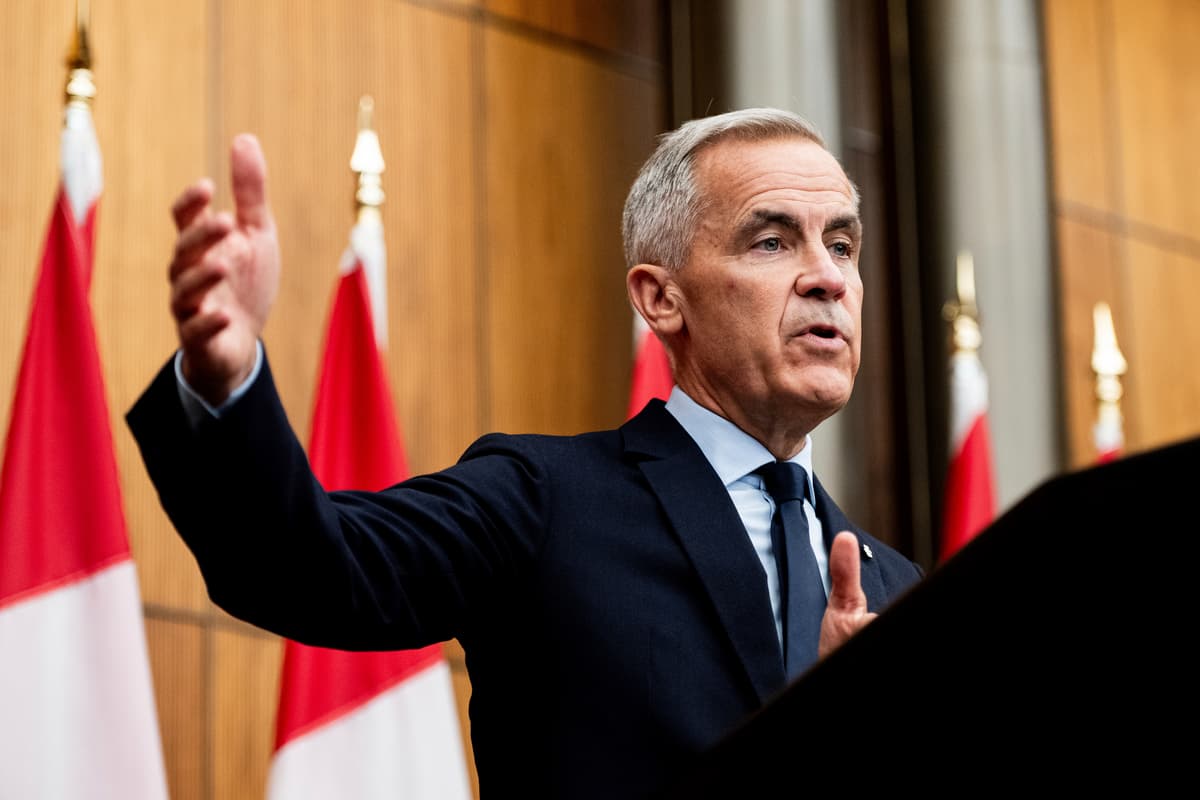
In what appears to be a clear capitulation to President Trump’s economic pressure, Canada says it will eliminate most of its retaliatory tariffs against the United States, effective September 1.
The decision, announced Friday by Canada’s prime minister, Mark Carney, represents a significant retreat from the country’s previous hardline stance. Canada had imposed 25 percent counter-tariffs on $21.7 billion worth of American products in March following Mr. Trump’s announcement of steel and aluminum duties.
The move comes after months of escalating trade tensions and Mr. Trump’s threat to raise tariffs on Canadian goods to 35 percent. Mr. Trump had cited Canada’s handling of fentanyl trafficking and what he characterized as the country’s unwillingness to cooperate with U.S. border security efforts as justification for the harsh trade measures.
“As we work intensively with the United States, our focus is squarely on the strategic sectors,” Mr. Carney said during Friday’s announcement, framing the decision as strategic rather than defensive.
Not everyone in Canada was happy with the capitulation. “I’m not a fan of this move. Is this ‘elbows down?’ I think Canadians want to see a stronger response to Donald Trump,” Manitoba’s premier Wab Kinew told CBC News on Friday. “I think Canadians want us to fight for this country that we love so much. This doesn’t seem to match the moment.”
A White House official’s response to NBC News suggested the administration viewed Canada’s reversal as inevitable, calling the move “long overdue.” “We look forward to continuing our discussions with Canada on the Administration’s trade and national security concerns,” the official said, CNBC News reported.
The tariff reversal follows what Mr. Carney’s office described as a “productive and wide-ranging” phone call between the two leaders on Thursday — their first known conversation since failed negotiations before the August 1 tariff deadline. Mr. Carney said Friday that Mr. Trump assured him that dropping retaliatory tariffs would kick-start negotiations between the two countries.
Notably, Canada will maintain its 25 percent tariffs on U.S. automobiles, steel, and aluminum for now, suggesting the country is attempting to retain some negotiating leverage while yielding on broader trade disputes. U.S. tariffs on Canadian steel and aluminum stand at 50 percent.
The timing of Canada’s concession is particularly significant as the U.S.-Mexico-Canada Agreement, which Mr. Trump renegotiated during his first term, is scheduled for review later this year. Canada is seen as seeking to avoid a potentially damaging trade war ahead of those crucial discussions.
Canada’s original counter-tariffs, imposed swiftly under Justin Trudeau who resigned as prime minister in January, had covered nearly $22 billion worth of U.S. goods. The measures were designed to pressure the Trump administration to reconsider its own tariff policies, but Mr. Trump’s threat to escalate to 35 percent duties appears to have forced Canada’s hand.
Border security concerns have become a central issue in the dispute, with U.S. Customs and Border Protection reporting seizures of 43 pounds of fentanyl at the northern border in 2024, with an additional 58 pounds confiscated so far this year.
In another development, Mr. Trump has reportedly moved away from setting prohibitive tariffs on pharmaceuticals and semiconductors imported from the European Union. In July, the president said those two products were not covered by America’s deal with the EU, meaning those sectors faced tariffs rates of 250 percent and 100 percent respectively.
Instead, tariffs on the two sectors will be limited to the same 15 percent as most other EU products, the BBC reported.