
Canada’s Carney, in Second Major Climbdown, Says He Apologized to Trump for Reagan Anti-Tariffs Ad
The apology came during a reportedly ‘frosty’ dinner at the APEC summit in South Korea, where the two leaders sat across from one another.
Canada’s prime minister, Mark Carney, says he offered an apology to President Trump for a contentious television ad on American television, his second significant concession to the U.S. president in recent months.
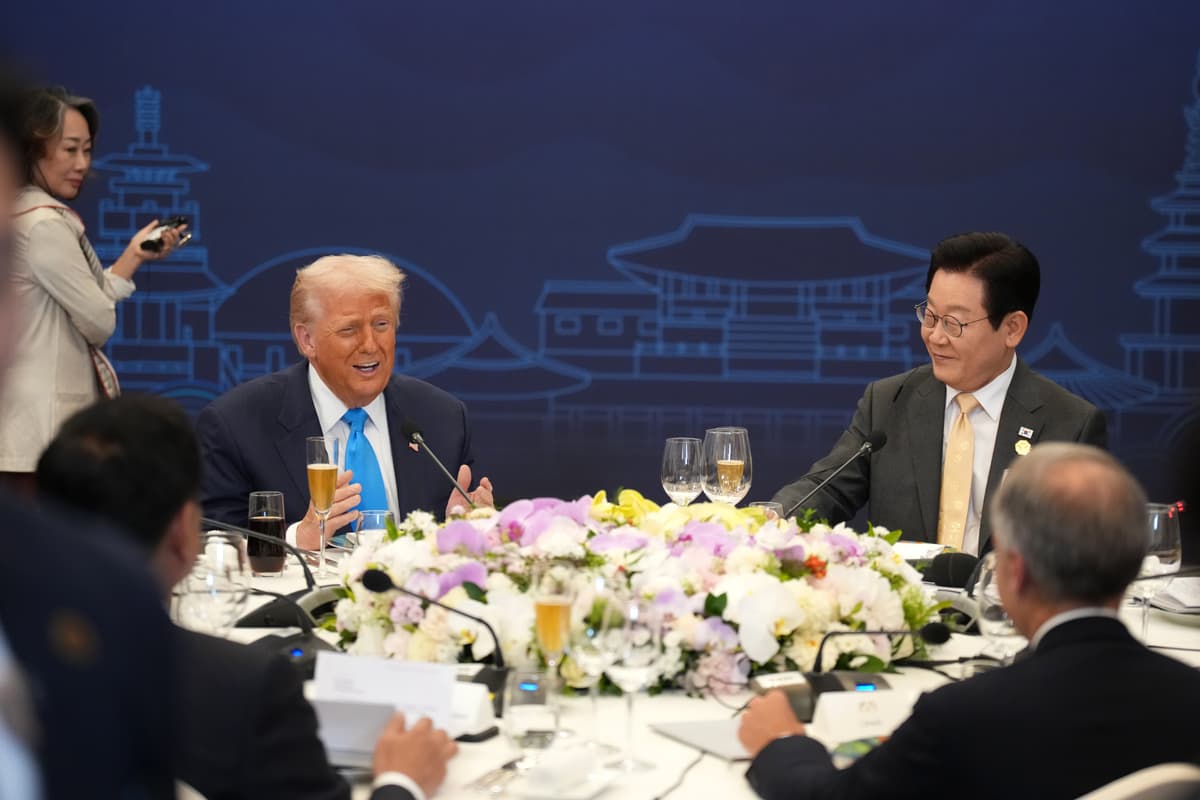
“I did apologize to the president,” Mr. Carney told reporters Saturday in Gyeongju, South Korea, where the annual summit of the Asia-Pacific Economic Cooperation group was concluding. He said he had offered the apology personally to Mr. Trump during a dinner of summit leaders earlier in the week.
The ad, created by the province of Ontario and aired during Major League Baseball games, used an old audio recording of President Reagan explaining his opposition in principle to tariffs. An infuriated Mr. Trump broke off trade talks in response and then imposed a new 10 percent tariff on Canadian goods when the ad appeared twice more during the World Series.
The Canadian Broadcasting Corp. said observers of the dinner described a “visible demonstration of the frost” between the two leaders, who were seated across from one another.
However, Mr. Trump told reporters on his own flight home from South Korea that he has “a very good relationship” with Mr. Carney, a former governor of the Bank of England as well as of Canada’s central bank.
“I like him a lot, but what they did was wrong. He was very nice. He apologized for what they did with the commercial,” Mr. Trump told reporters on Air Force One. “It was a false commercial. It was the exact opposite — Ronald Reagan loved tariffs.”
The apology is the second humiliating climbdown for the Canadian leader, who in June rescinded a proposed 3 percent tax on large U.S. tech firms like Google, Amazon, and Meta after Mr. Trump halted trade negotiations and threatened new, punitive tariffs.
The leader of Canada’s opposition Conservative Party, Pierre Poilievre, has sought to capitalize on Mr. Carney’s failure to lock down a trade deal with America. The Liberal Party leader won election in March by arguing that he was the best candidate to negotiate with Mr. Trump.
“Mr. Carney promised a good deal by July 21. He promised he could negotiate a win with President Trump. Those were his promises. … So why did he promise it?” Mr. Poilievre asked Friday in an interview with the Canadian Broadcasting Corporation.
Mr. Poilievre also disputed Mr. Carney’s claim that he had sought to discourage the Ontario premier, Doug Ford, from running the ad. “Carney approved the ad, and then he claimed after the ad started running that the ad was the reason why no deal happened,” Mr. Poilievre said.
Mr. Ford, for his part, is offering no regrets. The hardline conservative, who has at times been compared to Mr. Trump, has said he will “never apologize for fighting” for Ontario workers, who have been hard-hit by American tariffs on autos, steel and aluminum.
In a letter to the Wall Street Journal this week, Mr. Ford wrote, “Our government ran an ad featuring the words of President Reagan because we can benefit from being reminded of his wisdom.”
The offending ad pulled excerpts from a 1987 radio address in which Mr. Reagan laid out his opposition to protectionist trade policies in general, even as he defended a targeted U.S. tariff on Japanese semiconductor imports. The ad used only Mr. Reagan’s words but omitted some context and used sentences out of order.
Mr. Trump denounced the ad as a “fake” and charged it was intended to influence an upcoming Supreme Court ruling on the legality of his tariffs. The Ronald Reagan Presidential Foundation and Institute also criticized the ad, saying it distorted the former president’s views.
Canadian fact-checkers have generally agreed that the ad quoted Reagan accurately but provided an incomplete view of his trade philosophy.
Mr. Ford, though, is unfazed. Speaking to reporters at his Ontario legislature this week, he said, “We achieved our goal. As we say, ‘mission accomplished.’ They’re talking about it in the U.S., and they weren’t talking about it before I put the ad on.”
And the Canadian public? They are mostly just focused on the Toronto Blue Jays, who are making the first appearance by a Canadian-based team in the World Series since 1993.