Caribbean Nations Demand Reparations During UK Visit

A delegation suggests that the UK needs to develop its own version of a Marshall Plan.
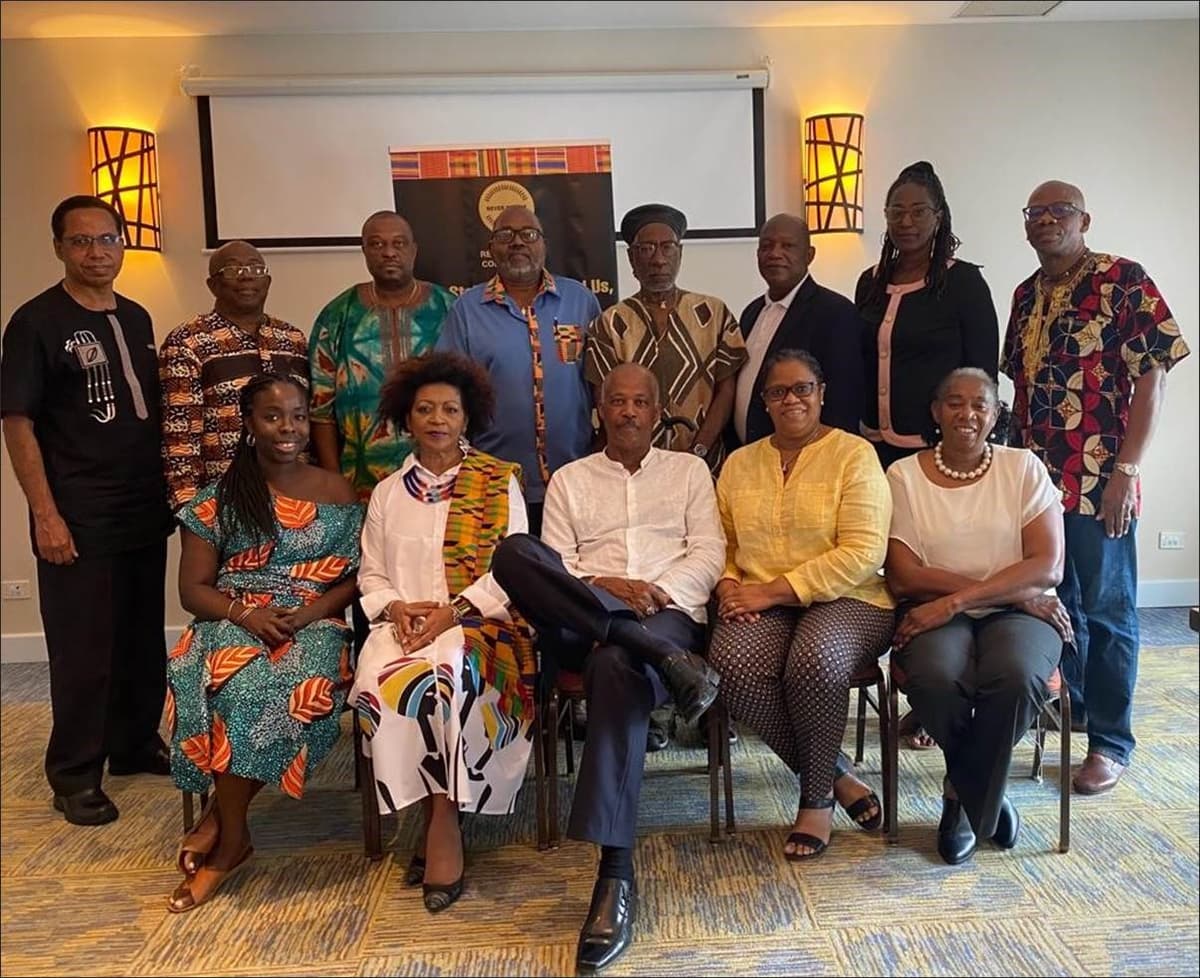
Via CARICOM.org
Members of a Caribbean reparations commission pressing England for money. Via CARICOM.org

Calling slavery a festering wound, a delegation representing 15 Caribbean nations is in England to press for reparations for centuries of slavery and colonialism.

More than 10 million Africans were forcefully transported to the Caribbean as the enslaved chattel and property of Europeans over a period of 300 years, according to CARICOM, which represents the Caribbean nations.

The group has a 10-point plan for what it calls reparatory justice. It includes asking for a formal apology, a program to resettle descendants of slaves who want to return to their ancestral lands, a development plan to provide land to the native Caribbean population, and debt cancellation for Caribbean governments.

“Reparations is not about an extraction process. No one on our side is talking about an extraction of wealth from Britain,” the chairman of the commission, Sir Hilary Beckles said at a Tuesday news conference.

“Return to the Caribbean as a partner so you can help clean up the mess you created,” Mr. Beckles added.

Mr. Beckles suggests that Britain needs its own version of a Marshal Plan — the post-World War II program the United States used to rebuild Europe — for the Caribbean. He cites hurricane ravaged Jamaica as a location that needs money for redevelopment.

Another member of the commission spoke of the “debt crisis” that much of the Caribbean faces in the wake of centuries of slavery and colonization.

“The reparations campaign is really about transforming relations that are dysfunctional,” Barbados ambassador to CARICOM, David Comissiong, said.

Mr. Comissiong says the British government stripped the natural resources from Barbados and taxed anything that was produced and shipped back to England to hurt the local population.

“The 21st century needs to be a century of reparations,” Mr. Comissiong said.

Reparations, though, appear to be a hard-sell in the United Kingdom and other European countries that exploited Caribbean islands during colonial times. There has been a backlash against the idea and some European leaders oppose even talking about reparations.

The British government ruled out issuing a formal apology or paying reparations during last year’s Commonwealth Summit but declared that it was time for a discussion on the idea. Prime Minister Keir Starmer said he preferred to be “looking forward” instead of taking part in “very long, endless discussions about reparations on the past.”

The Caribbean delegation counters that there would be more support for reparations if the British people were more aware of their country’s role in slavery.

A poll earlier this year found that 89 percent of British adults didn’t know that Britain enslaved people in the Caribbean for more than 300 years and 85 percent were unaware that Britain forcibly transported more than three million Africans to the Caribbean. The poll also found that 40 percent of respondents supported reparations.


The New York Sun

© 2025 The New York Sun Company, LLC. All rights reserved.

Use of this site constitutes acceptance of our Terms of Use and Privacy Policy. The material on this site is protected by copyright law and may not be reproduced, distributed, transmitted, cached or otherwise used.

The New York Sun

Sign in or  create a free account

or
By continuing you agree to our Privacy Policy and Terms of Use