Could an Actual Ham Sandwich Get Indicted at D.C.?
A grand jury wouldn’t indict the hurler of a hoagie. So all that’s left of the case is the sandwich itself.

If federal prosecutors can’t get a grand jury to indict a man accused of throwing his Subway hero at police, maybe the next step is to charge the sandwich. A good prosecutor, after all, could get a grand jury “to indict a ham sandwich,” New York’s chief judge, Sol Wachtler, once quipped. The failure of the Department of Justice to get felony charges against the sandwich-thrower, though, suggests that Washington’s grand juries are working as the Framers intended.
It’s not our intention here to endorse physical assaults of any kind, even in the form of a menu entrée, against law enforcement officials who keep Americans safe and our communities orderly. Yet the attempt by the justice department to hang a felony charge against the accused sandwich thrower, Sean Dunn, has the earmarks of a case of prosecutorial overreach. Mr. Dunn, a former DOJ paralegal, threw the sandwich at a Customs and Border Protection officer.
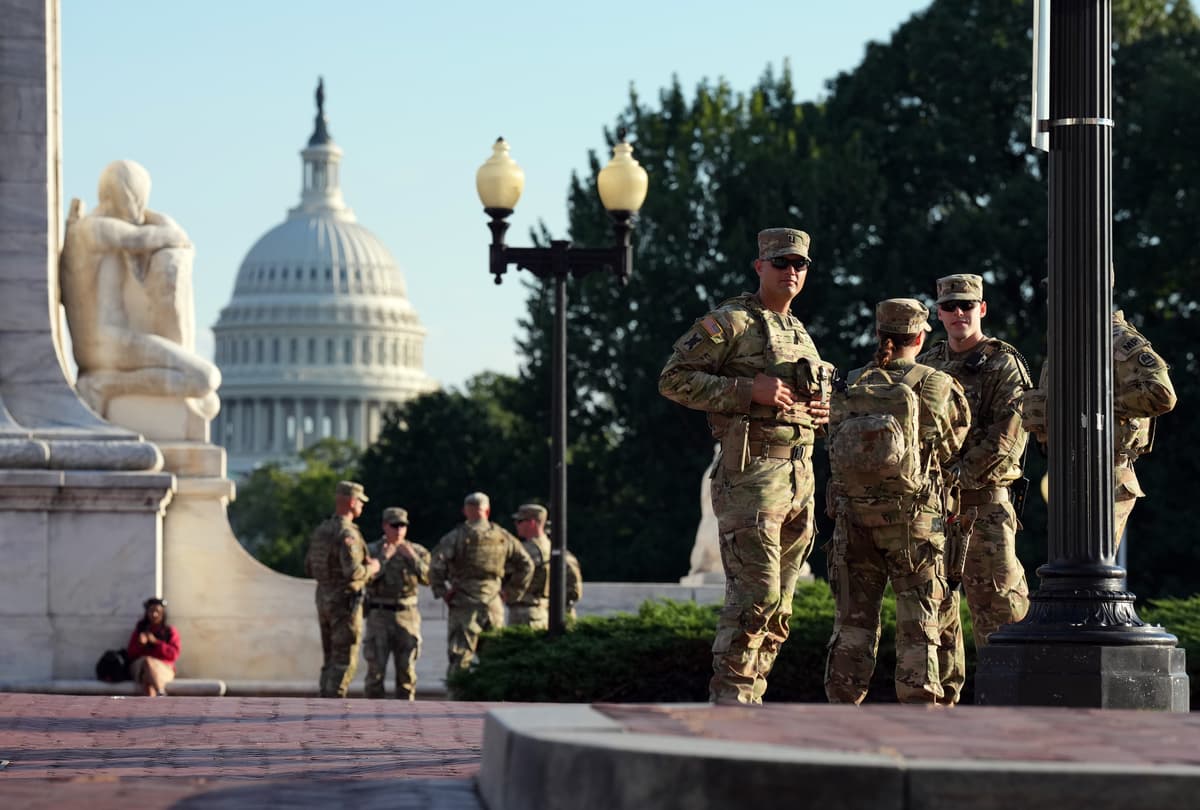
Mr. Dunn on the night of August 10 shouted at a group of Metro Transit Police and CBP officers, “F— you,” he exclaimed, “you f—ing fascists,” and asked, “Why are you here? I don’t want you in my city,” before he “hurled a hoagie” at the officer, the DOJ reported in a statement. Attorney General Pam Bondi pointed to a charge of assault against Mr. Dunn and averred: “If you touch any law enforcement officer, we will come after you.”
That Mr. Dunn had been working at the DOJ, Ms. Bondi suggested, made the incident “an example of the Deep State we have been up against for seven months as we work to refocus” the department. Referring to Mr. Dunn, Ms. Bondi added: “You will NOT work in this administration while disrespecting our government and law enforcement.” The attorney general is certainly within her powers, it seems, to fire Mr. Dunn.
What, though, of the bid to charge Mr. Dunn with assaulting an officer of the United States, under a statute that carries a potential fine and imprisonment of up to a year? That prospective charge seems to have hit a snag in the form of the Fifth Amendment of the Constitution. That’s where the Framers ordained that “No person shall be held to answer for a capital or otherwise infamous crime, unless on a presentment or indictment of a grand jury.”
The Times is reporting, based on unnamed sources, that prosecutors have been unable to convince a grand jury to hand up an indictment against Mr. Dunn. “It is extremely unusual for prosecutors to come out of a grand jury without obtaining an indictment,” the Times adds, “because they are in control of the information that grand jurors hear” and the accused do not “have their lawyers in the room as evidence is presented.”
Wachtler’s jape about grand juries and ham sandwiches reflects the fact that these aspects of grand jury protocol tend to favor the government. Even so, they are a bulwark of liberty under the Anglo-Saxon common law tradition. Grand juries “perform most important public functions,” Justice Joseph Story said in his “Commentaries on the Constitution,” “and are a great security to the citizens against vindictive prosecutions.”
Such invalid prosecutions, Story adds, can be fomented “by the government, or by political partisans, or by private enemies.” Under old custom, Story says, when a grand jury found an indictment “is groundless, or not supported by evidence,” they used to dismiss it by writing “on the back of the bill” the word “ignoramus,” meaning “we know nothing of it.” By the 19th century, the usual practice in rejecting an indictment was to state that it was “not a true bill.”
We wouldn’t suggest that grand juries always work as the Framers intended. During, say, the Jim Crow era, racial bias was pervasive and the absence of black representation on grand juries led to injustices. At Washington today, no one wants to suggest that the skepticism of the charges against Mr. Dunn is a license for grand juries to more broadly reject the anti-crime campaign pursued by President Trump. They could, though, go after the sandwich.