

Democrats’ Embrace of Mail-In Voting Faces Supreme Court Scrutiny

A case brought by an Illinois congressman could prove a corrective to the increasing laxity of blue-state laws over counting ballots.
AP/Matt Rourke
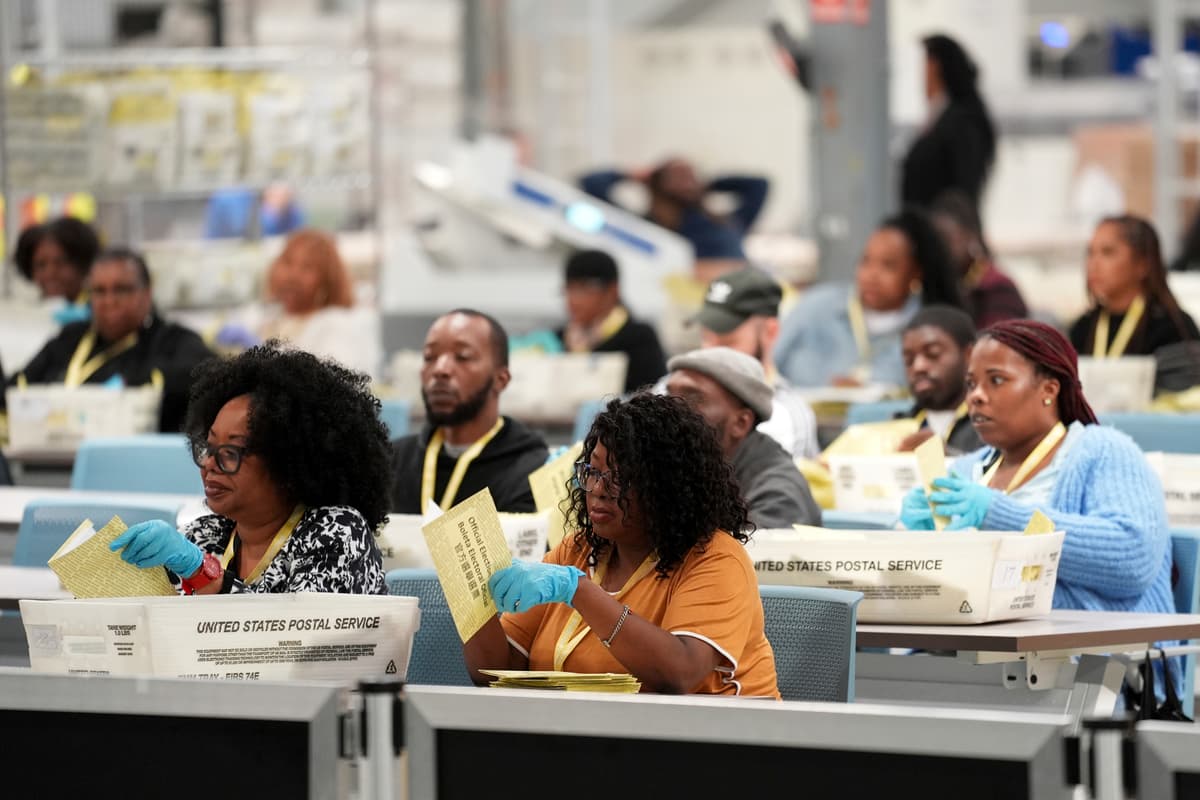
Election staffers process mail-in ballots for the 2024 General Election at the Philadelphia Election Warehouse. AP/Matt Rourke

The Supreme Court appears poised to seize a chance to weigh the constitutionality of lax state mail-in balloting rules, if arguments before the Nine Wednesday are any guide. Bost v. Illinois State Board of Elections challenges a law letting late-arriving ballots be counted up to two weeks after Election Day. If the justices agree with the lawmaker who filed suit against the law, it could prove a corrective to the Democrats’ recent embrace of voting by mail.

First, though, Congressman Mike Bost of Illinois has to establish his standing to file the suit. That’s jargon for proving that he has been harmed by the lax ballot-counting law — not as easy a question as one might think, since Mr. Bost won his election to Congress. Yet his famed lawyer, Paul Clement, practically a Founding Father himself, averred that the cost of running a campaign for the extra two weeks of counting was enough of a harm to establish standing.

One can understand Republicans’ eagerness to get to the crux of the mail-in voting dispute — since, as Justice Samuel Alito noted in arguments today, a more lenient policy “generally helps Democratic candidates.” Yet establishing standing amounts to an important check, embedded in the Constitution, against an activist judiciary. That’s why a provision in Article III, Section 2 limits the federal courts to hearing only certain “cases” and “controversies.”

In Bost, though, the court’s conservative justices seemed likely to find that the congressman had a basis to challenge the state law. After all, Mr. Bost had sued before the 2024 election and it wasn’t certain he would win. Justice Neil Gorsuch called it “unseemly” for “a federal court in the middle of an election” to decide whether “you don’t have standing because you’re going to win or you do have standing because you might lose?” 

The court’s more liberal justices, by contrast, presented themselves as paragons of judicial restraint, wondering just what “harm” Mr. Bost could possibly have as the basis for his suit, since he had proven the victor. This scrutiny seems like an instance where an overly politicized approach to the question of standing, though, could prove an impediment to the equitable consideration of the legal issues at stake.

When it comes to mail-in voting, these questions are myriad. Once seen as a rare exception to the tradition of voting in-person on Election Day, in recent years the Democrats have increasingly warmed to the practice of voting through the mail, along with looser politics regarding absentee ballots and early voting. Going to the polling place on Election Day, a traditional rite of democracy, it now seems, has become a kind of quaint relic.

Yet voting at a polling place on Election Day means casting a ballot privately. “With absentee ballots,” these columns have asked, “who’s to say if votes are being cast in the same solitude as in the voting booth?” This is one reason why voters in most cases used to require an excuse, like travel or illness, to obtain an absentee ballot. Now, this amenity is largely handed out without question by liberal-leaning states, raising concerns about a free-for-all.

Counting these mailed ballots can also prove fraught. Illinois is one of 18 states, along with the Columbia District, that require ballots to be tallied even if they are received by officials after Election Day. It doesn’t require paranoia to have qualms about the risks to election integrity posed by such a lenient policy. All the more logical for the high court to weigh the claims in Bost, especially with the high-octane elections ahead in 2026 and 2028.


The New York Sun

© 2025 The New York Sun Company, LLC. All rights reserved.

Use of this site constitutes acceptance of our Terms of Use and Privacy Policy. The material on this site is protected by copyright law and may not be reproduced, distributed, transmitted, cached or otherwise used.

The New York Sun

Sign in or  create a free account

or
By continuing you agree to our Privacy Policy and Terms of Use