Family of American Archbishop Missing in Syria Speaks Out for First Time

The religious leader, Gregorios Yohanna Ibrahim, disappeared 12 years ago when his convoy was attacked on a desolate road outside of Aleppo.

Via Ibrahim family
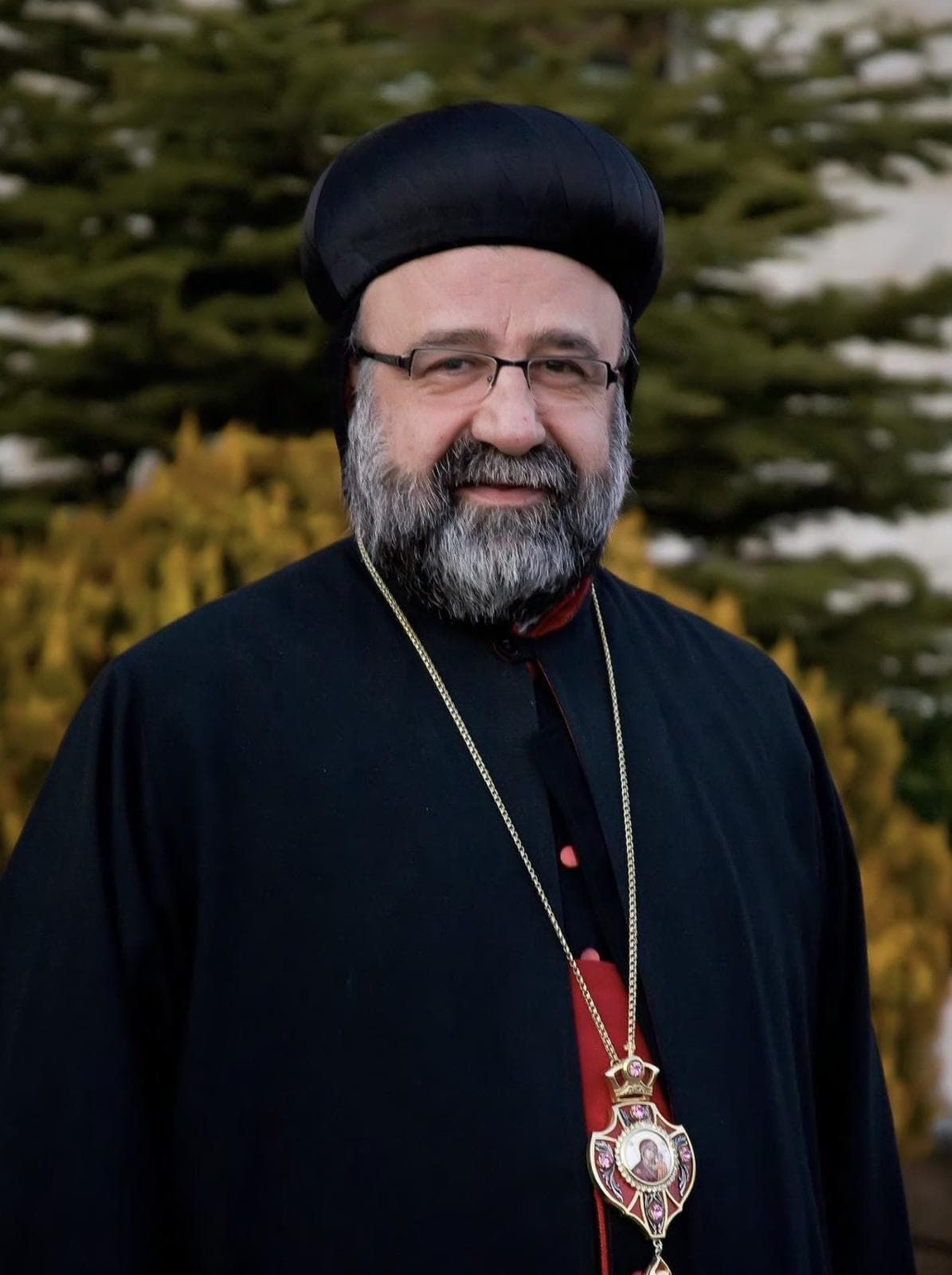
Mor Gregorios Yohanna Ibrahim, a Syriac Orthodox Archbishop and dual American-Syrian national, who disappeared in Syria in 2013. Via Ibrahim family

United States officials are once again intensifying efforts to uncover the fate of Austin Tice, an American journalist and former Marine who vanished in Syria in 2012. While Mr. Tice’s case has drawn sustained diplomatic attention; there are at least four American citizens believed to still be missing in the wake of the long-running conflict.

This includes Mor Gregorios Yohanna Ibrahim, a Syriac Orthodox Archbishop and dual American-Syrian national. He disappeared in Syria in 2013. 

“We were uncomfortable talking about the case, given how the situation in Syria developed and the role extremist groups played,” a close family member of the Archbishop, who requested anonymity, tells the New York Sun. “We did not want Bishop Gregorios Ibrahim, if he were detained by an extremist movement, to meet the fate of James Foley and be placed on the world stage.”

Mr. Foley was an American journalist who was kidnapped in Syria in 2012 and brutally executed by ISIS on video in 2014, becoming the first American citizen killed by the group.

This is the first time Archbishop Ibrahim’s family, based in the United States, has spoken to the American press, having recently revealed that the esteemed religious figure is a United States citizen. That information had been previously kept under wraps for security purposes. 

In recent years, suspicion has shifted away from Islamic extremists. While the family emphasized that they do not have verifiable information, fingers point toward the regime of the ousted dictator Bashar al-Assad, despite his proclamations to defend the country’s Christian minority. 

The Backstory 

On April 22, 2013, two revered archbishops vanished, Syrian-American Archbishop Ibrahim of the Syriac Orthodox Church and Syrian Boulos (Paul) Yazigi of the Greek Orthodox. They were abducted on a desolate road outside Aleppo. 

They had set out together to negotiate the release of two Syrian kidnapped priests, Armenian Catholic Father Michel Kayyal and Greek Orthodox Father Maher Mahfouz, who were stopped by suspected Islamic State militants while on a bus from Beirut to Aleppo two months earlier. 

Armed men ambushed the vehicle transporting the archbishops. The driver, a deacon, was killed instantly. The bishops were seized. What followed was a swirl of confusion, disinformation, and silence.

Early speculation pointed fingers at Jabhat al-Nusra, al-Qaeda’s affiliate in Syria at the time, which four years later splintered into Hayat Tahrir al-Sham, now Syria’s de facto ruling party. Others blamed Chechen jihadists. The Islamic State, then surging across Syria and Iraq, was also implicated, though no firm evidence was presented. 

The family member tells the Sun that a witness to the abduction said that the men involved “spoke broken Arabic and were covered up.”

“The first indication was that it could have been an unknown extremist group. However, the regime is very well-versed in deploying certain entities to make it seem like they’re not responsible,” the family member continued. “We believe the (Assad) regime could have been behind this because of how brutal they are — and how intolerant they are of Syrians, especially prominent religious figures, speaking out.”

In the first year of the Syrian war, which exploded in early 2012, Archbishop Ibrahim was “very vocal against the regime’s tactics, especially targeting civilians indiscriminately,” the family member noted, which likely upset Mr. Assad and his inner circle, who then sought to silence the respected religious leader. 

“Also, extremist groups like Al Nusra or ISIS — when they abduct someone prominent — either make demands or kill publicly. Since the day of the abduction, no entity has claimed responsibility or made demands,” the family member stressed. “We believe that a well-organized intelligence apparatus was involved. And we know the regime has that capability.”

Indeed, no group ever claimed responsibility. No concrete ransom demands were made, and no credible proof of life ever emerged. Those within the community, however, say there is little doubt the Assad regime was involved, and much like the case with Mr. Tice, the incident was staged to appear as though a militant outfit was responsible. 

“Archbishop Ibrahim was a significant figure, highly connected internationally. He had a good relationship with the Pope at the time. He was opposed to any military action by the Syrian regime against its people,” Christian Syrian reformist and defected Assad government adviser Ayman Abdel Nour, tells the Sun. “That made him dangerous in the eyes of the regime.”

According to Mr. Nour, Bishop Boulos Yazigi was taken by happenstance. “The real target was Archbishop Yohanna Ibrahim,” Mr. Nour said. 

“Archbishop Ibrahim was essentially the ‘Crown Prince,’ next in line for the patriarchate. The patriarch at the time was elderly and expected to pass soon. If Ibrahim had become patriarch, he would have been in a position of great influence globally,” he explained. “The regime couldn’t risk that. So, they acted fast and kidnapped him.”

Mr. Nour also claimed that the regime used a proxy group, Chechen fighters, “who claimed to be Chechen but their leadership was essentially espionage-linked and backed by Iran.” 

A Trail Gone Cold

Over the years, multiple church leaders, including the three Patriarchs of Antioch representing Syria’s main Christian denominations, have repeatedly appealed for international pressure and action.

“The fate of the two bishops is a moral issue and an international responsibility,” said Patriarch John X Yazigi — brother to the missing Bishop Boulos — in a joint statement on the 12th anniversary of the abduction earlier this year. “We appeal to all states, institutions, and people of good conscience to raise their voices.”

In April 2025, Syriac Catholic Patriarch Ignatius Joseph III Younan echoed the call, noting that despite years of war, “the pain of not knowing remains.”

Several figures close to the Archbishop, however, have condemned the lack of focus on the matter from churches within the region, who, for a long time, feared the regime and what may happen to them if they pushed for answers.

A 2019 investigative report by Italian journalist Giorgio Bernardelli, published by Fides News Agency, claimed that both men had been killed shortly after their abduction, killed by extremists linked to al-Nusra. The Vatican-affiliated outlet cited unnamed sources and indicated that other governments may have been complicit. 

Yet, the lack of hard evidence — and the Church’s reluctance to officially confirm their deaths — has left many clinging to hope.

The family member said that, in 2018, they received information from a Syrian human rights activist claiming that he saw Archbishop Ibrahim in a high-security regime prison run by intelligence officials in Damascus. Despite attempting to corroborate this critical piece of information in conjunction with the United States government for seven years, they have been unable to do so.

As recently as 2024, the James W. Foley Legacy Foundation, which tracks cases of Americans and non-Americans abducted or missing in conflict zones, continued to list both bishops as “still missing.” Their inclusion highlights the lack of clarity that has persisted for over a decade.

A spokesperson for the United States Department of State tells the Sun that the government is “aware of reports of a U.S. citizen kidnapped in Syria.”

“The Department of State has no higher priority than the safety and security of U.S. citizens abroad. We stand ready to provide consular assistance to U.S. citizens in need and their families,” the spokesperson said, adding that they cannot discuss specifics “due to privacy and other considerations.”

A source with connections to the investigation, who requested to speak off the record, tells The Sun that family members of Archbishop Ibrahaim are in touch with the United States government, and that they are seeking a “live person.”

“There is no reason to believe that the Archbishop is dead,” said the source. “The hard part is, since the Assad regime collapsed, we still do not have answers. There are missing people from many nationalities. They could be in Syria, they could be in Iran, they could be in many different places.”

A Personal and Political Void

The loss of the two archbishops left a deep void in Syria’s embattled Christian community, which has dwindled dramatically since the war began in 2011. Both men were prominent figures, not only in religious circles but also in public life, advocating for dialogue between Christians and Muslims and promoting peace and reform.

Bishop Ibrahim, in particular, was known for his outspokenness, intellectual acumen, and efforts to foster interfaith understanding. Months before his abduction, he told Catholic News Agency: “The future of Christians in the Middle East is uncertain. We need help — not just money, but people who will speak on our behalf.”

For many Christians in Syria, Iraq, and Lebanon, the silence surrounding their fate has only deepened the feeling of abandonment. Beyond the personal loss, the case raises difficult geopolitical questions about the international community’s selective attention, the weaponization of hostage-taking in war zones, and the shifting lines of proxy conflict that continue to destabilize the region.

The lack of resolution has taken its toll on the families as well. Patriarch John X, still leading the Greek Orthodox Church of Antioch, has quietly borne the weight of his brother’s disappearance while continuing his ecclesiastical duties. In rare public comments, he has alluded to the pain of “knowing nothing, hearing nothing.”

A Call for Closure

The civil war in Syria has faded from global headlines, yet its human wreckage — including the mystery of the Aleppo bishops — lingers.

“When the regime fell, we had high hopes. We thought maybe the two bishops and other prominent abducted Americans would be found in prison,” said the family member. “But we were devastated to find out that wasn’t the case, not in the weeks or months after.”

The close relative also surmised that the two priests first taken may have also been part of an elaborate scheme by the regime to “lure in” the Archbishop. 

“They were the only ones taken on that bus. At that time, Bishop Gregorios Ibrahim was known as a mediator, respected on both sides. He’d already helped free around 200 people through negotiations before his own abduction,” said the insider. “But to this day, there’s no information about the fate of those priests either. I believe they were part of a larger plan.”

What happened on that dusty road in Aleppo in April 2013 may never be fully known. For the families, however, the Church, and the faithful who refuse to forget, the demand is simple: answers, accountability, and — above all — remembrance.

“We want people to keep Bishop Gregorios Ibrahim and Bishop Paul Yazigi and their families in their prayers,” added the family member. “We still have hope because we have no credible evidence they’ve died. We want closure. The family is prisoner to this case, too.”


The New York Sun

© 2025 The New York Sun Company, LLC. All rights reserved.

Use of this site constitutes acceptance of our Terms of Use and Privacy Policy. The material on this site is protected by copyright law and may not be reproduced, distributed, transmitted, cached or otherwise used.

The New York Sun

Sign in or  create a free account

or
By continuing you agree to our Privacy Policy and Terms of Use