
First Items From ‘Holy Grail of Shipwrecks’ Are Recovered but Fight Awaits Over Who Owns $10 Billion Treasure
The fate of the San José is sparking legal battles involving the United States, Spain, and Colombia.
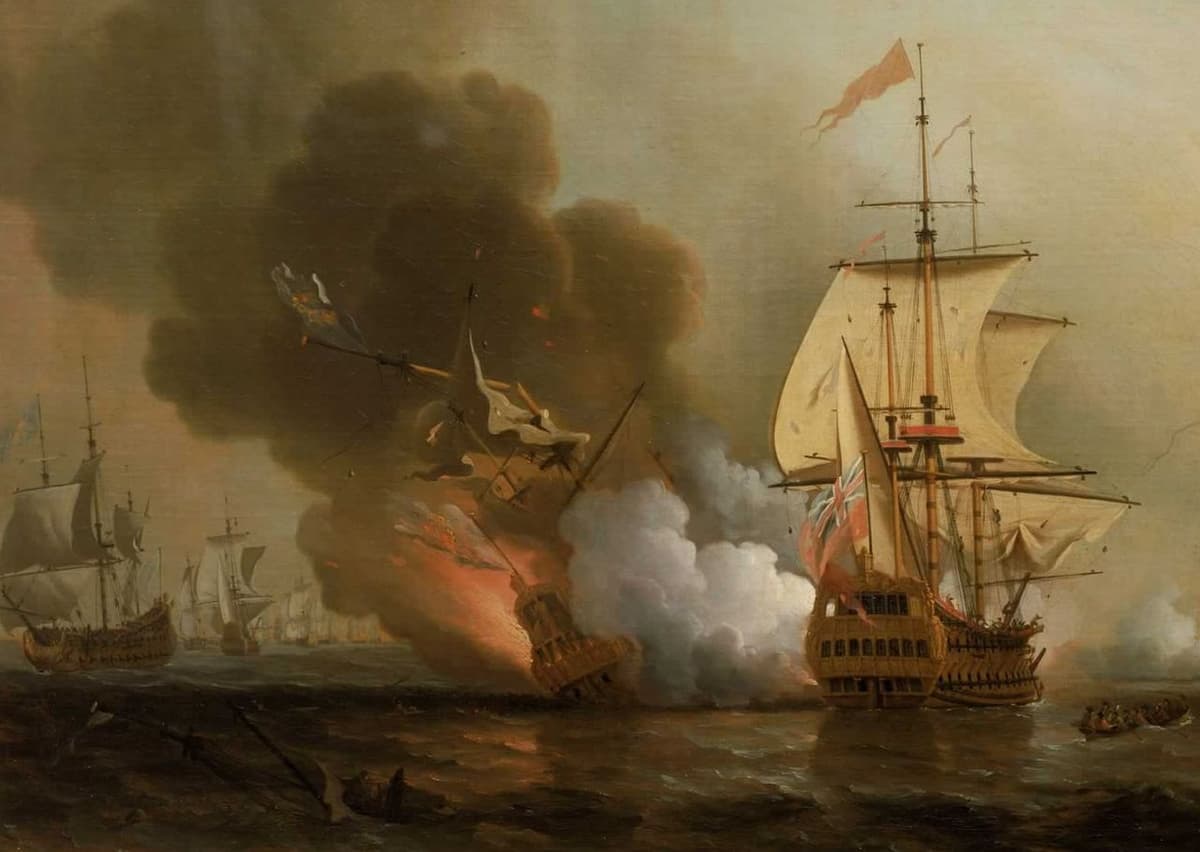
The first objects from what has been called the “holy grail of shipwrecks” have been recovered but a legal battle looms over who owns the sunken treasure worth as much as $20 billion.
Scientists pulled up three coins, a cannon, and two porcelain cups from the Spanish galleon San José last week. They had sat about 300 meters under the sea since the British navy attacked and sank the ship in 1708 in the Caribbean Sea. The galleon was returning to Europe with treasures to help fund the Spanish war effort.
The Colombian government says it is not retrieving items for financial gain but to conserve and study the objects. It plans to build a museum and conservation laboratory to preserve and publicly display the wreck’s contents, including cannons, ceramics, and other artifacts.
But several legal battles involving an American company, Colombia, and Spain over who owns the rights to the treasure remain unresolved.

A group of American investors claim to have discovered the ship in 1982 and have rights to half of the treasure — about $10 billion if their estimates are correct. The group — Sea Search-Armada — is currently in arbitration litigation with Colombia in a proceeding that has been ongoing for nearly three years.
Its suit claims that the Colombian government recognized the group’s predecessor — Glocca Morra Company — as the rightful “claimant” of the ship’s discovery. Under Colombian law, the discoverer of a treasure is entitled to 50 percent of the proceeds.
The Colombian Supreme Court later upheld Glocca Morra’s right to the discovery but the government eventually rejected the court ruling and claimed that Glocca Morra hadn’t actually located the San José but had discovered another ship.
Colombian authorities say a government approved search by the Massachusetts-based Woods Hole Oceanographic Institution discovered the actual location on November 27, 2015. The Colombian government would not release the exact coordinates of the find, making it impossible to prove that the ship had been found at a different location than the 1982 discovery, according to the suit by Sea Search-Armada.
Spain also says it has a claim to the ship due to it being a Spanish naval vessel. It considers the ship an underwater graveyard since some 600 people died when it sank. Spain is asking the United Nations cultural agency UNESCO to step into the conflict.
Colombia is not a signatory of the United Nations Convention on the Law of the Sea or the 2001 UNESCO Convention on the Protection of the Underwater Cultural Heritage, however. That means it could ignore UNESCO requests without retribution.
Another fight involves indigenous communities in Bolivia who have objected to pulling the treasure up from the ocean floor. The Bolivians say a substantial part of the treasure was mined by forced labor and claim pulling the remains of the ship with consulting with their descendants would violate international law.
“Our native communities consider any act of intervention and unilateral appropriation of the galleon, without consulting us directly and without expressly and effectively considering its common and shared character, to be an act of plunder and neo-colonialism,” the indigenous communities said in letters sent to UNESCO and Spain and seen by Reuters.
UNESCO has asked Colombia not to commercially exploit the cargo of the ship, but, again, Colombia can ignore the request.
While the legal questions continue, Colombia plans to continue to pull items from the ship to the surface.