Ghislaine Maxwell’s Complaint: Promises Made, Promises Kept?
The convicted procuress insists that she is shielded by a non-prosecution agreement between disgraced financier Jeffrey Epstein and the United States.
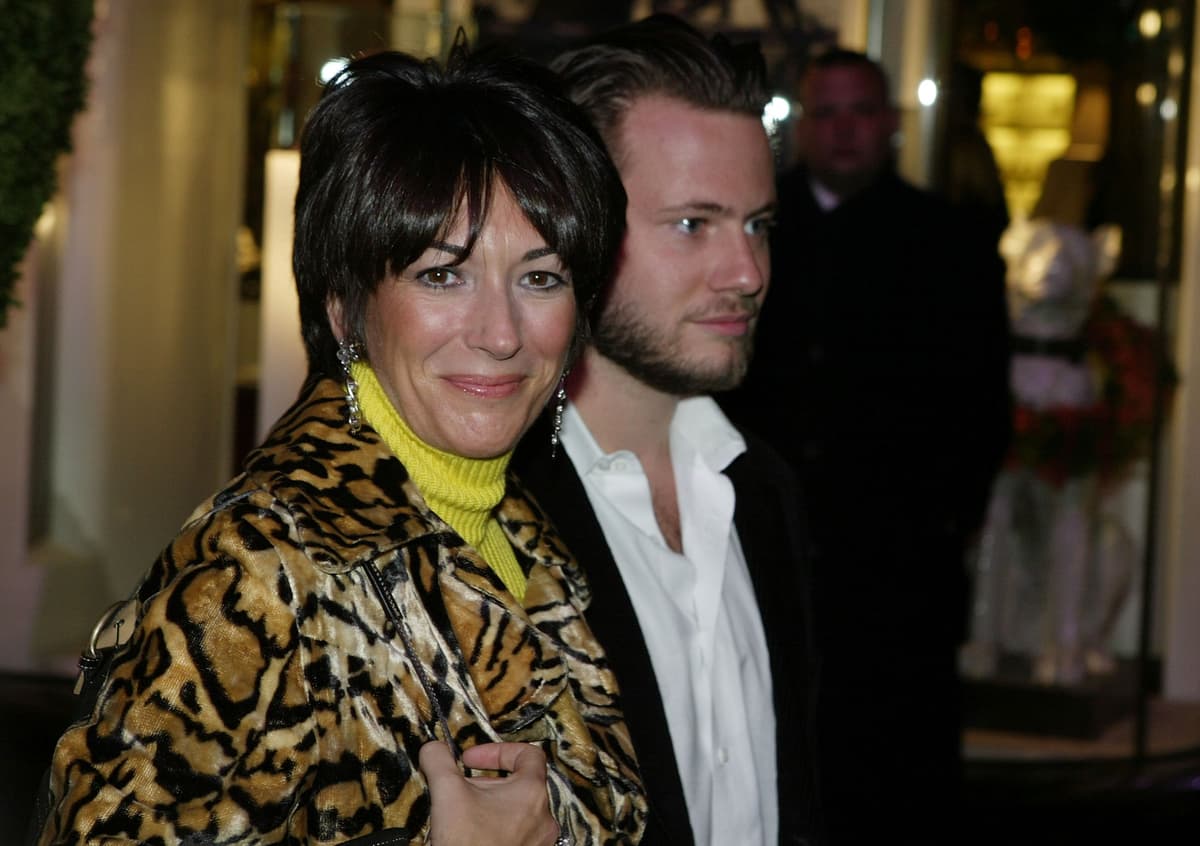

The Supreme Court is weighing whether to take up the Epstein case, via the appeal of the disgraced financier’s convicted procuress, Ghislaine Maxwell. She was found guilty in 2021 of abetting abuse. Yet Ms. Maxwell avers that she was shielded by a non-prosecution deal between Epstein and the United States. Her lawyer calls it “a promise the government made and broke.” That argument fell on deaf ears in lower courts, but might the Nine prove more receptive?
If so, it wouldn’t be without precedent. Just ask Bill Cosby. We carry no brief whatsoever for Ms. Maxwell or, for that matter, Mr. Cosby. Yet her lawyer, David Oscar Marcus, says he’d “be surprised if President Trump knew his lawyers were asking the Supreme Court to let the government break a deal.” In 2022, in any event, the Supreme Court let stand Pennsylvania’s supreme court decision to void Mr Cosby’s conviction on sexual assault charges.
The behavior of which Mr. Cosby and Ms. Maxwell were accused shocks even a cynical society. Yet the notion that prosecutorial agreements have to be respected is important. Even if the promise is made in, say, a press release. That is what happened to Mr. Cosby, who was protected by a local prosecutor’s vow, via press release in 2005, not to file charges. A successor district attorney reneged and Mr. Cosby was convicted. No dice, the state’s high court then said.
When a prosecutor makes a “promise of non-prosecution,” the Keystone State justices averred, “the principle of fundamental fairness that undergirds due process of law in our criminal justice system demands that the promise be enforced.” In Ms. Maxwell’s case, lower courts found that the non-prosecution pact inked in 2007 by Epstein and the United States attorney at Miami, Alex Acosta, lacked the authority of the Cosby press release.
The Epstein deal “did not bar Maxwell’s prosecution” by federal prosecutors at New York, the Second Circuit held. A Department of Justice review found that Mr. Acosta, later President Biden’s labor secretary, used “poor judgment” in making the deal. DOJ pointed to his failure to notify Epstein’s victims and noted that the deal came before “significant investigative steps were completed.” Aspects of the pact were “unusual and problematic,” the DOJ said.
The DOJ in a high court filing concedes that the agreement shields “any potential co-conspirators of Epstein,” per Solicitor General John Sauer. This provision was “highly unusual,” he says. DOJ policy bars district level prosecutors from making “any agreement, including any agreement not to prosecute, which purports to bind” other districts or divisions without “written approval” from other districts “and/or” the head of the DOJ’s Criminal Division, he adds.
The agreement, in the event, did not feature any approval by the “Assistant Attorney General of the Criminal Division,” General Sauer says in a DOJ filing. The circuit court, when it reviewed the case, “found no indication that either the Southern District of New York or the Criminal Division had reviewed and approved” the agreement, General Sauer added, “as DOJ policy would have required” if the immunity deal “applied to other districts.”
Ms. Maxwell’s argument is undermined by the Nine’s refusal to consider an appeal in Prisco v. United States, which made a similar argument about a federal plea agreement in New Jersey extending to New York, General Sauer says. The Epstein agreement’s use of the term “the United States,” General Sauer adds, is not a reference to “the entire federal government,” but only to the United States Attorney’s Office that made the agreement. Hmmm.
Ms. Maxwell has argued that prosecutors had “scapegoated her,” as Reuters puts it, because Epstein died in jail and “the public demanded that someone else be held accountable.” Amid the renewed furor over Epstein’s alleged crimes and questions over whether records of his activities are being concealed, will the Nine take an interest in the case? That, one imagines, could depend on whether and to what extent the Cosby precedent holds.