Global Climate Conference Ends With Acrimony and Frustration But No Deal on Fossil Fuels

Delegates are headed home after two weeks of debate at Belem, Brazil, with nothing to say about the leading cause of climate change.

Andre Penner/AP
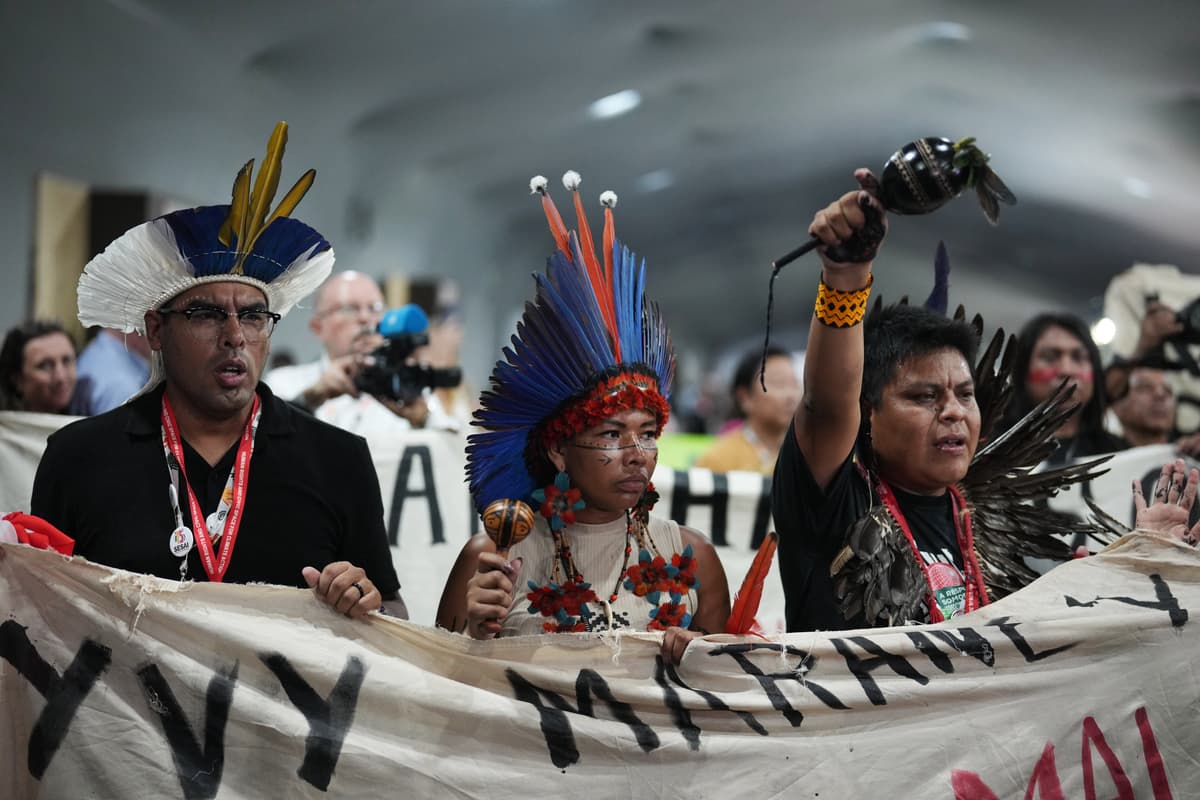
Indigenous activists protest at the COP30 climate summit at Belem, Brazil on November 21, 2025. Andre Penner/AP

Delegates to the world’s preeminent annual climate conference headed home late Saturday with bruised feelings and little to show for two weeks of acrimonious debate at Belem, Brazil.

To the bitter disappointment of dozens of developing countries, the COP30 conference ended with a final communique that made no mention of the leading cause of climate change, the burning of fossil fuels.

It was perhaps a fitting conclusion to a conference that featured angry protests by Brazil’s indigenous peoples and a fire on Thursday that forced thousands of delegates to evacuate the conference hall.

“The venue bursting into flames couldn’t be a more apt metaphor for COP30’s catastrophic failure to take concrete action to implement a funded and fair fossil fuel phaseout,” one delegate, Jean Su, told ABC News. Mr. Su is the energy justice director at the Center for Biological Diversity.

The final hours of debate Saturday became especially heated, according to participants, with one telling the BBC there was “a lot of fighting” in the room, which was closed to reporters.

One delegate, Juan Carlos Monterrey Gomez of Panama, had said earlier that the omission of any mention of fossil fuels threatened to reduce the gathering to “a clown show.”

More than 80 countries had sought to commit the participants to an action plan, or roadmap, with concrete benchmarks for transitioning the world away from energy produced from coal, oil and gas.

However stiff opposition from countries that rely on the production or use of those fuels kept any direct mention of the issue out of the final communique, which required unanimous agreement.

Among them were Saudi Arabia, Russia, India, and several oil-producing Middle East countries. America did not attend for the first time since the initial COP conference in 1995. COP stands for Conference of the Parties.

The fossil fuel omission marked a reversal from recent conferences, which first called for “phasing down unabated coal” and “phasing out inefficient fossil fuel subsidies” at COP26 in 2021. At COP28 in 2023, more than 200 countries signed onto a non-binding pledge to “transition away from fossil fuels in energy systems.”

The Belem conference also failed to reach agreement on another goal of climate advocates, a binding roadmap to slow the rate of deforestation in the world.

In his closing remarks to the conference, the COP30 president, CorrĂȘa do Lago of Brazil, promised to create his own non-binding roadmaps on fossil fuels and deforestation that could be followed by willing countries.

Delegates did point to a few achievements of the conference, including agreement on some practical steps to help vulnerable nations prepare for the impact of higher temperatures and rising seas.

The countries also agreed to convene an annual dialogue at which they will monitor progress toward meeting the 2015 Paris Agreement goal of holding the rise in global temperatures to 1.5 degrees Celsius.

A U.N. study says the world is now on a course that would produce 2.8 degrees of warming by 2100. 


The New York Sun

© 2025 The New York Sun Company, LLC. All rights reserved.

Use of this site constitutes acceptance of our Terms of Use and Privacy Policy. The material on this site is protected by copyright law and may not be reproduced, distributed, transmitted, cached or otherwise used.

The New York Sun

Sign in or  create a free account

or
By continuing you agree to our Privacy Policy and Terms of Use