

Investigators Seek To Determine Why Fuel Was Cut Off to the Engines of Air India Flight 171
The devastating crash last month of the Boeing 787 Dreamliner killed 260 people.
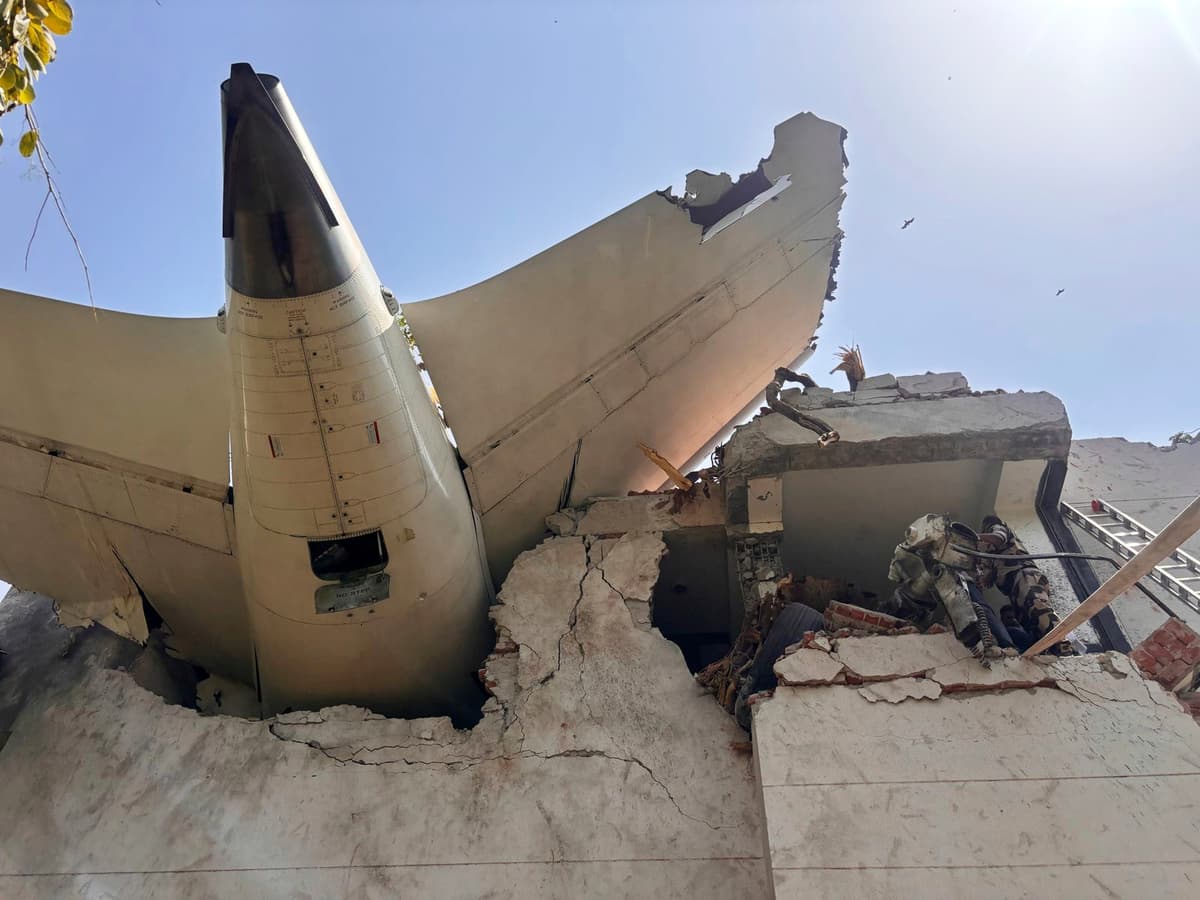
On June 12, 2025, Air India Flight 171 took off from Ahmedabad en route to London. Just 32 seconds later, both engines lost power. The aircraft plunged into a crowded neighborhood near the runway, killing 260 people — 241 passengers and crew, and 19 on the ground. Only one man survived: a 40-year-old passenger in seat 11A who escaped on foot
More than a month later, investigators, regulators, and grieving families are still searching for answers. The central question remains: why did the engines of a Boeing 787 Dreamliner — one of the safest jets in commercial aviation — suddenly go silent?
The focus has shifted to Captain Sumeet Sabharwal, who has more than 15,000 hours of flying time.
“The possible cause of this air accident is beginning to narrow very quickly. The fuel shut off on the aircraft does not easily activate unless the pilot moves the actual manual controls, either accidentally or on purpose,” aviation professor and attorney, Sal Lagonia, tells the New York Sun.
Preliminary findings from India’s Aircraft Accident Investigation Bureau indicate the twin General Electric GEnx engines failed when the fuel-control switches — located beneath the throttles — were moved from “RUN” to “CUTOFF” shortly after takeoff. The cockpit voice recorder captured the first officer exclaiming, “Why did you cut off the fuel?” to which the captain replied calmly, “I did not do so.”
“Moving both individual controls in error at nearly the same time is unlikely and a cause for suspicion,” Mr. Lagonia continued. “In addition, having the fuel selectors activated at the point in the takeoff sequence where it occurred furthers the suspicion, as the aircraft is at its most vulnerable point in the flight: low and slowing. At this point, it is likely not to recover.”
The Air Accidents Investigation Branch has not yet determined whether the switches were flipped intentionally or accidentally. The mere fact that both switches were flipped within one second of each other, however, without any corresponding emergency, has left aviation experts baffled. These switches are designed with physical guards to prevent accidental movement, requiring a deliberate lift-and-pull action.
CEO and Founder of Sagun Aviation Consulting, Captain Ross Sagun, tells the Sun that while “an intentional movement of the switches” is the most likely scenario, it is also possible that there was a “failure of the switch locking mechanisms which resulted in the switches ‘migrating’ to the cutoff position due to vibration, turbulence, or other external factor.”
Mr. Lagonia explained that the one piece of evidence he was looking to find was “whether the crew indicated an engine failure.”
“If one engine failed, or had a fire warning, it is possible that they would have switched off the fuel flow on that engine and perhaps could have mistaken the good engine for the bad,” he continued.
“However, nothing in the Cockpit Voice Recorder (black box) suggests that this was the case. I would like to see the entire transcript, without interruption, released to verify its accuracy. The recorder would have indicated the alarm if there was one.”
The act of accidentally cutting off the fuel supply is not unprecedented. A 1986 Flight Safety Foundation report shows that a United pilot mistakenly switched off the fuel supply to the engines of a Boeing 767-222 passenger jet shortly after takeoff from San Francisco to Denver. The crew successfully restarted both engines and returned to San Francisco without incident. The same occurrence happened three years earlier.
However, CEO at Safety Operating Systems, John Cox, also tells the Sun that he does “not think it is likely that a switch malfunction occurred.”
“It is highly unlikely that both switches moved within one second,” he surmised. “(But) regulators must determine whether a safety-of-flight condition exists or if this is a product improvement. That is the critical process.”
Human Error or Mechanical Fault?
While investigators have not ruled out pilot error, they have also not ruled out the possibility of a mechanical or design flaw.
A 2018 FAA service bulletin — non-mandatory and often disregarded — warned that the fuel switch stop-locks on some Boeing 737 and 787 aircraft may have been improperly installed during assembly. The Air India jet involved in the crash, registered as VT-ANB, had never been inspected for this issue.
Indian regulators are now mandating inspections across domestic airlines to ensure fuel switches are adequately secured. Boeing and the United States Federal Aviation Administration maintain the switches are safe if installed and operated correctly. No global airworthiness directive has been issued.
The Virginia-based company is still emerging from reputational damage caused by previous tragedies involving its 737 MAX jets.
Former airline pilot and Associate Professor at the University of Las Vegas, Daniel Bubb, however, stressed that the only times the fuel switches are moved to “CUTOFF” is when “the pilots are taxiing to the gate on one engine to save fuel, and at the gate when pilots are shutting down the engines.”
“If they were improperly installed, then I would think that the FAA would ground all 787s until the flaw was fixed, given the serious nature of this issue,” he tells the Sun. “The 787 is so popular and commonly used for international flights that I can’t help but wonder if more of these similar events would have already happened, and the airlines would have had them fixed.”
Mr. Lagonia also pointed out that the other major aircraft manufacturer, France-based Airbus, uses a similar system of fuel shutoff.
“It is also important to note that the fuel shutoff needs to be readily accessible in the event of an emergency. Thus, its design and location are important. Here, the design is in place to avoid accidental fuel shut off while being readily accessible,” he said. “As we learn more, the findings will lead us to improve air safety once again.”
Air India Under Pressure
Air India, which was re-nationalized under the Tata Group in 2022 and has since launched a sweeping modernization campaign, is now at the center of a firestorm. In a public statement, Air India CEO Campbell Wilson called the preliminary findings “deeply troubling” and said they “raise more questions than they answer.”
The airline grounded portions of its Dreamliner fleet following the crash. It has only recently announced a phased resumption of international services, starting August 1, with a full return to pre-COVID-19 operations planned by October.
While operations are slowly recovering, confidence in the brand — and its training protocols — is under renewed scrutiny. The pilots of Flight 171 had passed all standard checks, including sobriety and medical fitness, according to internal reports.
Mr. Bubb also emphasized the need to examine the mental health of commercial pilots. “Flying passengers safely is already stressful,” he said. “Pilots also face personal pressures — marital issues, financial distress, ‘empty nest’ syndrome — and many are reluctant to report mental health concerns for fear of losing their licenses.”
He added, “This is not to suggest the Air India crash was a suicide, but the pilots’ psychological state should be part of the investigation.”
As investigators probe the cockpit, the control systems, and the human element, one unsettling truth remains: even in the age of ultra-modern jets, a small switch — flipped in a single second — can still decide the fate of hundreds.