How a Broken Asylum Vetting System Let a Killer Slip Through — and What To Do Next
The multi-layered and rigorous system developed since 2001 was not designed for today’s record volume of applicants.
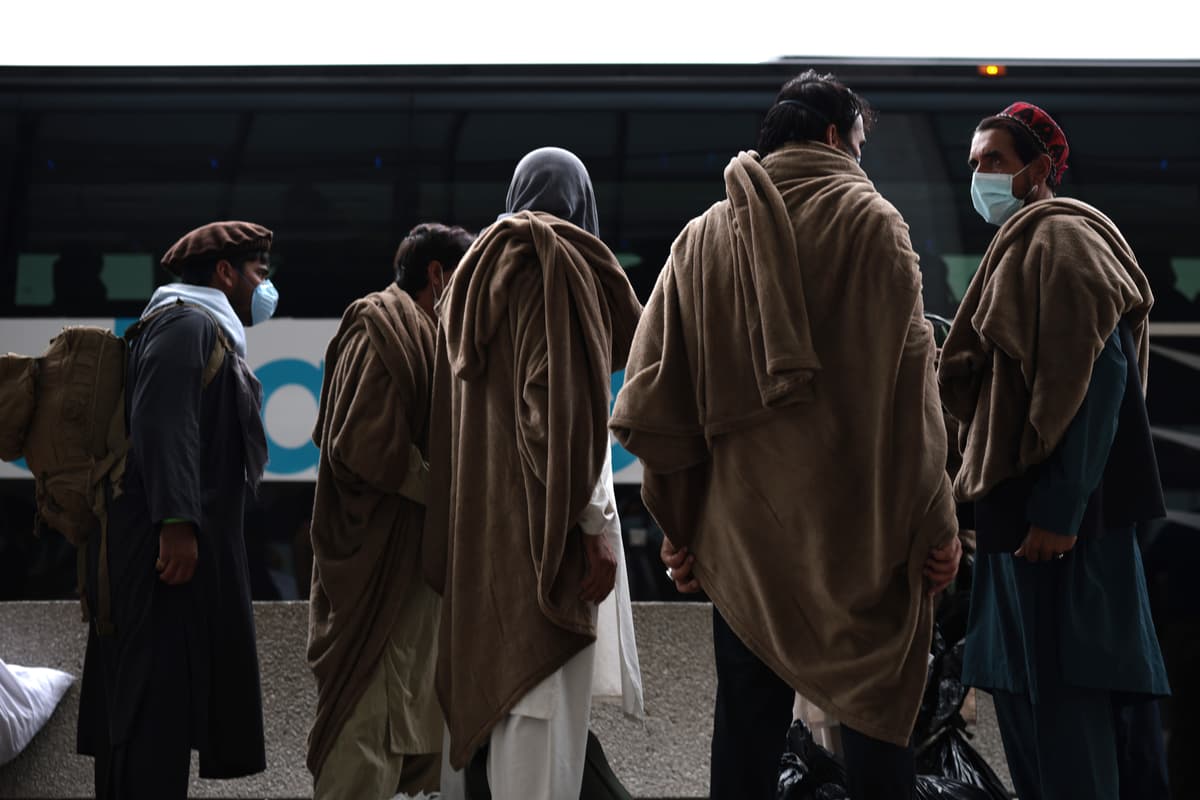

When an Afghan asylum seeker allegedly opened fire on D.C. National Guard members just blocks from the White House late last month, the political shock was immediate. Federal officials said the suspect, Rahmanullah Lakanwal, had passed routine background checks under the Biden administration before entering the United States and was ultimately granted asylum by the Trump team in April.
The incident raised a familiar question within the homeland security bureaucracy: whether America’s vetting system can reliably identify risks in an era of fragmented records, strained manpower, and surging arrivals.
A System Designed for Another Era
The United States asylum and refugee-screening process has long been described by officials as multi-layered and rigorous. The Department of Homeland Security, the State Department, and intelligence agencies all run checks against watchlists, biometric databases, and law-enforcement files.
A 2018 review outlined how security checks can take months or, in some cases, years, as applications move through “several layers of background and security checks involving multiple federal agencies.”
These steps were expanded after September 11, 2001, and again during the Syrian refugee crisis. In many cases, officials conduct repeated security checks through intelligence and law-enforcement systems, relying on biometric data, interviews, and document reviews, which can significantly extend the timeline.
The system, however, was not designed to accommodate today’s record volume. The asylum backlog now exceeds 2 million open cases, a figure migration analysts say strains officers’ ability to conduct repeat checks and deep background reviews. One assessment described the backlog as “the highest in U.S. history,” with long waits creating inconsistent follow-up screenings as applicants move, change phone numbers, or cycle through court dates.
Information gaps remain especially severe for applicants from conflict zones where civil registries have collapsed. For refugees from war zones like Afghanistan, complete documentation is often impossible, leaving United States screeners to rely heavily on interviews and limited biometric data rather than verifiable civil records.
A System Struggling With Records, Enforcement, and Data
Authorities say the D.C. Guard shooting suspect, an Afghan national who entered the United States through humanitarian channels, had passed routine checks upon arrival. His name did not appear on any federal watchlist, and he cleared the standard screening process for recent Afghan evacuees.
Yet, the deputy executive director of the Federation for American Immigration Reform, Matt O’Brien, tells The New York Sun that “the vast majority of countries from which migrants to the United States hail do not have reliable, effective record-keeping systems and/or they refuse to share information with the United States.”
“Without access to accurate information about foreign nationals, U.S. immigration authorities cannot conduct meaningful vetting,” said Mr. O’Brien, a former immigration judge. “Obviously, an increasing backlog coupled with a static number of immigration officers will increase workload and slow overall vetting efforts.”
Mr. O’Brien underscores that the primary concern should remain national security, contending that there is “no reason the U.S. needs to be on any specific timeline” and that one way to reduce the backlog is “to place a moratorium on the adjudication of refugee and asylum claims.”
In other words, he contends that the government should not feel pressured to process asylum or refugee applications by a designated time, and that the United States should temporarily halt — or freeze — the processing and approval of refugee and asylum applications altogether until all existing applications are cleared.
The larger challenge, however, is that officers often work with fragments. Intelligence gaps in Afghanistan mean that, in many cases, investigators are starting from scratch with very little to go on, particularly for young applicants traveling without passports or verifiable records.
“The biggest gaps are in biometric and biographic data from failed states like Afghanistan, Syria, Somalia, Venezuela, where civil registries have been destroyed, governments collapsed, or regimes refuse to cooperate,” the managing director of Nestpoint Associates, John Thomas, tells the Sun. “We’re often vetting ghosts with no reliable way to confirm criminal or terror histories.”
Mr. Thomas says the historic surge in global displacement has pushed the vetting system beyond its limits.
“Officers are drowning in volume, courts are years behind, and recurrent vetting gets deprioritized,” he continued. In his view, recent policies turned “a security process into a conveyor belt where threats can sit in limbo for years while new hits keep coming in.”
The problem is not limited to Afghans. There are numerous documented cases in which refugees from Somalia, Haiti, or parts of the Middle East arrived without birth certificates or police files, leaving adjudicators to rely on interviews and whatever fragments foreign partners can share.
Mr. O’Brien asserts the problem is systemic.
“With the exception of the developed countries of Europe, Asia and the Anglosphere, most nations in the world lack verifiable records of any kind. And many countries are unwilling to share even the poor records that they do have,” he said.
In Defense of Immigration
Proponents of America’s legal immigration programs stress that they have long played a central role in America’s global commitments — both to allies and to fundamental human-rights principles. For civilians fleeing war, collapsed states, or targeted persecution, asylum and refugee programs are among the few viable escape routes.
In addition, the offering of protection strengthens alliances, supports partners who have risked their lives alongside American forces, and reinforces America’s reputation as a nation that upholds humanitarian norms.
Advocates also note that, despite political claims linking immigration to rising crime, decades of research point in the opposite direction. A recent nationwide analysis found that immigrants were 44 percent less likely than U.S.-born Americans to be victims of violent crime between 2017 and 2023 — a trend that suggests lower crime rates within immigrant communities.
Long-term data show similar patterns. A 2025 study concluded that immigrants across racial and ethnic groups had significantly lower incarceration rates by age 33 than native-born individuals. Broader research from the American Immigration Council found that both legal and undocumented immigrants are incarcerated at lower rates and are underrepresented among perpetrators of serious criminal offenses compared with American-born residents.
Still, November’s tragic shooting illuminated gaps that many say require urgent fixing.
Applicants themselves often describe confusion. Several Syrian refugees tell the Sun that they underwent multiple rounds of questioning by different agencies and struggled to understand the timeline or requirements.
They said they were required to give a “yes” or “no” response to such questions as “Are you a member or representative of a terrorist organization?” and “Do you seek to engage in terrorist activities while in the United States or have you ever engaged in terrorist activities?”
The now-permanent residents also emphasized that, while the process felt intrusive at times, they were unsure which agency made the final decision and how long the next step would take.
“We weren’t sure who to talk to, and what really to do when we got here,” said one household member, who requested his name not be used.
High Stakes and Slow Modernization
The technology behind the system is equally strained. According to the Center for Victims of Torture, officers have long warned that legacy systems cannot easily integrate new biometric data or foreign intelligence feeds, slowing security checks at precisely the moment they need to accelerate.
Mr. Thomas asserted that major fixes are still possible.
“Institute mandatory biometric re-checks every 12 to 18 months, combine all intel databases into one giant database, and apply aggressive social-media screening,” he suggests, adding that the administration should “double down” on audits of individuals from high-risk countries, accelerate removals, and “put security as a top concern once again.”
Meanwhile, shifting political directives — such as a new requirement to screen for “anti-American views” — have left many officers unsure where those standards begin or end.
The Trump administration’s recent announcement that it would retroactively vet certain refugees already in the United States has further blurred the picture for resettlement agencies struggling to reconstruct incomplete files from the outset.
Pressure After the D.C. Guard Shooting
While the investigation into the D.C. National Guard attack is incomplete, the shooting has sharpened calls for a system capable of keeping pace with today’s geopolitical volatility.
A Department of Homeland Security spokesman tells the Sun that “the Trump Administration is making every effort to ensure individuals becoming citizens are the best of the best.”
“Citizenship is a privilege, not a right. We will take no chances when the future of our nation is at stake,” the spokesperson continued in an email. “The Trump Administration is reviewing all immigration benefits granted by the Biden Administration to aliens from Countries of Concern.”
For many experts, however, the core problem remains unchanged: The system is only as reliable as the information it can collect, with little attention paid to activities once the immigrant settles on American shores.
“The only way to strengthen the current vetting system would be to ban applicants from countries whose nationals are impossible to vet; and to insist that any countries who wish their citizens to enter the U.S. share all relevant security information with DHS and the Department of State,” Mr. O’Brien said.