How Has the Federal Reserve Worked Out?
‘What we need to do is examine the entire Federal Reserve institution and whether they have been successful,’ says Secretary Bessent.


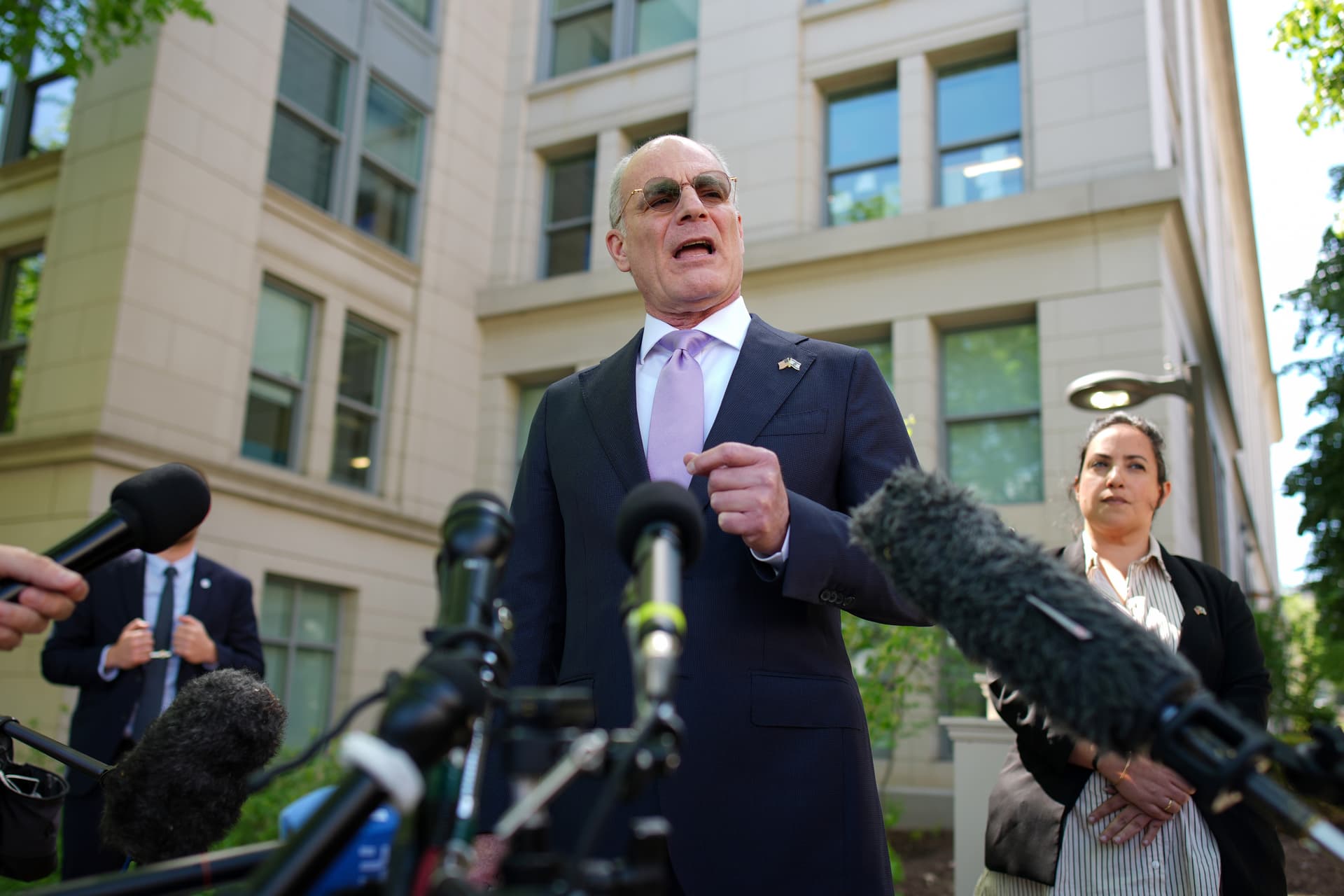
Feature Secretary Bessent’s remarks today on CNBC about the Federal Reserve. He is calling for a broader look at our central bank and its operations. “What we need to do is examine the entire Federal Reserve institution and whether they have been successful.” We couldn’t agree more. For nearly a generation, we have been issuing editorials on this head, including several calling for a formal commission to assess the performance of the Fed in its first century.
We don’t see this as part of any campaign against the Fed chairman, Jerome Powell. It is a task that transcends the question of the individual performance of Mr. Powell, the criticism of whom strikes us as unwarranted. The task does include the collapse in the value of the greenback, the value of which is now lurking at near record lows of less than a 3,396th of an ounce of gold. On the Fed’s watch, the dollar has shed more than 98 percent of its value.
So who is accountable for the collapse in the value of America’s dollar in the age of the Fed? On the day Mr. Powell became chairman, the dollar was valued at a 1,331st of an ounce of gold. Since then, the dollar has lost nearly 60 percent of its value. Maintaining stable prices is part of the Fed’s mandate. There aren’t many, if any, prices more important than that of gold. So who, or what institution, is responsible?
A number of sages would fault, say, FDR, who in 1933 devalued the dollar to a 35th of a gold ounce. Others would fault LBJ, who signed the 1965 Coinage Act, removing silver from the dollar. Then again, too, others would fault President Nixon, who closed the gold window that, under Bretton Woods, had allowed foreign governments to redeem dollars they presented to the U.S. Treasury at the rate of a 35th of an ounce of gold.
The current collapse of the dollar really began early this century, which opened with the dollar at a 261st of an ounce of gold. We began this editorial series in 2005, when the greenback fell below a 500th of an ounce. Since then we have issued 200 or 300 editorials, pausing now and again to call for an assessment of the Fed’s performance in the years since, in 1913, it was enacted — only after the legislation was amended to require gold convertibility.
Yet the debased dollar isn’t the only reason for concern over the Fed. What of the Fed’s $234 billion in operating losses, of which our Alex Pollock writes, or of its real capital standing at negative $188 billion? Mr. Pollock and others note, too, that the Fed is technically insolvent. This, in the private sector, would spell a change in management. Yet accountability has proven elusive. Mr. Bessent says: “All these Ph.D.s over there, I don’t know what they do.”
More broadly, Mr. Bessent’s remarks on CNBC sound a level-headed note amid the criticism of the Fed and of the central bank’s headquarters renovation project, which is a minor matter beside the Fed’s failures to protect the dollar. Mr. Bessent adds that if, say, the Federal Aviation Administration had erred to the same extent, “we would go back and look at why this has happened.” It’s hard to argue with that logic.
Mr. Bessent’s comments suggest, too, that the vehicle by which to evaluate the Fed’s performance would be the kind of monetary commission that preceded the creation of the central bank itself. Such a panel could investigate, among other questions, how well America’s embrace of fiat money has turned out. The answers to those questions, implicating the Fed and the Congress that created it, would go a way toward much-needed accountability.