In Asia, Africa, and the Americas, Russia Retreats
With a bipolar world emerging between America and Communist China, Russia could be marginalized.
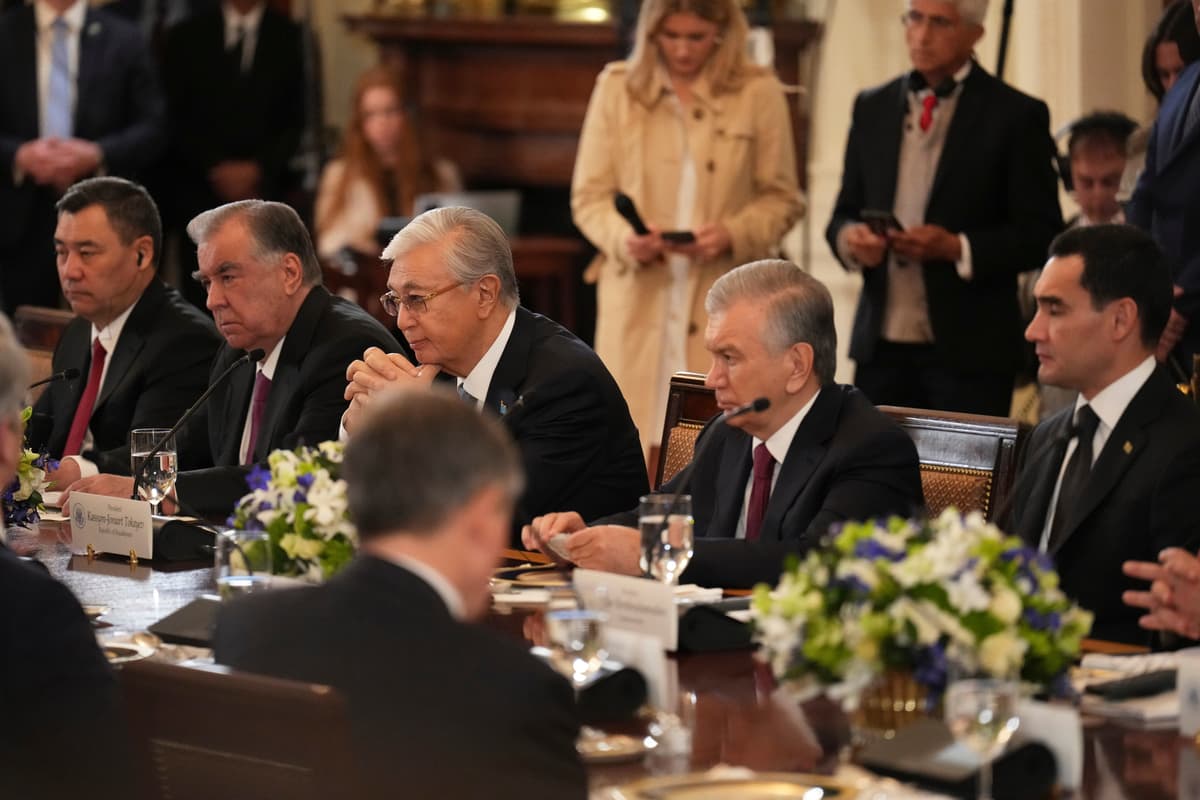
President Trump dined last night at the White House with the presidents of the five Central Asian republics, all former Russian colonies. Kazakhstan’s president, Kassym-Jomart Tokaye, said he would sign the Abraham Accords, the Israel-Arab peace initiative that was a hallmark of Mr. Trump’s first administration. Uzbek’s president, Shavkat Mirziyoyev, praised Mr. Trump as “president of the world.”
These are two signs that Russian influence is waning around the world. As setbacks come fast and furious, Kremlinologists speculated yesterday that Russia’s foreign minister of 21 years, Sergei Lavrov, is on the way out. With Russia stalled in Ukraine for almost four years, Moscow is losing its ability to project power.
Yesterday, Azerbaijan’s leader, Ilham Aliyev, welcomed to Baku representatives from 15 countries of the North Atlantic Treaty. A fluent Russian speaker and a graduate of a top Moscow university, Mr. Aliyev assured his guests that his armed forces “are undergoing a broad modernization and transitioning to [NATO] standards.”
On Monday, it is the turn of Syria’s new president, Ahmed al-Sharaa, to meet Mr. Trump at the White House. In a quid pro quo for Washington dropping sanctions against Syria, America is to win use of an air base at Damascus, Reuters reported yesterday. In December, Mr. al-Sharaa took over Syria, forcing Russia to give up an air base and a navy base, Moscow’s only navy base on the Mediterranean. Syria’s longtime leader, Bashar al-Assad, now lives in exile at Moscow.
In the Americas, the world’s largest warship, the USS Gerald Ford, is steaming across the Atlantic to rendezvous with a United States Navy strike group in the Caribbean. As Washington gathers the largest military force in the Caribbean since the Cuban missile crisis of 1962, the Venezuelan dictator, Nicolás Maduro, has sent a letter to President Vladimir Putin, appealing for military aid. Since then, members of the Russian Duma have said that the government should send nuclear-capable Oreshnik missiles to Caracas and Havana. Despite a close alliance of 25 years with Venezuela, Moscow is not expected to go further than angry speeches at the United Nations.
“When Maduro traveled to Moscow in August to mark 80 years of the bilateral relationship, he came home without any new loans or funding,” Imran Bayoumi and Shelby Magid wrote Tuesday in an Atlantic Council essay. “Significant Russian military support is unlikely to be forthcoming, even if the United States launches some sort of targeted strike within Venezuela.” The essay was headlined: “Facing the threat of US strikes, Maduro has requested Russia’s help. He shouldn’t expect much.”
In West Africa, the mood in Mali, another Russian client state, is reminiscent of the last days in Saigon. Last week, the American embassy urged all Americans to get out immediately — by airplane.
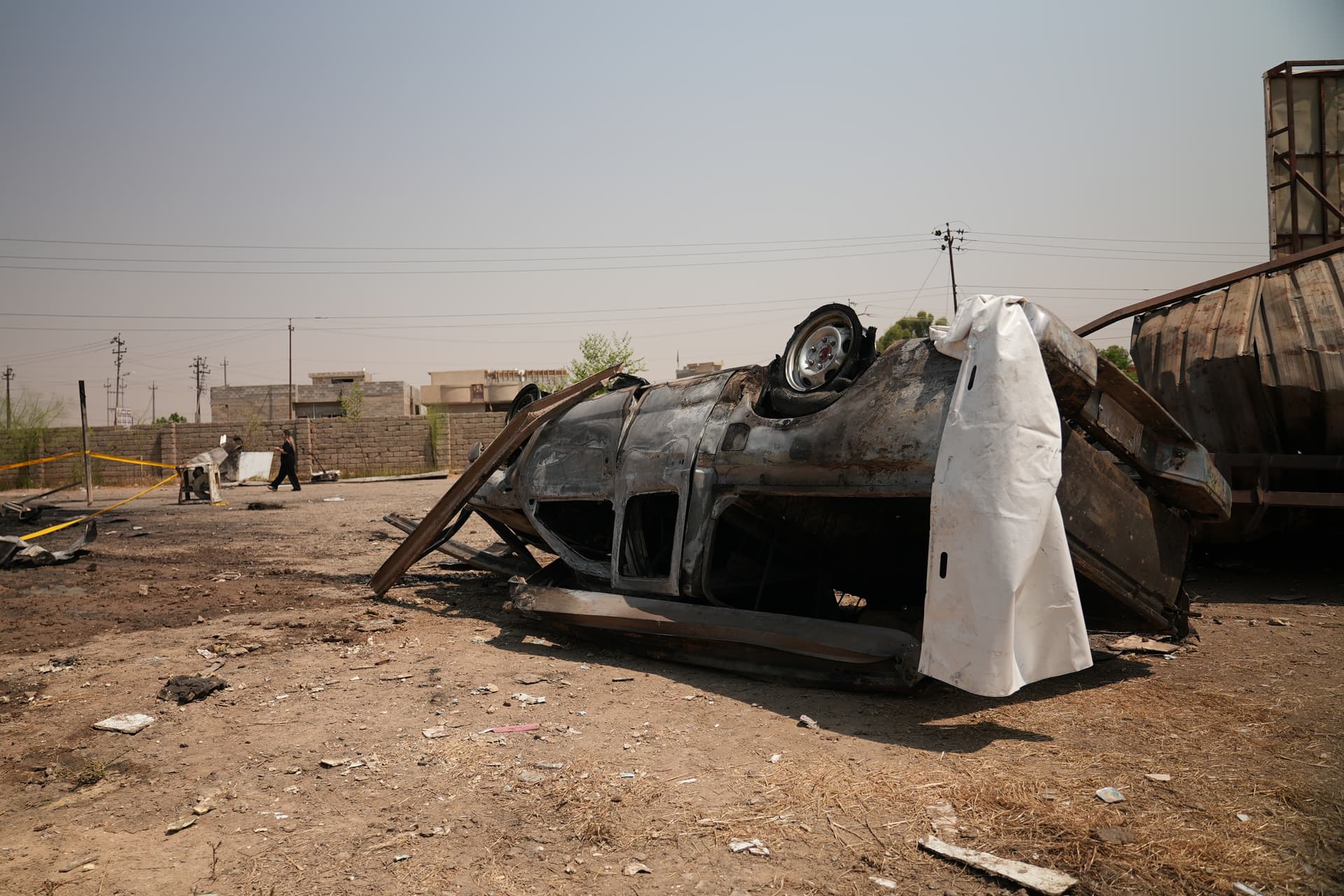
After a decade of fighting, rebels belonging to an Al Qaeda affiliate spread south from the Sahara to control most of a country larger than Texas and California combined. Now surrounding Bamako, capital of the land-locked country, the rebels have attacked tanker convoys, burning fuel trucks and kidnapping foreign drivers. Last month, two drivers from the United Arab Emirates were freed after a $50 million ransom was paid.
Inside Bamako, lines of cars and motorcycles stretch for miles as drivers wait to buy gasoline at $13 a gallon. The security situation deteriorated after Mali army officers took power in a coup in 2020. They kicked out French soldiers who had been fighting against a jihad insurgent group, Jama’at Nusrat al-Islam al-Muslimin, or Support Group for Islam and Muslims. To replace the French, Mali’s coup leaders brought in Russian mercenaries.
The “presence of Russia, or forces associated with it, in Mali, does not in any way ensure the security of Malian women and men,” the French foreign ministry spokesman, Pascal Confavreux, told reporters yesterday at Paris. Referring to the 4,000 French citizens in Mali, he said: “Their fate and safety is obviously one of our priorities.”
About 1,500 soldiers of Russia’s new Africa Corps provide security to Mali’s leaders. A similar pattern was followed in neighboring Niger and Burkina Faso. Soldiers from France, the old colonial power, were replaced by soldiers from Russia. Russia’s Africa Corps “has served as little more than a praetorian guard for autocrats seeking regime survival and deeper relations with Russia,” a U.S. Naval War College professor, Christopher Faulkner, wrote in a recent Foreign Policy essay. “The Kremlin, meanwhile, is now far more exposed.”
Now, analysts fear that African dominos could start falling. If Mali, home to 25 million people, becomes the world’s first Al Qaeda-controlled country, Niger and Burkina Faso could follow.
Last week, for the first time, the Jama’at group carried out an attack in Nigeria. In Western Nigeria, a rebel unit killed a soldier and stole ammunition. Until now, the Islamist attacks on Christians that have drawn the ire of President Trump have largely been carried out in Eastern Nigeria.
These setbacks — in Africa, Central Asia, and South America — contribute to a sense that Russia’s failing war in Ukraine is forcing Moscow to curb its ability to walk the stage as a world power. In foreign policy, Moscow’s botched relationship with the Trump administration may cost Foreign Minister Lavrov his job.
At Wednesday’s meeting of Russia’s Security Council the only missing permanent member was the 76-year-old minister. Kommersant news site described the absence as “coordinated.” Mr. Lavrov also has been stripped of his post as head of Russia’s delegation to the Group of 20 meeting in South Africa later this month.
“Putin sent Lavrov into disgrace after the collapse of the summit with Trump,” the Moscow Times said in a headline yesterday. In a fatal misstep, the foreign minister ranted about the “Nazi regime” in Ukraine in an October 21 in a call to his American counterpart, Secretary Marco Rubio. In response, Mr. Trump canceled a planned summit at Budapest with Mr. Putin and hit Russia’s two largest oil exporting companies with sanctions.
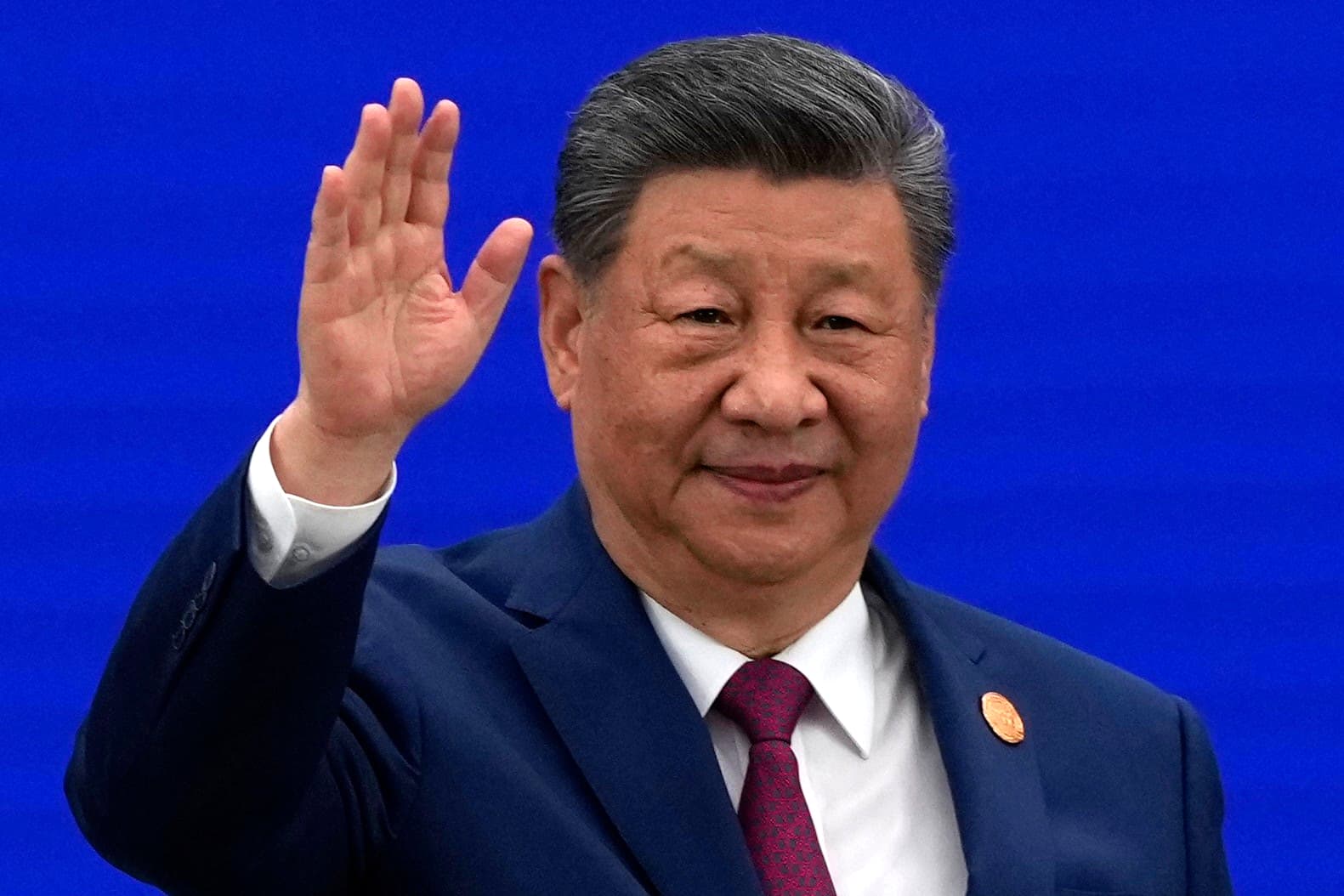
Yesterday, Mr. Trump told reporters: “India stopped buying Russian oil.” For decades, India has been a major ally of Russia, largely to block China. In a sign of Russia’s growing isolation, Mr. Trump negotiated last week a partial trade truce with China during a meeting in South Korea with Premier Xi.
“China and the US reached a truce in their tariff and trade dispute, while Russia’s Vladimir Putin threatened Armageddon,” Canadian-American journalist Diane Francis wrote yesterday, referring to Mr. Putin’s recent unveiling of new nuclear-powered missiles. “The China-US geopolitical pivot is good news because its leaders pursue prosperity, job creation, and profits, not carnage and conquest. Their deal is Putin’s worst nightmare.”
China’s leadership comprises “technocrats and businessmen. It is not, like Russia, a one-man dictatorship led by a revanchist fanatic with Imperial delusions,” continued Ms. Francis, a lifelong Russia watcher. “Likewise, the ‘business of America is business,’ and the country is run by politicians with business backgrounds who are tied, financially and culturally and electorally, to the business interests and the economic welfare of workers.”
In this light, Communist China and America, the world’s two largest economies, may form a bipolar world 2.0. In such a world order, Russia would be marginalized.