Inflation Is No Hoax

The roots of the affordability crisis lie in the debasement of the dollar in terms of gold.

AP/Matt Rourke
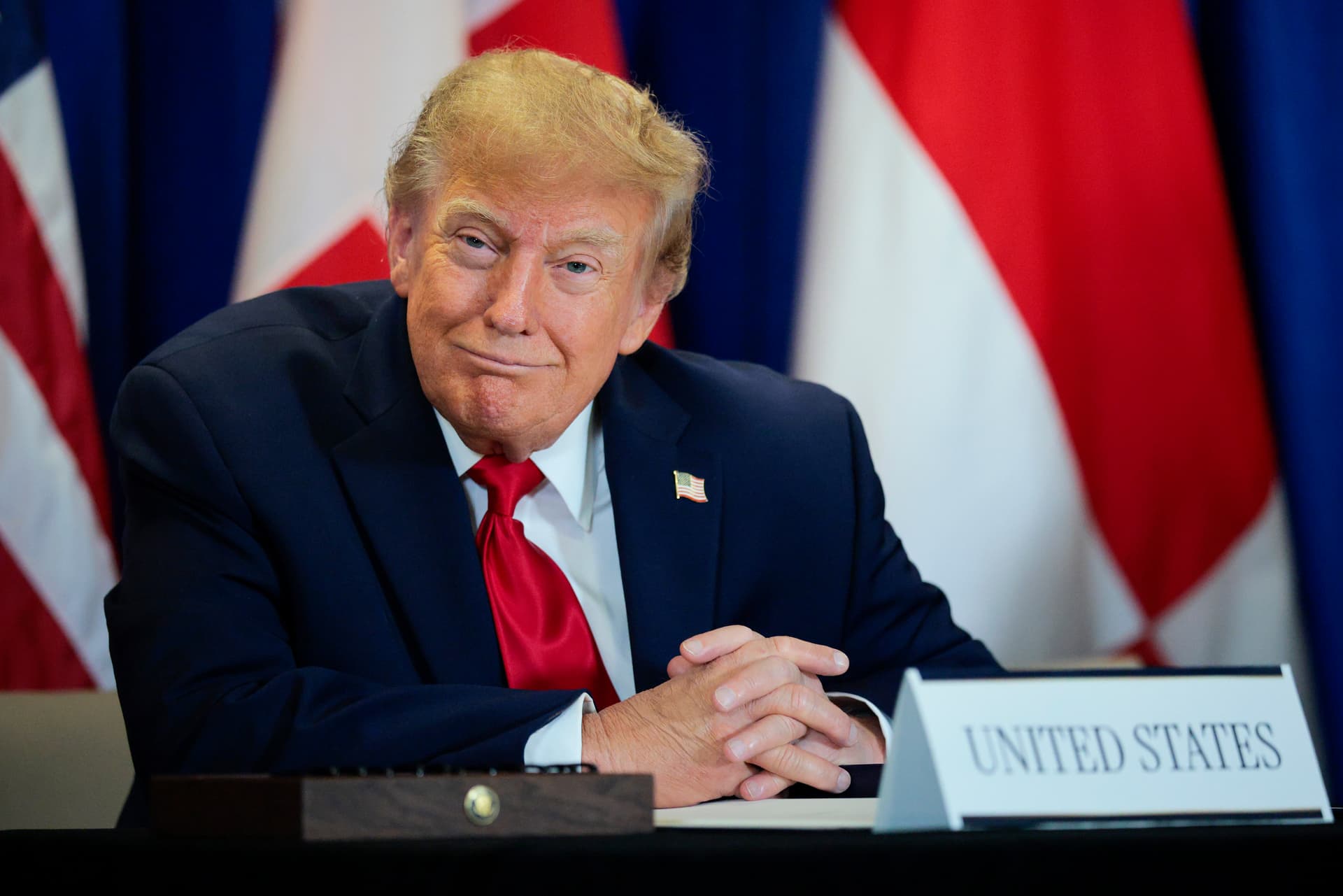
President Trump speaks at the Mount Airy Casino Resort, Mount Pocono, Pennsylvania, December 9, 2025. AP/Matt Rourke

President Trump has an enviable record when it comes to his handling of the economy — whether in terms of tax cuts, deregulation, or fostering growth. Yet the president does himself no favors when, as he did at his rally in Pennsylvania, he denies the consequences of inflation, and the frustration provoked by higher prices. “They have a new word, you know they always have a hoax, the new word is affordability,” Mr. Trump contends. 

Mr. Trump is right to point out that the bulk of the recent inflation — an increase of some 20 percent — took place on President Biden’s watch. Inflation’s pace has slowed since then. The problem is, prices aren’t going down, as American consumers would prefer. For that state of affairs, much of the blame can be laid at the feet of our system of fiat money, under which prices consistently ratchet higher — in contrast with a gold standard that holds prices steady over the long run.

This gives an opening to Mr. Trump’s opponents. No wonder Democrats were quick to criticize Mr. Trump’s attempt to gloss over the higher prices Americans are paying. “Everywhere they look prices are going up and up and up,” says Senator Chuck Schumer, Never mind the failure of his “anti-inflation” act. The fact is that the Democrats’ Biden-era policies of overspending and overregulating helped spark the inflation spiral.

The roots of today’s inflation can be traced to America’s abandonment of honest money. That was the system envisioned by the Framers. Paper money was convertible into specie like gold or silver at a fixed rate set by law. In the nation’s first 150 years, honest money propelled its economy to global predominance. Under a gold standard, between the years 1790 to 1913, annual price inflation averaged but 0.2 percent.

That system, though, was jettisoned by President Nixon in 1971 when he abrogated America’s pledge under Bretton Woods to redeem dollars presented by foreign governments at the rate of a 35th of an ounce of gold. That set in train the stagflation of the late 1970s. It also ushered in America’s fiat money era, in which prices creep steadily higher without, as they used to under the gold standard, ever reversing course and going back down. 

This change is a function of eliminating the legal definition of the dollar in terms of gold or silver. When the government was required to maintain the gold value of the dollar, the logic of convertibility imposed a discipline on Uncle Sam in terms of spending and borrowing. If prices ever went up, as they did, say, in times of war, the requirement of convertibility meant that prices would soon fall back down to their level.

The inverse of the price surge since 1971 is the plunge of the dollar’s value in respect of gold. From a 35th of a gold ounce under Bretton Woods, the dollar has collapsed to less than a 4,200th of an ounce in today’s trading. Hence what we’ve called the “gloom of inflation,” with Americans relying on debased dollars to buy ever-more costly goods and services. Mr. Trump’s challenge, and opportunity, is to reverse that trend by restoring a system of honest money.


The New York Sun

© 2025 The New York Sun Company, LLC. All rights reserved.

Use of this site constitutes acceptance of our Terms of Use and Privacy Policy. The material on this site is protected by copyright law and may not be reproduced, distributed, transmitted, cached or otherwise used.

The New York Sun

Sign in or  create a free account

or
By continuing you agree to our Privacy Policy and Terms of Use