
IOC Nears Decision To Completely Bar Trans-Identifying Men From Female Olympic Events

The new policy will also likely address athletes who were raised as girls from birth but possess male chromosomes and male levels of testosterone.

Richard Pelham/Getty Images
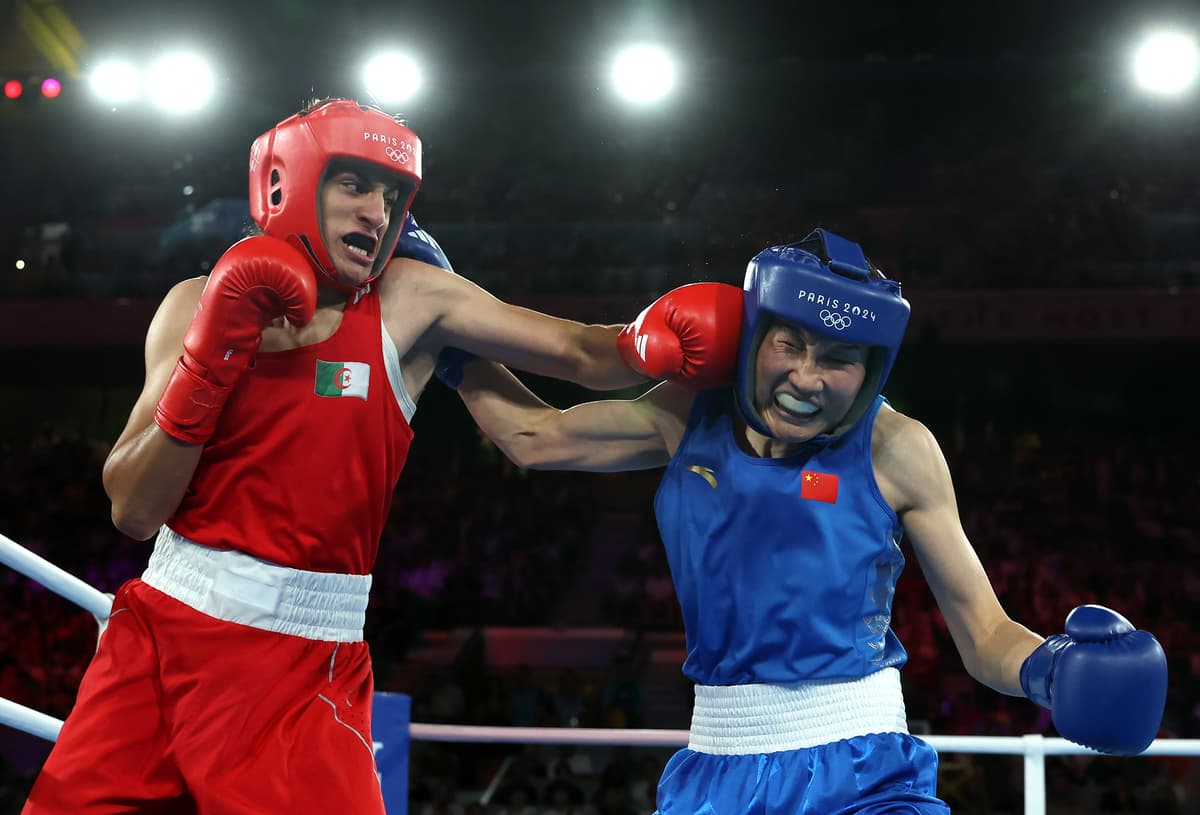
Imane Khelif of Algeria punches Liu Yang of China during the women's 66 kg boxing final at the Paris Olympics on August 9, 2024. Richard Pelham/Getty Images

The International Olympic Committee is inching toward a widespread ban on allowing trans-identifying men to compete against women in all female sporting events.

A final announcement is expected early next year, according to a report from the Times of London. News of the impending proclamation from the governing body of the Olympic Games follows the presentation of new findings from the committee’s medical and scientific director, Dr. Jane Thornton, during a meeting last week at Lausanne, Switzerland. 

The science-based review covered issues pertaining to transgender athletes and athletes with differences in sexual development who compete in female sports. It showed that athletes who transitioned to female continued to enjoy significant physical advantages, even after taking treatment to reduce their levels of testosterone.

“It was a very scientific, factual and unemotional presentation which quite clearly laid out the evidence,” one source who attended the meeting said to the British newspaper.

The IOC previously advised committees governing the individual Olympic sports that transgender women could compete if they lowered their testosterone levels, allowing the committees to make the final decision.

The anticipated change follows the election in March of the IOC’s first female president, Kirsty Coventry, who has vowed to protect the female category.

The new policy will also likely address so-called DSD athletes, who were raised as girls from birth but naturally possess an abnormal mix of male and female chromosomes, potentially providing higher levels of testosterone. DSD stands for “differences of sexual development.”

The issue of DSD athletes came to the fore with the boxing events at the 2024 Paris Olympics, where Lin Yu-Ting of Taiwan and Imane Khelif of Algeria won gold medals despite having been disqualified from the prior year’s World Championships over alleged failures to meet gender eligibility criteria.

The World Boxing Federation, which was recognized as a governing body for the sport by the IOC after the Paris Games, recently introduced mandatory sex testing for competitors and said that Ms. Khelif will not be able to compete until she undergoes testing.

Ms. Khelif battered her female opponents at the Paris Games, prompting suspicions that she had transitioned to female from male, though no evidence of that has been presented. One of the matches ended after 46 seconds, with the athlete’s opponent quitting in tears.

“This policy is designed to deliver a level playing field for men and women which ensures the safety of all participants, based on their sex as a key determinant in delivering competitive fairness and protecting the health and welfare of boxers,” says a summary of the new WBF policy.

Ms. Khelif has refused to participate in testing and recently filed a legal appeal with the Court of Arbitration for Sport in Switzerland. She is seeking to overturn a recent decision by World Boxing that prevented her from participating in the Eindhoven Box Cup in the Netherlands earlier this summer, as well as the World Boxing Championships at Liverpool, England.


The New York Sun

© 2025 The New York Sun Company, LLC. All rights reserved.

Use of this site constitutes acceptance of our Terms of Use and Privacy Policy. The material on this site is protected by copyright law and may not be reproduced, distributed, transmitted, cached or otherwise used.

The New York Sun

Sign in or  create a free account

or
By continuing you agree to our Privacy Policy and Terms of Use