
Iran Top Adviser Says No Cease-Fire With Israel, Warns War Could Erupt ‘at Any Moment’
As Iran suffers from water and electricity shortages, a major general close to Ayatollah Khamenei diverts attention toward the possibility of restarting a war with Israel.

As Iran suffers from water and electricity shortages that threaten the stability of the Islamic regime, a top-level adviser to Iran’s supreme leader, Ayatollah Ali Khamenei, is diverting attention toward Israel, claiming that a cease-fire does not exist and that a war between the two nations could be reignited.
“We are not in a cease-fire. We are in a stage of war. At any moment the situation may collapse, as there is no protocol, agreement, or treaty between us and the U.S. and Israel,” Major General Seyed Yahya Rahim Safavi said in a video statement that was first reported by state-controlled Iran Front Page News.
“A new war between Iran and Israel may occur at any time. We must adopt an offensive strategy; the best defense is an attack.”
His statements echo comments made earlier this month by Iran’s foreign minister, Abbas Araghchi, and the commander-in-chief of Iran’s military, Amir Hatami.
“A 1 percent threat must be perceived as a 100 percent threat. We should not underestimate the enemy and consider its threats as over,” Mr. Hatami said, according to the state-run IRNA news agency.
In a separate interview with the Iranian Student News Agency, Mr. Araghchi stated, “Everything can resume. They can resume; we can resume. There is no official cease-fire, and everything is possible, and it is not just Iran that should be worried and concerned.”
The defiant statements come amid a water crisis plaguing Iran that is compounded by extreme heat and electrical brownouts. As Iran’s hydroelectricity plants are currently unable to meet daily demand, the government has ordered two-hour power cuts in big cities twice a day. Iran blamed crypto-mining operations for excessive energy use; however, multiple sources report Iran’s uranium enrichment facilities diverted vast amounts of water from its rivers while mismanagement, corruption, underinvestment, and sanctions have long contributed to Iran’s collapsing infrastructure.
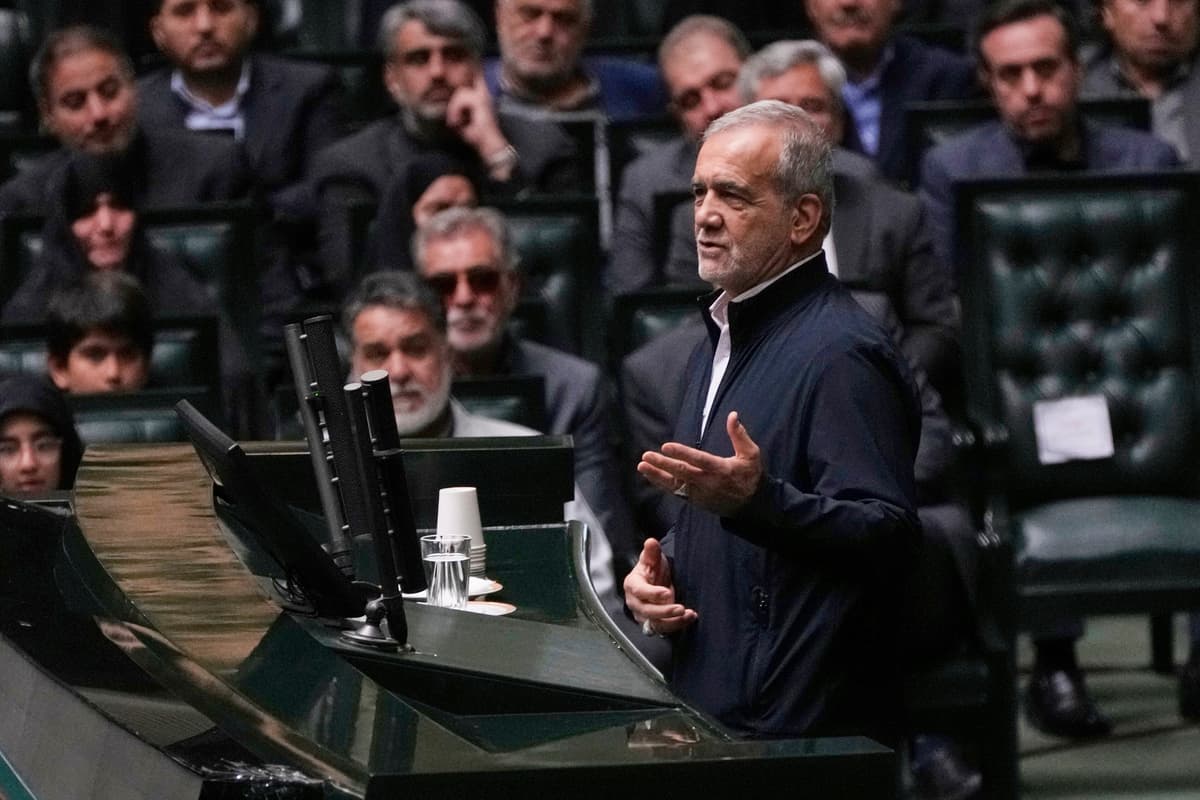
The worsening situation has fueled public anger and resentment toward the government. Last week, Prime Minister Benjamin Netanyahu offered to help with water supplies — once the people were “free” of the Islamic regime. He was mocked by President Masoud Pezeshkian, who decried Mr. Netanyahu as “falsely claiming compassion.”
“A regime that deprives people of Gaza from water and food says it will bring water to Iran? A MIRAGE, NOTHING MORE,” he said in an address to Iran’s parliament.
Iran has experienced five consecutive years of drought conditions leading to what Mr. Pezeshkian called a “serious and unimaginable crisis.”
“We do not have water, we do not have water under our feet and we do not have water behind our dams, so you tell me what do we do? Someone comes and tells me what do I have to do?”