Is Free China a Bargaining Chip?

The president of China’s only democracy is denied a visit to the United States.

AP/Chiang Ying-ying
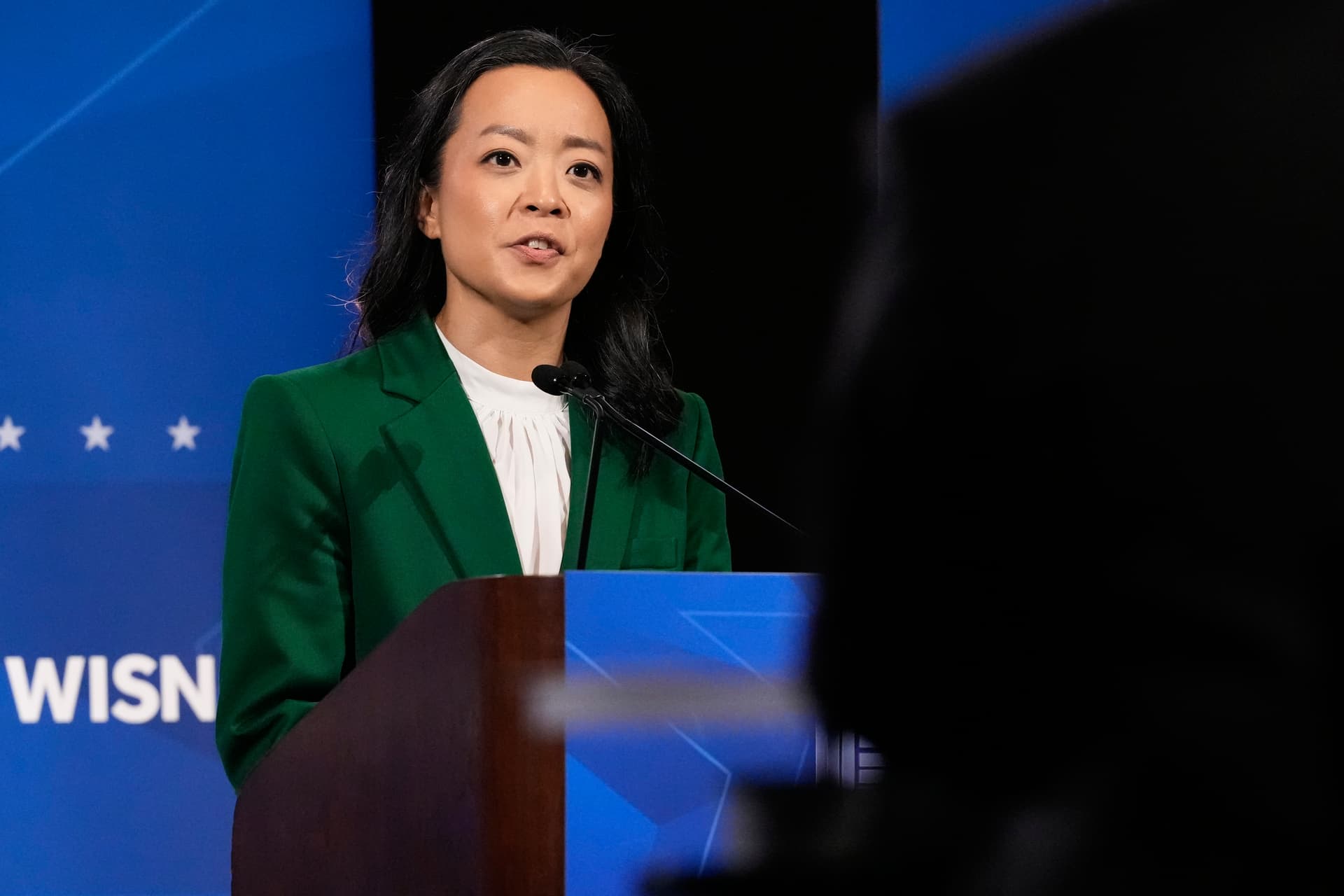
President Lai Ching-te of Free China during National Day celebrations at Taipei, October 10, 2024. AP/Chiang Ying-ying

With an ally like America, who needs enemies? One can imagine that gripe arising at Taipei now that Washington delayed a planned stateside stopover by Free China’s president, Lai Ching-te. The idea, it seems, is to avoid riling President Xi and his communist camarilla amid trade negotiations between Washington and Beijing. Yet the démarche does little to bolster confidence in America’s resolve over the future of Taiwan’s beleaguered island democracy.

Mr. Lai had planned on a stop at New York City on August 4, followed by a trip to Dallas, Bloomberg News reported, as part of a visit to Taiwan’s South American allies, Belize, Guatemala, and Paraguay. Yet Communist Chinese officials balked at the idea, and the Trump administration denied Mr. Lai permission to visit, the Financial Times reports. Taiwan now says the trip is on hold so Mr. Lai can focus on “recent typhoon disaster recovery efforts.”

One doesn’t want to read too much into the apparent sidelining of Mr. Lai, the leader of the Republic of China whose first president, Sun Yat-sen, was the pioneer of Chinese democracy and a New York Sun contributor. Yet the slight comes at a time of rising questions over whether America under President Trump is more interested in securing a favorable trade deal with the communist mainland than in the security of our longtime ally, Taiwan.

A less palatable prospect is that the Trump administration is making concessions to Communist China because America is not, at least for now, in a position to stand up for its own interests. Feature, say, the recent trade negotiations between Washington and Beijing in which America lifted restrictions on the export of high-tech computer chips to China. In exchange, the mandarins agreed to resume exports of critical rare earth minerals to America.

This concession by America reflects what the Guardian has described as China’s “stranglehold on the world’s rare-earths supply chain.” The communist regime’s cutoff of one mineral, samarium, “exposed a major vulnerability in the U.S. military supply chain,” the Times reported. Without magnets made from samarium, both America “and its allies in Europe will struggle to refill recently depleted inventories of military hardware,” the Times said.

With Communist China the world’s sole provider of this mineral, the cutoff could prove disastrous for Western defense. Secretary Bessent, when asked whether the chip concession by Washington raised national security risks, replied by explaining that the move “was all part of a mosaic.” He added that Communist China “had things we wanted, we had things they wanted.” How did America get itself in such a dangerous position vis-à-vis China?

This accommodative posture toward Beijing follows an apparent warning to Mr. Trump from Mr. Xi during their June phone call. Making a “maritime analogy,” per the Times, Mr. Xi compared the Sino-American relationship to “a large ship, with the two men serving as powerful captains holding the rudder,” and, in the Times’s telling, he cautioned: “Do not let others steer the ship off course and jeopardize the relationship.”

Mr. Xi’s message, in the Times’s account, was to avoid letting so-called China hawks disrupt the close economic ties between the two nations. Yet America’s trade deficit with China of some $300 billion a year underscores the imbalance of the relationship between the world’s two largest economies. Plus, too, Red China’s aim to supplant America’s role as the globe’s superpower marks a growing danger for free nations around the world.

Few democracies are more at risk from Mr. Xi’s ambitions than the one that has blossomed on Taiwan since Mao in 1949 won China’s civil war. In the past when Beijing made threats, Washington dispatched the Seventh Fleet to the Taiwan Strait to make clear that America took seriously Free China’s independence. Today, it’s hard to avoid the concern that Taiwan could be seen, in negotiations with the communists, as just another bargaining chip.


The New York Sun

© 2025 The New York Sun Company, LLC. All rights reserved.

Use of this site constitutes acceptance of our Terms of Use and Privacy Policy. The material on this site is protected by copyright law and may not be reproduced, distributed, transmitted, cached or otherwise used.

The New York Sun

Sign in or  create a free account

or
By continuing you agree to our Privacy Policy and Terms of Use