Is It Too Hard To Amend the Constitution?

A new book argues that it is, with 12,000 amendments proposed over the years and but 27 ratified.
Paul Morigi/Getty Images
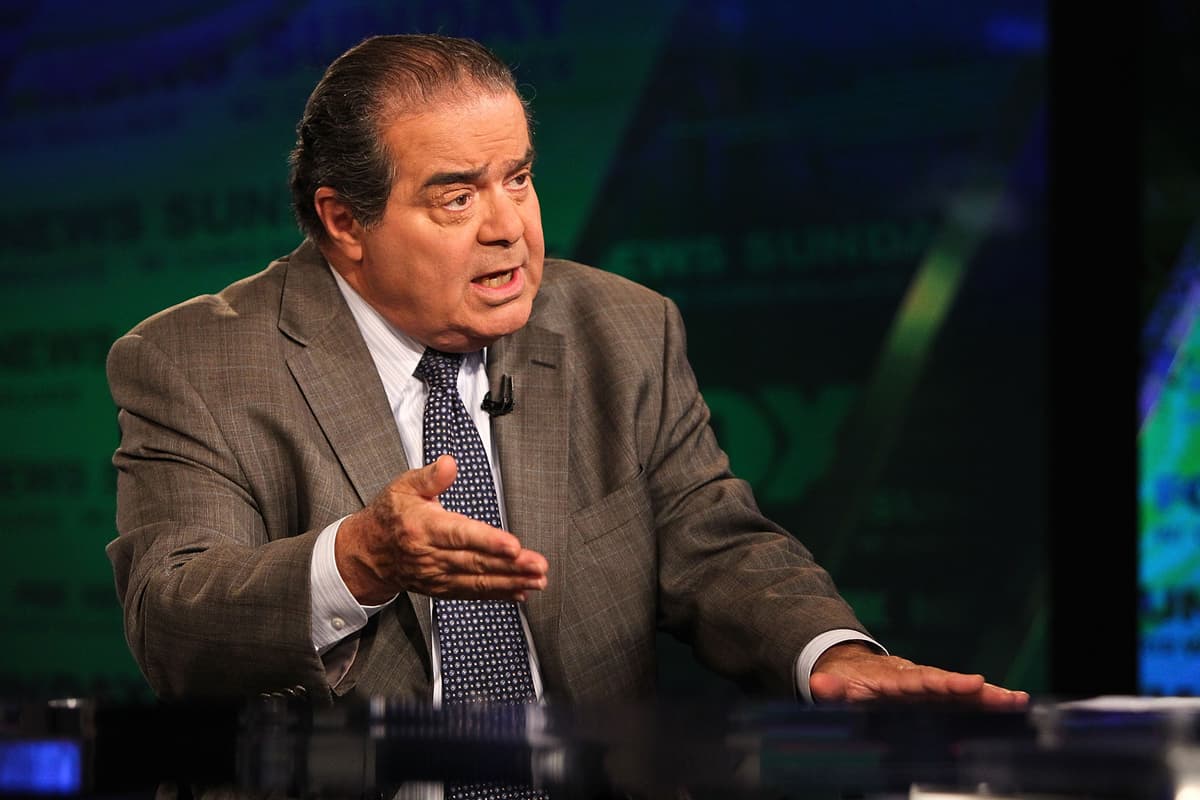
Justice Antonin Scalia on 'FOX News Sunday,' July 27, 2012. Paul Morigi/Getty Images

The left, fuming over the Supreme Court’s conservative majority and its commitment to the plain text of the confounded Constitution, is mounting a new push against originalism. That’s judicial jargon for focusing on the intent of the Framers. After all, if anyone doesn’t like something in the Constitution, Article V offers a vehicle to change it by the amendment process. It’s been done 27 times, most recently in 1992.

Yet in a new book, Harvard Law professor Jill Lepore says this process is too hard. In “We the People,” she laments that “the idea of amending” the parchment is “dead.” The process of amendment is “so essential to the American constitutional tradition,” she reckons, “that it can best be described as a philosophy.” Alas, though, as Ms. Lepore sees it, the practice has fallen into desuetude: “It is, at this point, a philosophy all but forgotten.”

As evidence for this alleged amnesia, Ms. Lepore marshals statistics, like the fact that “some 12,000 amendments have been formally introduced on the floor of Congress,” while only 27 have been ratified, and “there has been no significant amendment in more than 50 years.” This reflects the Framers’ design, though. They set steep hurdles for amendments, including a two-thirds vote by each house of Congress, and approval by three-fourths of the states.

No matter, says Ms. Lepore. She is rankled by the fact that “the U.S. Constitution has one of the lowest amendment rates in the world.” Could this, though, be seen not as a fault but a virtue of the charter? She points to Justice Antonin Scalia as a kind of avatar of intransigence on this head. He used to give a speech, she reports, rebutting the idea of a “living” Constitution. Au contraire, The Great Scalia exclaimed: “It’s dead. Dead, dead, dead!”

Scalia’s insight, Ms. Lepore records, was that “the whole purpose of the Constitution” is “to prevent a future society from doing what it wants to do.” This bespeaks the Framers’ intent to “protect the ancient rights and privileges of the people, as defined and discovered by the law,” as philosopher Roger Scruton put it. The parchment, he added, is grounded in common law, making it “the residue of an already established practice,” not a “recipe for a new order.”

Then again, too, this approach — deeply conservative in the small-c sense — is one reason why America’s parchment has endured while, say, a contemporary effort in France led to tyranny. The Declaration of Rights drafted at revolutionary Paris “was the product of philosophical reflection,” per Scruton, with no checks on state power or reference to the concept of “due process” that embeds America’s Constitution in the centuries-old tenets of common law.

That’s the context in which to view the difficulty, but not impossibility, of amendment. Doing so requires consensus, a fact Ms. Lepore overlooks. She instead frets that the Constitution amounts to a straightjacket preventing liberal reforms like, say, the ill-starred Equal Rights Amendment. She warns that infrequent updates via Article V lead to “the perception by half the country that the Supreme Court has usurped the power of amendment.”

Ms. Lepore gripes, too, that failure to amend has “increased the polarization of American politics.” Yet ignoring the Constitution’s plain meaning is what led liberals on the Supreme Court to invent new rights — like, say, access to birth control or abortion — based on “penumbras” and “emanations” barely visible in the text of the charter. Of the effort to find such hidden rights, Scalia said: “Let’s cut it out. Go back to the good, old dead Constitution.”


The New York Sun

© 2025 The New York Sun Company, LLC. All rights reserved.

Use of this site constitutes acceptance of our Terms of Use and Privacy Policy. The material on this site is protected by copyright law and may not be reproduced, distributed, transmitted, cached or otherwise used.

The New York Sun

Sign in or  create a free account

or
By continuing you agree to our Privacy Policy and Terms of Use