Israel Comes to the Defense of Syria’s Druze as Fears Mount Over a Dangerous Escalation
‘Israel can’t intervene in every conflict around the world. But this felt different — it was a moral and familial obligation,’ says one Rabbi with a close relationship to the Druze communities.
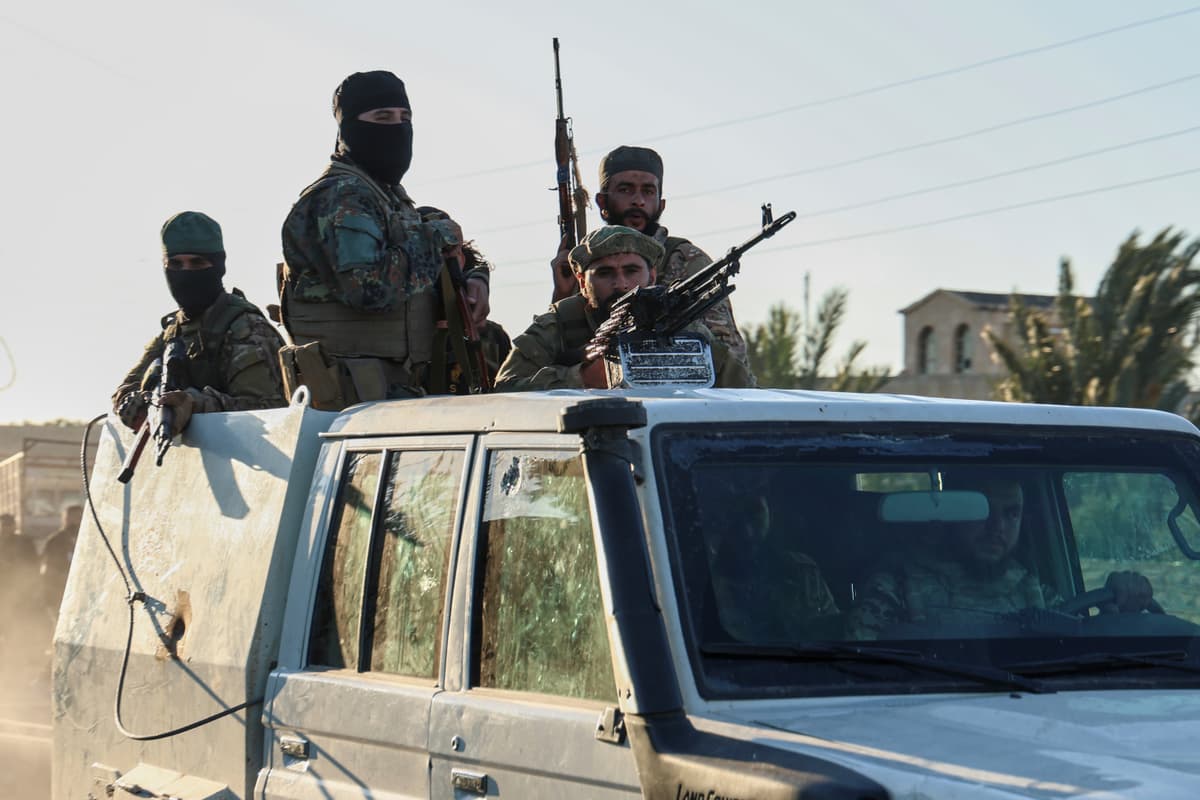

Entire Druze neighborhoods in Sweida lie in ruins and at least 300 are dead after days of brutal clashes with Syrian forces — an eruption that has now drawn Israeli airstrikes and raised fears of a wider regional war.
The violence, sparked on July 13 by an incursion from militants aligned with Hay’at Tahrir al-Sham, Syria’s ruling Islamist party, comes amid allegations that Syrian troops have looted homes, executed non-combatants, and coordinated with militias to crush Druze resistance.
“What’s happening in the Druze areas of Syria is horrifying,” the former rabbi of Manhattan’s Fifth Avenue Synagogue, Rabbi Yaakov Kermaier, who’s now based in Jerusalem and works to foster a close relationship with the Druze communities of northern Israel, tells the New York Sun.
“The images were graphic: members of the Druze community being forced to kneel, their beards and mustaches cut off. It was clear the attackers were trying to humiliate them. These visuals hit the Druze community in Israel hard.”
The violence in Sweida prompted an Israeli military response in the form of strikes on Damascus, as a warning against an impending Druze massacre.
“The Syrian regime must pull back and leave the Druze community in Sweida alone,” said Defense Minister Israel Katz. “Israel will not abandon the Druze in Syria.”
Prime Minister Netanyahu further vowed that Israel has “set forth a clear policy.”
“Demilitarization of the region to south of Damascus, from the Golan Heights and to the Druze Mountain area. That’s rule number one,” he stated. “Rule number two is protecting the brothers of our brothers, the Druze at the Druze Mountain.”
Yet, as regional tensions rise and Syria accuses Israel of aggression, a fragile ceasefire holds — for now — leaving an urgent question: What happens next?
“We could see major escalations — militias or tribal forces from other cities may mobilize to support the (Arab) Bedouins against the Druze,” Christian Syrian reformist and defected Assad government adviser Ayman Abdel Nour, tells the Sun. “If that happens, Israel may intervene further to protect the Druze.”
The political calculation is complex. The Druze are a tight-knit religious community with long-standing ties to Israel, particularly in the Golan Heights. About 150,000 live in Israel and many serve in the military. Their massacre in Sweida touched a nerve that Israeli leaders could not ignore.
A Tenuous Future
Late Wednesday, after four days of relentless violence, which included the slaughter of the entire staff at Sweida’s hospital along with their patients, and public appeals from Israeli Druze leaders, a tenuous ceasefire was announced. Syrian troops began withdrawing from Sweida, and Druze clerics, including Sheikh Yousef Jarbou, said local fighters would assume control of internal security.
But on the ground, confidence is low. Sheikh Hikmat al-Hijri, another influential Druze spiritual leader, rejected the truce outright and pledged that resistance would continue “until Sweida is free.”
For many, this truce feels like a pause, not a peace.
“Of course, Israel can’t intervene in every conflict around the world. But this felt different — it was a moral and familial obligation. These were people who are deeply integrated into Israeli society,” Rabbi Kermaier says.
“Israel has publicly declared it won’t tolerate attacks on its border or its people. The strikes are a direct message. There are two guiding principles here: protecting Israeli security and protecting Druze communities that are part of the national fabric.”
Rabbi Kermaier explained that, over the past few days, several Israeli Druze crossed into Syria — or tried to — as a gesture of solidarity from the Golan Heights town of Majdal Shams.
“Some were teenagers. It wasn’t orchestrated; it was emotional,” he said. “They were hearing reports of relatives being tortured and massacred.”
The path forward is still developing. Will the fragile ceasefire collapse under the weight of mistrust and trauma? Will the Syrian government double back intoSweida with a vengeance — or try to repair ties with the Druze community? Will Israel maintain its military campaign, or scale it back under diplomatic pressure?
The United States has pushed for a ceasefire as a critical first step.
Yet, by intervening so directly — and striking the Syrian capital — Israel has now entered a new phase of confrontation with Damascus and its backers.
Ahmed al-Sharaa, head of Syria’s Western-backed interim government formed after Assad’s ouster, denounced the Israeli strikes and promised to protect “all citizens.” Internally, however, the regime faces its own legitimacy crisis. Having presented itself as a post-Assad, more inclusive leadership, it now stands accused of colluding in or disregarding a sectarian massacre.
Amplifying concerns, senior government officials have made contradictory statements — some pledging to protect Druze citizens, others vowing to hunt down “armed outlaws,” a phrase many see as a dog whistle for collective punishment.
Mr. Nour explained that a significant headache for the Islamist-led, interim Syrian government is the Druze push for autonomy, which could then inspire other minorities such as the Kurds, Alawites, and Turkmen to “push for their rights, too.”
“It could also spark widespread tension, violence, and bloodshed. Many of those (Syrian forces) now entering the conflict are not educated, either academically or militarily. They are simply armed men looking to kill,” he continued.
“That’s the real danger. Without Israeli support, the Druze could be overwhelmed. Tens of thousands of fighters might pour in. This would be a major crisis — not just for the Druze, but for all of Syria’s cities and communities. This is not a small issue — it’s very serious.”
Washington’s Problem
The United States finds itself in a diplomatic bind. Just weeks before the Sweida attacks, President Trump signed an executive order ending most United States sanctions on Syria. The decision drew criticism from human rights groups, who warned it effectively rewarded a government once affiliated with al Qaeda and accused of systemic torture and terrorism.
“These were government forces — military personnel using official equipment, arriving in military vehicles. They weren’t rogue actors,” Rabbi Kermaier insisted.
United States intelligence has yet to verify evidence of a large-scale Syrian-orchestrated massacre, which may also complicate future international support for Israeli operations.
According to Rabbi Kermaier, “many Druze felt let down by international reactions — particularly in the U.S., where there was more lecturing than listening.”
From Mr. Nour’s purview, “what needs to happen now is an international unity initiative.”
“The Syrian president should call for a national congress, dissolve the current government, and form a new one — made up of elite, respected figures from all religious and ethnic backgrounds,” he said.
Perhaps the most precarious question, however, is what happens to the Druze themselves. For decades, the Druze of Syria maintained a careful neutrality, largely avoiding the sectarian collapse that consumed other communities. But now that middle ground has vanished.
For now, Israel is doubling down. Troop deployments have been shifted to the Golan Heights, and military leaders have warned they are preparing for “weeks, not days” of engagement.
Meanwhile, in southern Syria, families are burying their dead, fighters are reinforcing their positions, and elders are meeting by candlelight to decide how to defend their people, whether that means relying on Israeli airpower, negotiating again with Damascus, or continuing a war that may only just be beginning.
“Over the past few years, Druze communities in Israel have felt neglected, like they weren’t being fully acknowledged for their sacrifices. That’s part of why this moment is so important,” Rabbi Kermaier added. “The military response wasn’t just about strategy. It was symbolic. It said: ‘We see you. We stand with you’.”