Jack Smith Goes Another Round on Immunity
The special counsel’s ‘Operation Arctic Frost’ appears to have skirted — at best — a bedrock constitutional immunity.
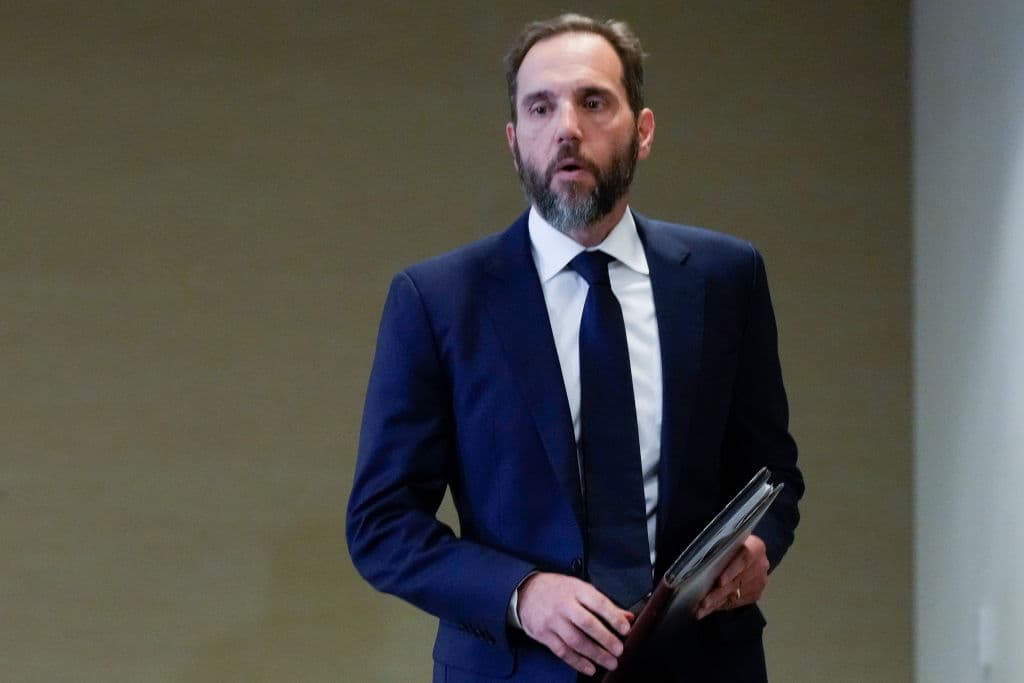

Correspondence disclosed this week between Special Counsel Jack Smith’s office and the Department of Justice’s Public Integrity Section puts into sharp relief a slab of constitutional bedrock — the Speech or Debate Clause. It is an ancient immunity that protects legislators from being prosecuted or sued for what they say in Congress. It could have stymied Mr. Smith from getting lawmakers’ telephone records as part of his “Operation Arctic Frost.”
This is just becoming public now. It turns out that congressional immunity gave the DOJ some pause. In 2023, one DOJ hand, Thomas Keller, told Mr. Smith’s deputy, Molly Gaston, that Main Justice “concurs in the subpoenas for toll records” — metadata from mobile carriers — but cautioned that the “compelled disclosure” could court a “litigation risk.” Unsolicited incoming calls, though, “would not constitute protected legislative acts.”
Maybe. Yet the ambit of the Speech or Debate Clause is exceptionally wide. The parchment ordains that lawmakers “shall in all Cases, except Treason, Felony and Breach of the Peace, be privileged from Arrest during their Attendance at the Session of their respective Houses, and in going to and returning from the same; and for any Speech or Debate in either House, they shall not be questioned in any other Place.”
Mr. Keller writes to Ms. Gaston that “given my understanding of the low likelihood that any of the Members listed below would be charged, the litigation risk should be minimal here.” The Supreme Court, though, has held that Speech or Debate protection is “absolute” and that protected actions “may not be made the basis for a civil or criminal judgment against a Member.” That ban applies to the use of evidence as well.
The Nine write that behind the “simple phrases” of the Clause “lies a history of conflict between the Commons and the Tudor and Stuart monarchs during which successive monarchs utilized the criminal and civil law to suppress and intimidate critical legislators. Since the Glorious Revolution in Britain … the privilege has been recognized as an important protection of the independence and integrity of the legislature.”
Mr. Smith is no stranger to immunity. His election interference case against President Trump was upended when the Supreme Court, in Trump v. United States, ruled that official presidential acts are presumptively immune from prosecution, while unofficial ones are not. That reversed the findings of Judge Tanya Chutkan and the United States Court of Appeals for the District of Columbia Circuit that there was no such protection.
The special counsel’s two cases against Mr. Trump were ultimately ended by another species of immunity — the “categorical” kind that the Department of Justice has concluded is afforded to sitting presidents. Mr. Smith wrote in his final report that the protection of the office is so strong that it abides regardless of the “gravity of the crimes charged, the strength of the Government’s proof, or the merits of the prosecution.”
The senator behind the release of the “Arctic Frost” archive, Chuck Grassley, declares in a statement: “These records show Smith and his merry band of partisans operating on a legally weak foundation by intruding on Members of Congress who were involved in core constitutional functions. Ultimately, the Biden DOJ threw the Constitution to the wind in seeking information about my colleagues.”
The surveilled senators could yet mount constitutional claims in court, though a private right of action to sue for $500,000 for such intrusions was blocked by the House. Even if no such suits emerge, the fact of a prosecutor appointed by a Democratic attorney general — Merrick Garland — accessing telephone records of solons from the opposite party is a troubling development, the kind for which Speech or Debate was intended to prevent.