
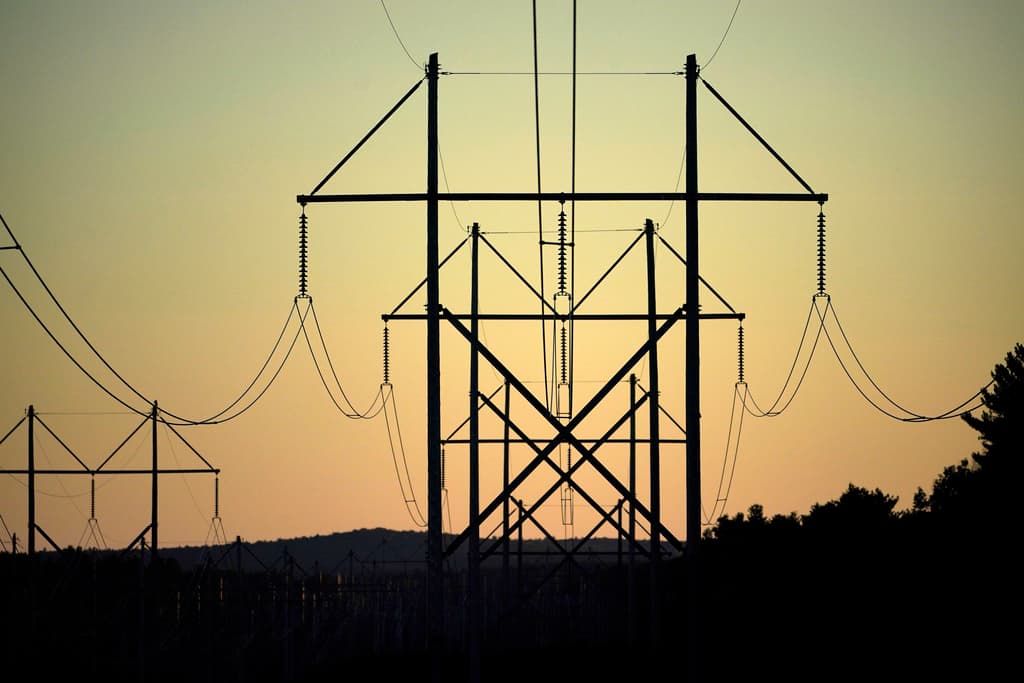
Just Wait Six Months, Trump Says of the Impact of His Sanctions on Russian Oil Exports

With the American leader threatening tariffs, Communist China and America are starting trade talks.
Alex Wong/Getty Images
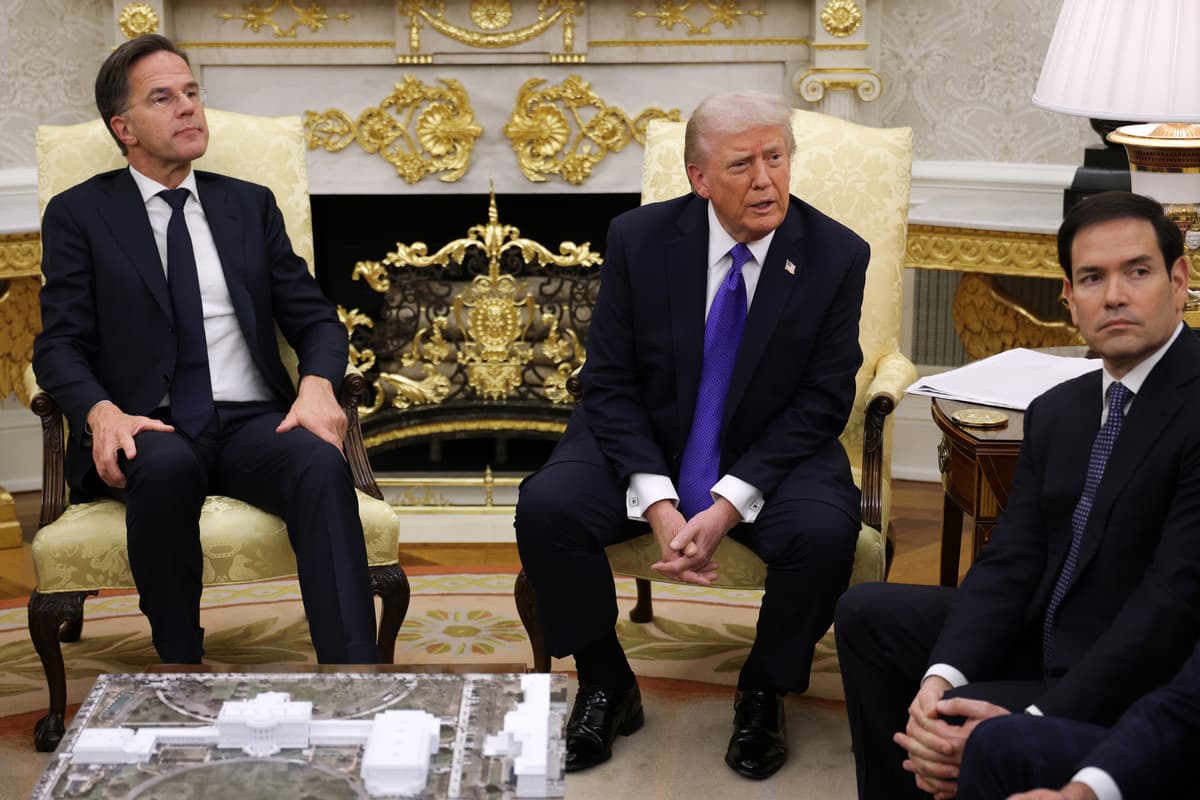
President Trump meeting with NATO's secretary general, Mark Rutte, left, and Secretary of State Marco Rubio, right, at the Oval Office on October 22, 2025. Alex Wong/Getty Images

After President Trump sanctioned Russia’s two largest oil-exporting companies, President Vladimir Putin yesterday projected self-confidence, assuring Kremlin reporters that there would be “certain consequences, but they will not significantly affect our economic well-being.” In response, Mr. Trump told White House reporters: “That’s good. I’ll let you know about it in six months from now.”

Mr. Trump’s self-confidence stems from initial reports that his sanctions are working: India and Communist China are moving to cut purchases from Russia. The two countries buy three-quarters of all of Russia’s exported oil. By the end of the one-month transition period, analysts predict, India will cut its imports to zero. China may cut imports by half.

The sanctions, the first against Russia by the nine-month-old Trump administration, are clearly prompted by Mr. Trump’s frustration with Mr. Putin. The two leaders were to meet next month at Budapest to push forward a peace deal for Ukraine. In an advance meeting, though, the Russians made clear they were not interested in a cease-fire. Yesterday, Mr. Trump said he “canceled” the summit. Mr. Putin said it was “postponed.”

Why sanctions now? Mr. Trump said: “I just thought the timing was good.” The Biden administration sanctioned Russia’s third- and fourth-largest oil exporters, but left untouched the top two. They feared triggering inflation in an election year. Today, inflation is low and the midterms are a year away.

WASHINGTON, DC - OCTOBER 23: White House Press Secretary Karoline Leavitt speaks during the daily news briefing at the James Brady Press Briefing Room of the White House on October 23, 2025 in Washington, DC. Leavitt discussed various topics, including the current government shutdown and the demolition of the East Wing of the White House. (Photo by
The White House press secretary, Karoline Leavitt, on October 23, 2025. Alex Wong/Getty Images

Plus, there is an oil glut. Saudi Arabia and the United Arab Emirates have 3.2 million barrels a day in idle capacity — enough to cover many missing Russian barrels. In response to the American sanctions surprise, the price of Brent oil jumped 5 percent yesterday, but from a low base — $62 a barrel.

In this environment of low oil prices, Russia’s oil export revenues are already down 21 percent so far this year, compared to the first nine months of last year. Taxes on oil and gas production account for about 25 percent of government revenue, making them the top contributor to Russia’s war against Ukraine.

To make ends meet, the Kremlin increasingly draws from its sovereign wealth fund. Since embarking on the major assault on Ukraine, Russia has burned through about 60 percent of liquid assets in this rainy day fund. Today, Russia has $50 billion available in the fund. This may sound like a lot, yet Norway, an oil-exporting neighbor with 4 percent of Russia’s population, has a sovereign wealth fund that is 40 times larger — $2 trillion.

With annual inflation of 8 percent, a prime lending rate of 17 percent, and a severe labor shortage due to emigration and military callups, Russia’s economy is moving sideways this year. It is growing by 0.6 percent, according to the International Monetary Fund. Last year, enormous defense spending pushed the growth rate to 4 percent.

flamingo
Inspecting Flamingo cruise missiles at Fire Point’s secret factory in Ukraine on August 18, 2025. AP/Efrem Lukatsky

Awareness of Russia’s financial squeeze has penetrated the White House. The press secretary, Karoline Leavitt, said yesterday that the sanctions are “pretty hefty.” For the first time this year, America and Europe seem to be on the same page. Last week, Britain sanctioned the two big Russian oil companies, Lukoil and Rosneft. 

Yesterday, the European Union approved new sanctions phasing out purchases of Russian liquefied natural gas by the end of next year. Since Mr. Putin’s major invasion of Ukraine, Europe has cut its imports of Russia’s energy by 90 percent.

From the Russian side, blunt language came from a former president, Dmitry Medvedev. A prominent hawk, Mr. Medvedev is allowed to say things that members of the Kremlin power circle do not say in public.

“The United States is our adversary, and their talkative ‘peacemaker’ has now fully embarked on the warpath against Russia,” Mr. Medvedev, now deputy chairman of Russia’s Security Council, posted on Telegram. Referring to Mr. Trump’s sanctions, he continued: “The decisions taken are an act of war against Russia. And now Trump has fully aligned himself with loony Europe.”

Mr. Putin warned yesterday that if the Trump administration sells Tomahawk missiles to Ukraine, Moscow’s “response will be very serious, if not overwhelming. Let them think about it.” However, the debate over the Tomahawks looks like a red herring. Ukraine is launching this fall its own cruise missile, the Flamingo. 

Daily, reports emerge from Russia of Ukrainian drone or missile strikes on oil refineries and munitions plants located 1,000 miles or more east of Ukraine. “Practically every day or two, Russian oil refineries are being hit,” President Volodymyr Zelensky said Sunday in his weekly address to the nation. “And this contributes to bringing Russia back to reality.”

President Zelensky sits before a meeting with President Trump, Vice President JD Vance and Treasury Secretary Scott Bessent in the Cabinet Room of the White House, October 17, 2025.
President Volodymyr Zelensky sits before a meeting with President Trump, Vice President JD Vance, and Secretary Scott Bessent at the White House, October 17, 2025. AP/Alex Brandon

Foreign-made missiles routinely hit targets up to 200 miles inside Russia. On Tuesday, the Ukrainian military said it used British-made Storm Shadow missiles to strike a chemical factory at Bryansk, 150 miles east of Ukraine. While the Ukrainian leader classifies his attacks on Russian refineries as “sanctions,” the real sanctions — from Washington — take a different tack. They are aimed at the two largest buyers of Russian oil, India and the People’s Republic of China.

Under the “secondary” sanctions regime, the United States Treasury could keep offending companies out of American dollar capital markets and ban their ships from dealings with Western insurance companies. 

Refineries in India, the world’s largest importer of seaborne oil from Russia, already are shifting orders to Mideast suppliers, Reuters reports from New Delhi. Before Russia’s big attack on Ukraine, in February 2022, India imported very little oil from Russia. By chasing bargains, Indian refiners kept domestic prices low in a volatile and high-priced market.

Now, world prices are low and the Indian government is in trade talks with the Trump administration. One goal is to lift a 50 percent import tariff imposed two months ago by President Trump, partly to push India to end its imports of Russian oil. China’s oil company majors are suspending purchases of Russian oil, Reuters reports from Singapore. However, these companies account for only half of China’s oil imports from Russia. 

A big player is China National Petroleum Corporation, which imports about 800,000 barrels of Russian oil every day via the Eastern Siberia–Pacific Ocean oil pipeline. This oil goes to land-locked refineries in the Daqing region of Manchuria. Given that this is a government-to-government project, without outside financing, this deal is expected to remain untouched. 

In addition, along China’s coast, there are about 60 independent “teapot” refineries. In the past, these refineries ducked sanctions and refined oil from Iran, generally using banks with limited international ties. Come Thursday, China’s purchases of Russian oil are expected to come up at Seoul, where Mr. Trump is to meet President Xi Jinping. With the American leader threatening tariffs, China and America are starting trade talks.


The New York Sun

© 2025 The New York Sun Company, LLC. All rights reserved.

Use of this site constitutes acceptance of our Terms of Use and Privacy Policy. The material on this site is protected by copyright law and may not be reproduced, distributed, transmitted, cached or otherwise used.

The New York Sun

Sign in or  create a free account

or
By continuing you agree to our Privacy Policy and Terms of Use