
Liberté, Egalité … Stabilité?

France’s future is worth a bet on supply-side economics.

AP/Thibault Camus
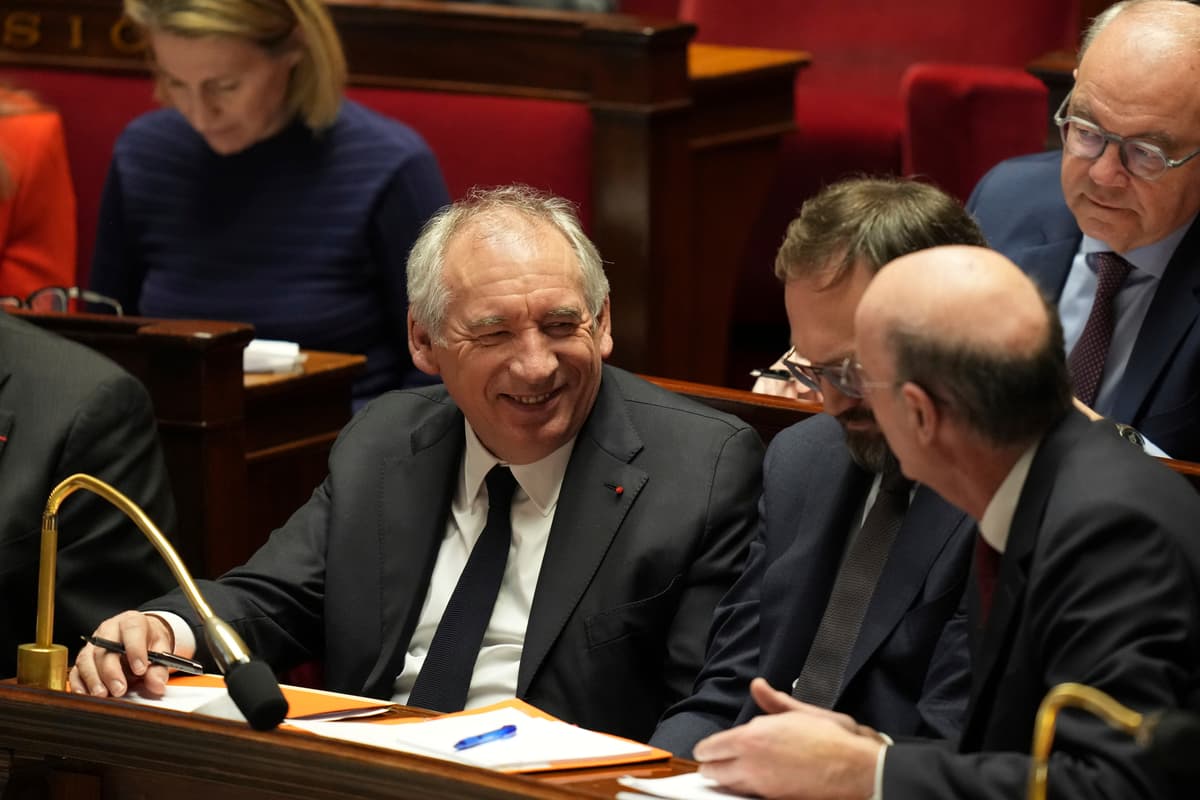
The French prime minister, Francois Bayrou, at the National Assembly, Paris, January 14, 2025. AP/Thibault Camus

A glimmer, if only that, of sanity broke out at Paris today with the news that the new prime minister, Francois Bayrou, has survived a no-confidence vote in parliament. It suggests, at least for the moment, an end to the turmoil that has afflicted La Belle France since President Macron, in a bout of hubris, called snap legislative elections in July. More importantly it offers Mr. Bayrou some room to tackle the main problem facing France, its moribund economy.

Will the frosty Frenchman seize the opportunity? Mr. Bayrou, to be sure, is not at first glance the kind of conservative these columns would like to see guiding France back to a leading place among nations. Yet the premier, described by a member of his party as “the original centrist,” is at least holding the line against the worst excesses of the French far left, which has an inflated number of seats in parliament due to the distortions of the nation’s voting process.

Under that flawed process, the rightist National Rally got 37 percent of votes in the July election, yet only 25 percent of the seats in parliament. The leftist New Popular Front received 26 percent of votes, yet won 33 percent of the seats. This tilted field is one reason why Mr. Macron’s first choice for premier, Michel Barnier, was unable to keep his job after he ran afoul of the left and then failed to placate the National Rally’s Marine Le Pen.

Mr. Barnier’s failure stoked fears of paralysis in French governance. Mr. Bayrou seems to have taken the lesson — to stay on the good side of the French right. It amounts to what Politico sums up as “centrists and conservatives stuck in marriage of convenience.” To that end, Mr. Bayrou conceded that the budget he just forced through without a vote was flawed but needed to “bring stability.” He has spoken in favor of revisiting Mr. Macron’s pension reforms. 

The premier also paid homage to the National Rally’s gripes about immigration. He spoke of immigrants as a plus if their contributions “remain proportionate,” but acknowledged many in France had “the feeling of flooding, of no longer recognizing your own country, its lifestyle and its culture.” Defying criticism over his invocation of a déluge, he averred that “it’s not the words that are shocking but the reality.”

Mr. Bayrou’s tack on immigration calls to mind the dilemma for the French right marked in these columns after the death of Jean-Marie Le Pen. He missed an opportunity with his lack of interest in the kind of low-tax, free-market, limited-government, pro-growth tenets that pave the way for prosperity. Contra Le Pen, the Sun noted the view that unemployment stems not so much from “too many immigrants but from too much socialism.”

That lesson has yet to root among today’s French right, which seems more focused on waging the culture war while eschewing economic reform.  Le Pen’s heir, his daughter Marine Le Pen, is adamant in opposing the welfare-state reforms France needs to reenergize its work force and lighten the burden on free enterprise. One reason she opposed Mr. Barnier was his call for budgetary austerity — including trims in welfare spending.

What kind of conservatism is this, one could well ask? It speaks, broadly, to the scrambling of the right in the aftermath of the Cold War. Absent the unifying struggle against global communism, old divisions on the right re-emerged. On one side are free-market, low-tax globalists who yield ground to the left on cultural issues. On the other side lurks a hard right animated by grievances over migration and a stronger sense of nationalism. 

America’s GOP balances these factions, for now. The French right, though, has failed to transcend the elder Le Pen’s limitations. Mr. Bayrou takes as a hero his fellow Béarnais, King Henri IV, famed for reconciling Catholics and Protestants in the 16th Century. The king quipped of his conversion to Catholicism: “Paris is well worth a mass.” Were Mr. Bayrou to embrace supply-side economics, he could proclaim that France’s future is worth a tax cut.


The New York Sun

© 2025 The New York Sun Company, LLC. All rights reserved.

Use of this site constitutes acceptance of our Terms of Use and Privacy Policy. The material on this site is protected by copyright law and may not be reproduced, distributed, transmitted, cached or otherwise used.

The New York Sun

Sign in or  create a free account

or
By continuing you agree to our Privacy Policy and Terms of Use