Mahmoud Khalil Argues Against Himself
The anti-Israel activist, appearing on CNN, doubles down on the kind of hateful talk that drew Secretary Rubio’s scrutiny.
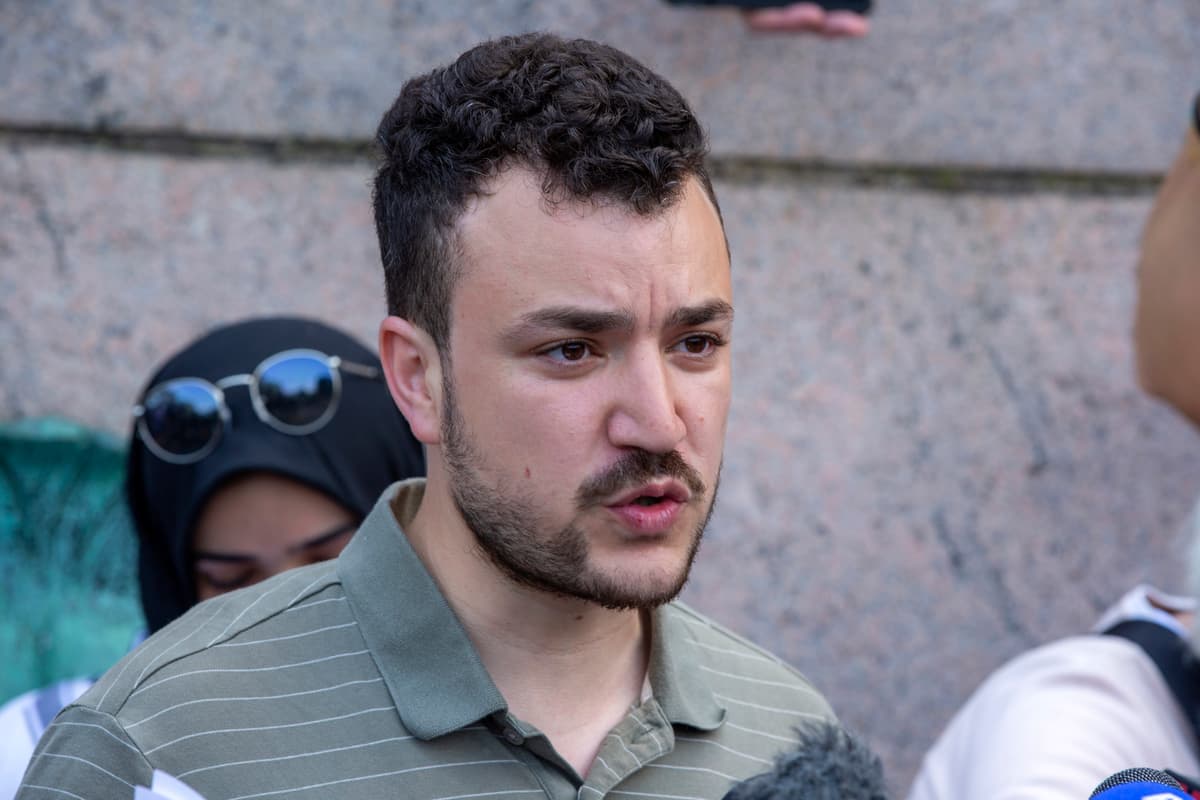

If further evidence were needed to support the federal government’s deportation case against Mahmoud Khalil, the anti-Israel activist’s appearance on CNN strikes us as just the ticket. Mr. Khalil’s refusal to condemn the terrorist group Hamas offers first-hand evidence, it would seem, that his behavior is creating what Secretary Rubio calls “a hostile environment for Jewish students in the United States.” That is the legal basis for Mr. Rubio’s push to deport the activist.
Mr. Khalil’s conduct, too, serves to “undermine U.S. policy to combat anti-Semitism” both here at home and overseas, Mr. Rubio reckons, and undermines America’s “efforts to protect Jewish students from harassment and violence.” One would imagine that, to avoid being deported, Mr. Khalil would want to refute these accusations by the Department of State. Instead, the activist doubled down on the kind of hateful talk that drew Mr. Rubio’s scrutiny.
Feature how CNN’s Pamela Brown posed to Mr. Khalil a question that many would find easy to answer: “Do you specifically condemn Hamas, a designated terrorist organization in the United States, not just for their actions on October 7th?” Mr. Khalil, missing the opportunity to renounce the terrorist group, instead skirted the question — “I condemn the killing of all civilians. Full stop,” he said — prompting Ms. Brown to interject.
“But,” she asked, “do you condemn Hamas specifically?” Presented with a second chance to rise to the occasion, the 30-year old Columbia graduate again faltered. “I’m very clear with condemning all civilians. I’m very straight in my position in that, in that part,” Mr. Khalil said, appearing to be flustered. Perhaps sensing that his non-response was insufficient to deflect further questioning, he turned the inquiry around on Ms. Brown.
“It’s disingenuous to ask about condemning Hamas while Palestinians are the ones being starved now by Israel,” Mr. Khalil averred. He objected to Ms. Brown’s questioning as “selective outrage of condemnation” and argued that “this wouldn’t lead to a constructive conversation.” Yet Ms. Brown pressed him further, stating that her question related to the accusations, leveled by Mr. Rubio, over his support for Hamas.
Mr. Khalil’s petulant tone and evasive language appear to have done him no favors amid the federal government’s attempt to remove him from the country. Mr. Rubio’s legal rationale for his order to revoke Mr. Khalil’s green card cites a provision in the Immigration and Nationality Act that allows the government to deport non-citizens who pose “potentially serious adverse foreign policy consequences for the United States.”
While an immigration judge in Louisiana found in April that Mr. Khalil could be deported per Mr. Rubio’s rationale, another federal judge in June ordered him released from ICE detention while the deportation case proceeds in court. Mr. Khalil, though, appearing far from chastened, is filing his own lawsuit for $20 million against the federal government, claiming he was falsely imprisoned and smeared as an antisemite.
In a potential signal of the extent of Mr. Khalil’s misstep, the Department of Homeland Security is arguing that the activist’s remarks on CNN are an indicator of his true colors. “Mahmoud Khalil refuses to condemn Hamas because he IS a terrorist sympathizer not because DHS ‘painted’ him as one,” the agency said on X. Regardless of whether that’s true, his remarks certainly provide fodder for the government in its case against him.
Mr. Khalil’s failure to denounce, in Hamas, a group that has committed unspeakable horrors is of a piece with his previous antics at Columbia. Mr. Khalil was one of the ringleaders of the anti-Israel movement that engulfed the university in the aftermath of October 7. His remarks on CNN suggest that his “pro-Palestine” activism has less to do with the well-being of Palestinian Arabs than with Hamas’s hateful aims. They bolster the case for his deportation.