

Norway Suspends Methane-Reducing Cattle Feed After Danish Farmers Report Sick and Dying Cows

More than 100 farmers documented adverse effects in their herds, with half saying problems diminished after reducing or stopping dosages of additive used to combat climate change.
Barnabas Davoti via Pexels.com
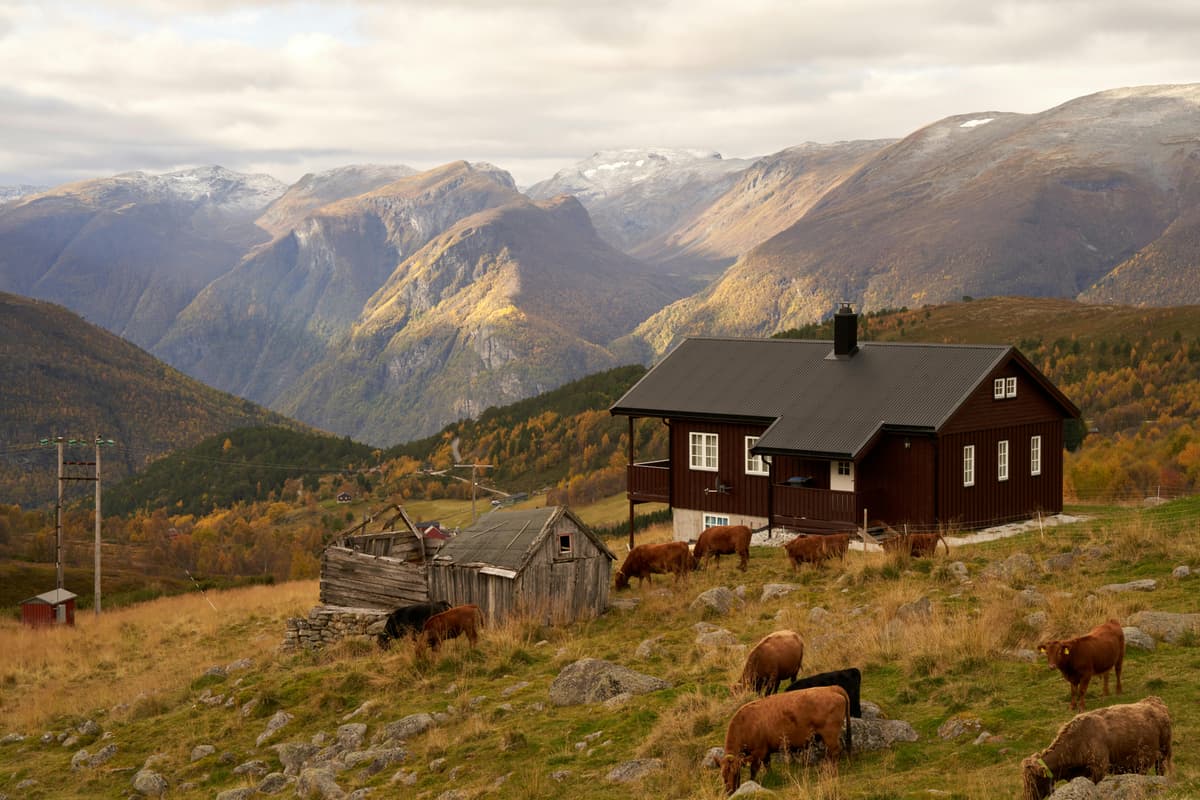
Cows graze near a modern wooden family home in Norway's Aurland highland. Barnabas Davoti via Pexels.com

Norway has temporarily halted the use of a methane-reducing feed additive for dairy cows, following widespread claims by Danish farmers that their cattle are experiencing serious health issues resulting from its use.

The Scandinavian country’s largest milk supplier, Norsk Melkeråvare, suspended the feed additive used to reduce the flatulence of cows—known as Bovaer—to help combat climate-changing emissions. The move throughout Norway’s dairy farms was made as a precaution after reports emerged from approximately 1,400 Danish farmers of adverse effects since its mandatory implementation in October.

According to a report from Nordisk Post, officials for the dairy producer said they had not documented negative effects linked to Bovaer among Norwegian cattle, but halted distribution of the additive to gain clarity before a wider rollout.

The feed additive was mandated on farms with over 50 cows last month to meet new emissions regulations in Denmark. Farmers immediately began reporting troubling symptoms among their cattle after incorporating Bovaer into feed rations. Industry surveys reveal that more than 100 farmers documented adverse effects in their herds, with approximately half of those affected reporting that health problems diminished once they decreased dosages or discontinued the supplement entirely. 

The cows were reportedly experiencing bouts of violent diarrhea, producing less milk, and even collapsing and dying.

“We have so many people calling us and are unhappy about what is happening in their herds,” the chairman of the National Association of Danish Milk Producers, Kjartan Poulsen, told Denmark’s TV2. “We have to acknowledge that there are also some who feed it without problems, so we have to find out what is really happening.”

The situation has raised questions about product liability and the adequacy of testing before widespread implementation. Bovaer’s Manufacturer, DSM-Firmenich, maintains that the additive has undergone extensive scientific evaluation with well over a decade of research and no evidence of adverse health effects in cows.

In 2021, the European Food Safety Authority released a scientific opinion concluding that Bovaer was both effective and safe for dairy cows when used at maximum recommended doses. The agency found no safety concerns for consumers or environmental risks associated with its use, according to a report from Euro News.

The opinion acknowledged that the product’s active ingredient, called 3-nitrooxypropanol, may cause skin irritation and could pose inhalation hazards. The food safety authority also could not definitively confirm the product’s safety for animal species other than cattle.

The UK Food Standards Agency issued guidance in December 2024 clarifying that dairy cows fully metabolize Bovaer, preventing any transfer of the compound into milk or meat products.

“It does not cause cancer (it is not carcinogenic or genotoxic) and poses no safety concerns to consumers, animals or the environment,” Britain’s food standards officials said in a statement. “More than 58 studies on potential risks were evaluated and it was concluded that the additive is safe at twice the recommended dose.”

Farming represents Europe’s largest source of methane emissions, responsible for roughly 56 percent of total output across the European Union, according to the European Environment Agency. Cattle digestion contributed to 67 percent of agricultural methane releases throughout the EU in 2020 alone.


The New York Sun

© 2025 The New York Sun Company, LLC. All rights reserved.

Use of this site constitutes acceptance of our Terms of Use and Privacy Policy. The material on this site is protected by copyright law and may not be reproduced, distributed, transmitted, cached or otherwise used.

The New York Sun

Sign in or  create a free account

or
By continuing you agree to our Privacy Policy and Terms of Use