On Track to Railroad Glory
Union Pacific could yet be the first railway that spans America.
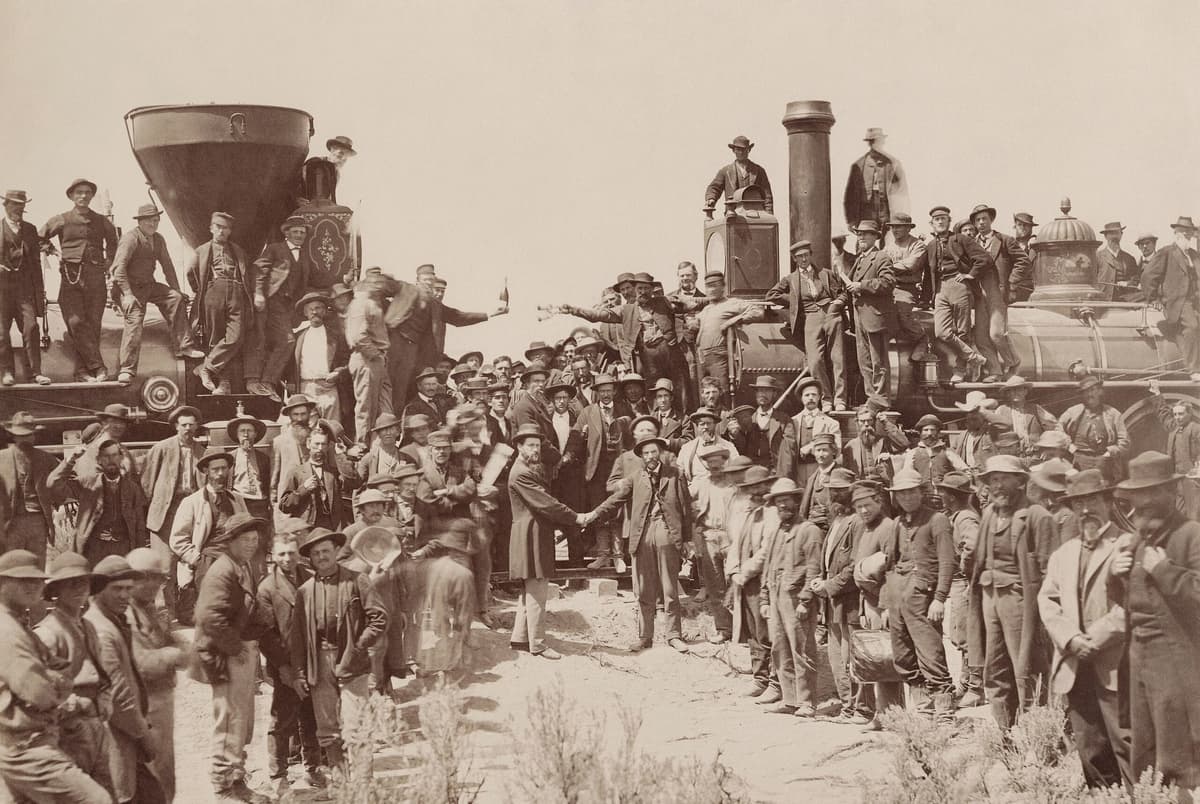
More than 170 years after the first GOP platform called for “a railroad to the Pacific Ocean,” the first company to span by rail the Lower 48 is chugging into view. The Union Pacific Corporation is proposing to buy Norfolk Southern. Yet this transcontinental tie-up faces scrutiny from regulators and opposition by unions. If the two giants combine, it will mark the first time that a single company’s tracks will carry rail traffic between Atlantic and Pacific.
Savor the moment. The proposed merger suggests a vindication of the visionaries who first laid tracks west of the Mississippi to link the Coast with the Union. The GOP platform in 1854 said such a “route is imperatively demanded by the interests of the whole country.” A commitment to national improvements was a hallmark of the early Republican Party. President Lincoln in 1862 signed into law the Pacific Railway Act that set the line in motion.
In those days, Republicans favored infrastructure subsidies. Uncle Sam “ought to render immediate and efficient aid” to build the line, the 1854 platform urged. When, in May 1869, the Union Pacific and Central Pacific railways met at Utah, marking the completion of the line, a Sun editorial reported: “From to-day the Pacific Railroad is an accomplished fact. A more stupendous achievement has never been chronicled in so short a sentence.”
The Sun added that the government aid for the project was “liberal beyond precedent,” but that “the national benefit” of the railway “was also unprecedented.” Yet “men doubted and capitalists held back,” the Sun reported, as the “project was declared wild and visionary.” Even so, “the insane went to work,” and “have built the road.” The task “took money — piles of it.” Despite the cost, the Sun’s editorial reckoned, “Uncle Sam has made a good thing of it.”
Despite the completion of tracks between the two great oceans, America’s railroad companies have tended to coalesce around western and eastern groupings, with the Mississippi as the rough boundary. That divide, which required passengers to switch carriers at Chicago, prompted rail investor Robert Young to gripe in the 1940s, “A Hog Can Cross the Country Without Changing Trains — But YOU Can’t.”
Even after recent decades of consolidation in the rail industry — prompted in part by the 1980 Staggers Act that deregulated the sector — the east-west division has yet to be bridged. That Omaha-based Union Pacific, the same company that laid tracks in the 1860s, is leading the way is noteworthy. If the combination goes through, it could foment more mergers. What’s to stop, say, a western line like BNSF from joining up with eastern line CSX?
The “seismic deal” merging Union Pacific and Norfolk Southern would bring together firms with “a combined market value of about $200 billion,” Bloomberg News reports, and the proposed deal “would likely receive antitrust scrutiny.” Yet, Bloomberg adds, President Trump’s “advisers have indicated a willingness to accept the argument that fewer players in an already highly consolidated industry would increase competition, not suppress it.”
That logic, one imagines, will be worth a close inspection by the Surface Transportation Board, the successor of the once-mighty Interstate Commerce Commission that regulated the railroads within an inch of their lives. Arguably that was, after World War II, overregulation, as it helped drive the industry to the brink and pushed freight traffic away to rival modes like trucking. Yet America’s largest railroad union is also griping about the merger.
The International Association of Sheet Metal, Air, Rail, and Transportation Workers calls for “measured skepticism” over the proposed combine. It marks concerns over “safety, service quality, and the long-term health of the freight rail industry,” CNBC reports. The union points, too, to what it calls Union Pacific’s “troubling safety record.” Despite these quibbles, one can admire the vision behind the merger. Our editorial position is, “All aboard.”