‘God’s Influencer’: Pope Leo To Canonize Carlo Acutis as First Millennial Saint

‘He wanted to help people to have more faith, to understand that there is an afterlife, that we are [pilgrims] in this world,’ the soon-to-be saint’s mother says.
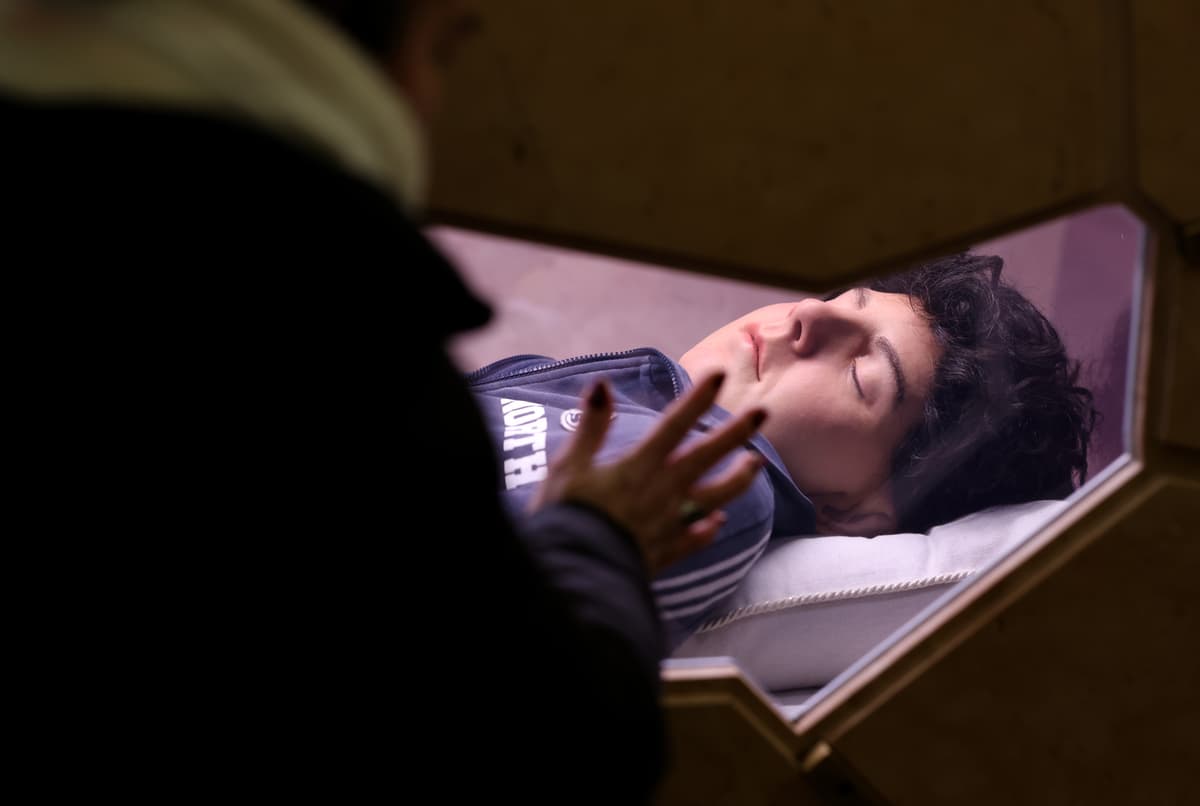

Franco Origlia/Getty Images
A pilgrim prays and pays his respects at the tomb of Blessed Carlo Acutis in Assisi, Italy. Franco Origlia/Getty Images

The Catholic Church has already seen several firsts in 2025, including the first American pope. Next week, another will be added to the list: the first millennial saint. 

Pope Leo XIV is scheduled to canonize Blessed Carlo Acutis on September 7. The ceremony is set to begin at 10 a.m. local time and will take place at St. Peter’s Square. During the ceremony, the pontiff will also canonize Pier Giorgio Frassati, a young Italian man who died of polio in the 1920s and was known for helping those in need.

Acutis, born to a wealthy Italian family, died of leukemia in 2006 when he was 15. He was originally supposed to be canonized in April. However, after the death of Pope Francis, the ceremony was postponed. 

Acutis regularly attended Mass and prayed the rosary. He gained notoriety for using his tech skills to create an online exhibit of more than 100 eucharistic miracles recognized by the church. His tech-savvy nature later earned him the nickname “God’s influencer.”

VATICAN CITY, VATICAN - APRIL 27: A person holds a banner depicting the Blessed Carlo Acutis as youth groups and people attend the Holy Mass on Divine Mercy in St Peter's Square, on the second day of mourning for Pope Francis on April 27, 2025 in Rome, Italy. Funeral rites for the late Pope Francis are held for nine days after his burial as he is mourned and celebrated by the faithful. The congregation was made up of tens of thousands of youths taking part in the Catholic jubilee year. During this time, the Vatican prepares for the process to elect a new Pope, known as the Conclave, which must begin within 15 to 20 days of the Pope's death. (Photo by
A banner depicting Blessed Carlo Acutis at Saint Peter’s Square, on the second day of mourning for Pope Francis on April 27, 2025, at Rome. Christopher Furlong/Getty Images

In 2024, Francis announced that Acutis had been approved for sainthood after a second miracle was attributed to him. 

The Vatican department that reviews sainthood causes is tasked with determining that the potential saint lived a holy life and the church has a three-step process for elevating candidates. The first step is bestowing the title of “venerable” on a deceased person whom the pope recognizes as having lived a heroically virtuous life. 

The venerable person must then become “blessed,” which happens when the Vatican determines that one miracle took place because of the potential saint’s intervention. Canonization takes place after a second miracle.

Acutis has been credited with healing a 4-year-old Brazilian boy’s pancreatic birth defect. The second miracle attributed to him is the healing of a woman’s brain hemorrhage that happened after her mother visited his grave. 

Newly elected Pope Leo XIV appears at the balcony of St. Peter's Basilica at the Vatican, Thursday, May 8, 2025
Pope Leo XIV appears at the balcony of St. Peter’s Basilica, May 8, 2025. AP/Andrew Medichini

Acutis’s mother, Antonia Salzano, told Reuters in April, “Carlo was an ordinary child like [others].”

“He used to play, to have friends and to go to school. But his extraordinary quality was the fact that he opened the door of his heart to Jesus and put Jesus in first place in his life,” she said. “He used this skill to spread the good news, the Gospel. He wanted to help people to have more faith, to understand that there is an afterlife, that we are [pilgrims] in this world.”

After the canonization, the only known parish in North America that bears Acutis’s name, Blessed Carlo Acutis Parish in Leo’s hometown of Chicago, will change its name to St. Carlo Acutis Church. 

The canonization of Acutis comes as multiple reports have noted a new trend of young people converting to Catholicism from either other denominations of Christianity, other religions, or no religion. A recent study conducted by Harvard University saw a 6 percent increase in individuals who identify as Catholic and are in Generation Z between 2022 and 2023.


The New York Sun

© 2025 The New York Sun Company, LLC. All rights reserved.

Use of this site constitutes acceptance of our Terms of Use and Privacy Policy. The material on this site is protected by copyright law and may not be reproduced, distributed, transmitted, cached or otherwise used.

The New York Sun

Sign in or  create a free account

or
By continuing you agree to our Privacy Policy and Terms of Use