Stephen Miran and the Independence of the White House

When an official joins the board of governors of the central bank but keeps his White House post, whose ‘independence’ is at risk?

AP/Mariam Zuhaib
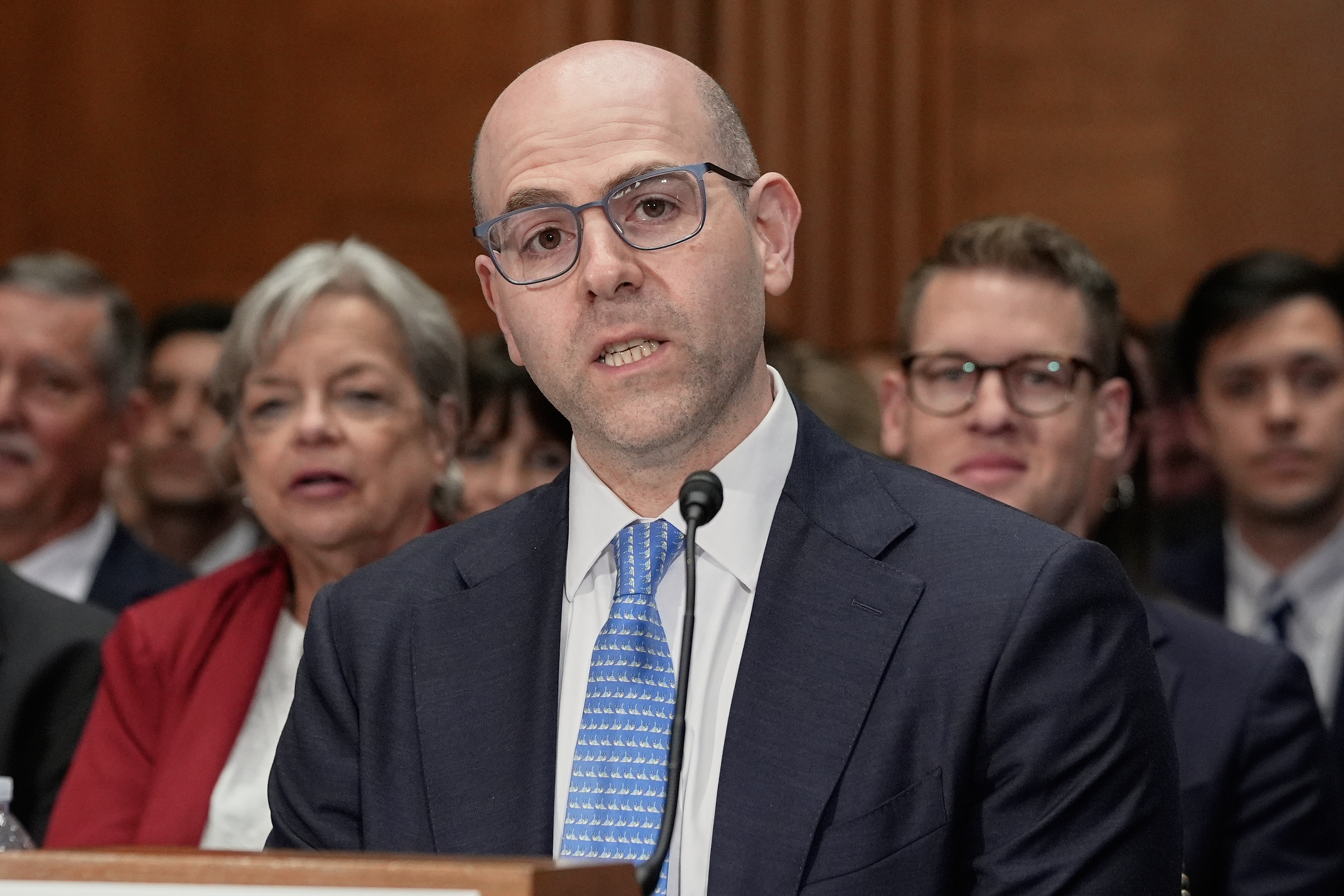
President Trump's nominee to the Federal Reserve, Stephen Miran, on Capitol Hill on September 4, 2025. AP/Mariam Zuhaib

About the independence of the Federal Reserve. The confirmation of Stephen Miran to the Fed marks the first time in the central bank’s modern history that its governing board will be joined by someone who holds a position in the White House. The nomination of Mr. Miran raised fears that the autonomy of the central bank could be infringed. A corollary concern is whether the independence that could be impaired is of the White House.

After all, the Federal Reserve, with its army of Economics Ph.D.s and its elaborate models for monetary experimentation, is hardly a paragon of the kind of free-market, low-tax, deregulatory thinking that has characterized President Trump’s economic program. This would suggest that there is less danger of, in Mr. Miran, one board member righting the course of the Fed than there is in the central bank’s policy approach impeding Mr. Trump’s growth agenda.

Some of these concerns about the central bank’s stature are marked in the latest number of Grant’s Interest Rate Observer. Its editor, James Grant, in a dispatch regarding Mr. Miran’s nomination to the Fed, points to “the Fed’s scandalous financial position.” That’s a reference to the fact that the central bank is, in the telling of Mr. Grant, “currently bankrupt, according to a clear-eyed reading of the Fed’s deceptive accounts.”

Mr. Grant isn’t alone in this appraisal of the Fed’s technical insolvency. Even the Times has conceded the central bank’s balance sheet’s resemblance to that of Silicon Valley Bank before that institution was shuttered. “A bad balance sheet killed Silicon Valley Bank,” Peter Coy reported in the Times in 2023 in the aftermath of the Coast bank’s collapse. “You know what other bank has a similar balance sheet?” he asked. His reply: “The Federal Reserve.”

Our columnist Alex Pollock, a former Treasury official, told us then that the balance sheet of the Fed “looks just like a Savings & Loan in 1980.” The state of the central bank’s books, as these columns saw it, served as a reminder of the “logic of a role for gold in the monetary system.” Amid a crisis of soaring debt, “the real emergency is fiat money.” When America jettisoned the gold standard, it opened the door to the Fed’s monetary experiments.

These forays into the financial unknown include Ben Bernanke’s Quantitative Easing program, in which the bank hoovered up trillions of dollars in assets while holding interest rates down to artificially low levels. When interest rates rose to quell the ensuing inflationary wave, a reckoning resulted. Mr. Pollock reckons that the Fed’s Quantitative Easing assets “yield 2 percent or 3 percent, but the cost of funding them is now over 4 ½ percent.” 

Hence the Fed’s red ink — to the tune of some $241 billion, cumulatively, as of September 3, Grant’s reports, and showing no signs of lightening. The scale of such losses points to the Fed’s other principal policy failure: its management of America’s currency. The central bank, after all, was formed in 1913 as a steward of the dollar and to maintain its convertibility into gold at the rate legislated in the Gold Standard Act of 1900.

That law valued a dollar at a 20th of an ounce of gold. Today, that value has plunged to barely a 3,700th of an ounce. The Fed’s role in the collapse of the “nature of the dollar,” Mr. Grant reports, which is “fast losing value against gold and silver, America’s original monetary materials,” ranks among the bank’s worst shortcomings. It marks the folly of imagining a one-way street when it comes to the independence of the White House and the Fed. 


The New York Sun

© 2025 The New York Sun Company, LLC. All rights reserved.

Use of this site constitutes acceptance of our Terms of Use and Privacy Policy. The material on this site is protected by copyright law and may not be reproduced, distributed, transmitted, cached or otherwise used.

The New York Sun

Sign in or  create a free account

or
By continuing you agree to our Privacy Policy and Terms of Use