The Collapsing Dollar
The greenback’s value in gold plummets as central banks reportedly hold more of the monetary metal than they harbor U.S. Treasuries.
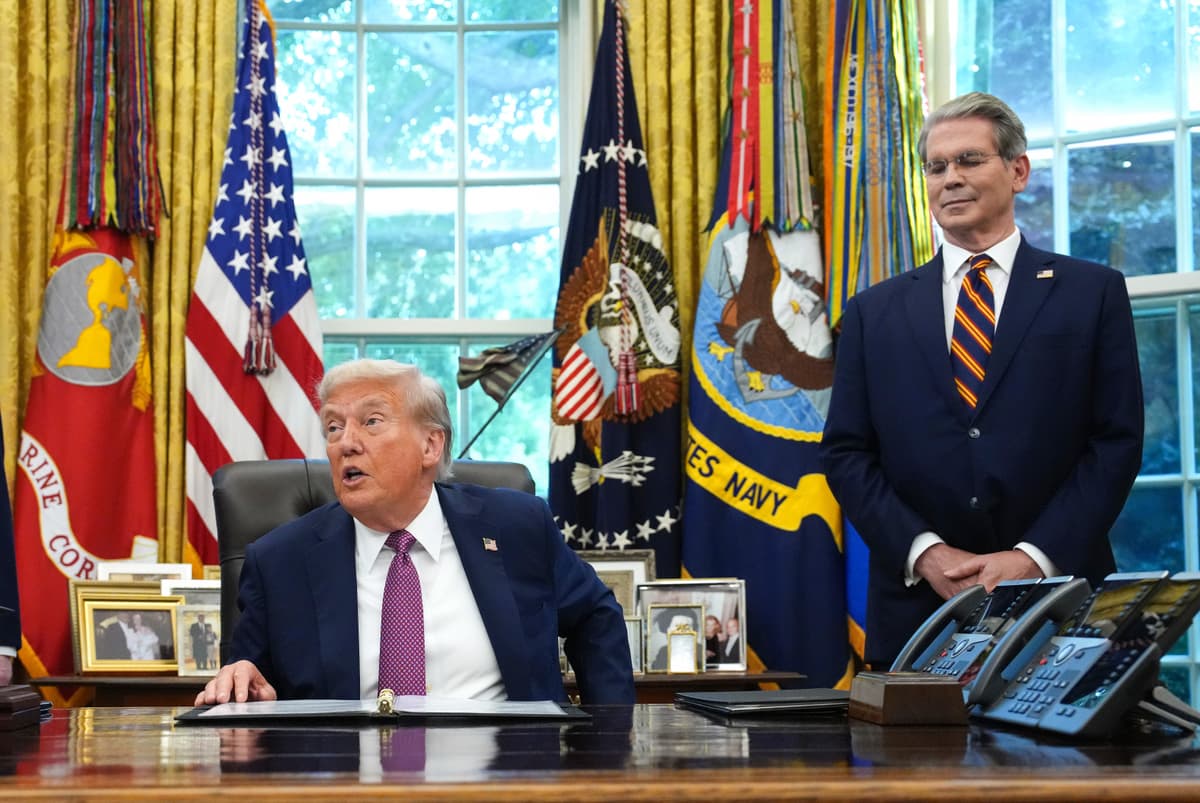

We were glad to see our Larry Kudlow spring to with a column on Treasury Secretary Scott Bessent’s op-ed on the Federal Reserve. Mr. Bessent’s op-ed appears in the weekend Wall Street Journal. It argues that our central bank “put its own independence at risk by straying from its narrow statutory mandate.” Mr. Kudlow reckons it’s an apt point but finds it curious that Mr. Bessent “neglects to mention the dollar.” Our sentiments exactly.
The first thing we did when we saw Mr. Bessent’s column was to scan it for the word “gold.” The monetary metal was unmentioned. That strikes us as odd. On that very day, after all, the value in terms of gold at which greenbacks were trading was about to set a new low of less than a 3,558th of an ounce of the monetary metal. When graphed it’s at the bottom of a decades-long slide. It’s the lowest value in terms of gold ever recorded for the greenback.
We understand that, in the age of fiat money, the legislated value of the dollar is not supposed to matter. In 1971, Nixon closed the gold window at which foreign governments could redeem dollars they held at a 35th of an ounce of gold. In 1973, Congress set the value of the dollar at a 42.22nd of an ounce of gold. Yet Uncle Sam hasn’t enforced that. It is amazing just how loath is our leadership at the Treasury and the Federal Reserve to open up this issue.
What’s so startling about the official silence on the collapse of the dollar is that Mr. Bessent and, above him, President Trump would be — or so it seems to us — a promising pair to take on the issue of fiat money. In the 2016 Republican primaries, moreover, Mr. Trump was widely quoted as saying, per NPR, “Bringing back the gold standard would be very hard to do, but, boy, would it be wonderful. We’d have a standard on which to base our money.”
Mr. Trump, in any event, failed to run on that issue. He’s made do by arguing that he wants the dollar to remain the global reserve currency. Yet at the same time he calls for a weak dollar, at least compared to our trading partners. It’s hard to think of a national currency that might pick up the reserve role the dollar has been playing. Yet it’s also hard to dismiss the reports, like the one this week, of the rising role of gold in the international system.
Just this past week, economists at BlackRock Investment Institute warned, per the New York Post, that markets “can no longer rely on longer-term US Treasuries to offer protection during equity selloffs.” The Post quotes a BlackRock paper dated September 2 as saying: “Gold has surged as investors seek other ways to build resilient portfolios.” It goes on to exclaim that “indeed, foreign central banks now hold more gold than US Treasuries.”
Meanwhile, Goldman Sachs is now predicting, per the Post, that gold prices could soar “to the $5,000 mark” — meaning, in Sun parlance, that the value of the dollar could plunge to less than a 5,000th of an ounce of gold. The Sun doesn’t watch this as an investor or trader in gold; it’s neither. Our interest is in a system of honest money. The opportunity for political leadership on this head, for either party, strikes us as enormous.