The Democratic Party’s Voter Crisis
Yet the party seems unable to shake the leftist tilt that drives its unpopularity.

The startling drop in voters registering as Democrats marks the latest signal that the party needs a course correction. The party is “hemorrhaging voters,” the Times warns on its front page. In the 30 states that monitor registration by party, the Times adds, “Democrats lost ground to Republicans in every single one” between 2020 and 2024, and “often by a lot.” Yet the party seems unable to shake the leftist tilt that drives this unpopularity.
The “swing toward the Republicans” amounts to a “stampede” of some 4.5 million voters, including in battleground states, the Times reports, creating “a deep political hole that could take years for Democrats to climb out from.” Last year, for the first time in seven years, the Gray Lady adds, “more new voters nationwide chose to be Republicans than Democrats.” One would imagine these statistics are raising alarm signals among the party of FDR and JFK.
Too many Democrats, though, seem to be sticking with the far-left positions that have led the party into the political wilderness. These columns recently traced the concerns by Congressman Ritchie Torres, a relative moderate, that the left’s refusal to respect voter fears of crime is handing a victory to President Trump. Governor Gavin Newsom of California seems to prefer emulating Mr. Trump’s combative online tactics over advancing a constructive vision.
This trouble is reflected, too, in bleak fundraising numbers that suggest, these columns reported, that “the blue party is drowning in red ink.” That is in part, we explained, because the Democrats are “in the grip of elite activists who are pushing the party further to the left than its voters necessarily want to go.” The disconnect reflects the power of what columnist Michael Barone calls “the Groups” — nonprofits and activists who wield outsize influence.
One clear-eyed observer on the left of the Democrats’ plight, the Times’s Ezra Klein, laments that these Groups “don’t really represent the people they presume to speak for.” So far, though, there’s little to suggest that the moderates — and even, Heaven forfend, conservatives — within the Democratic Party’s ranks are making much headway on bringing the party back to the vital center.
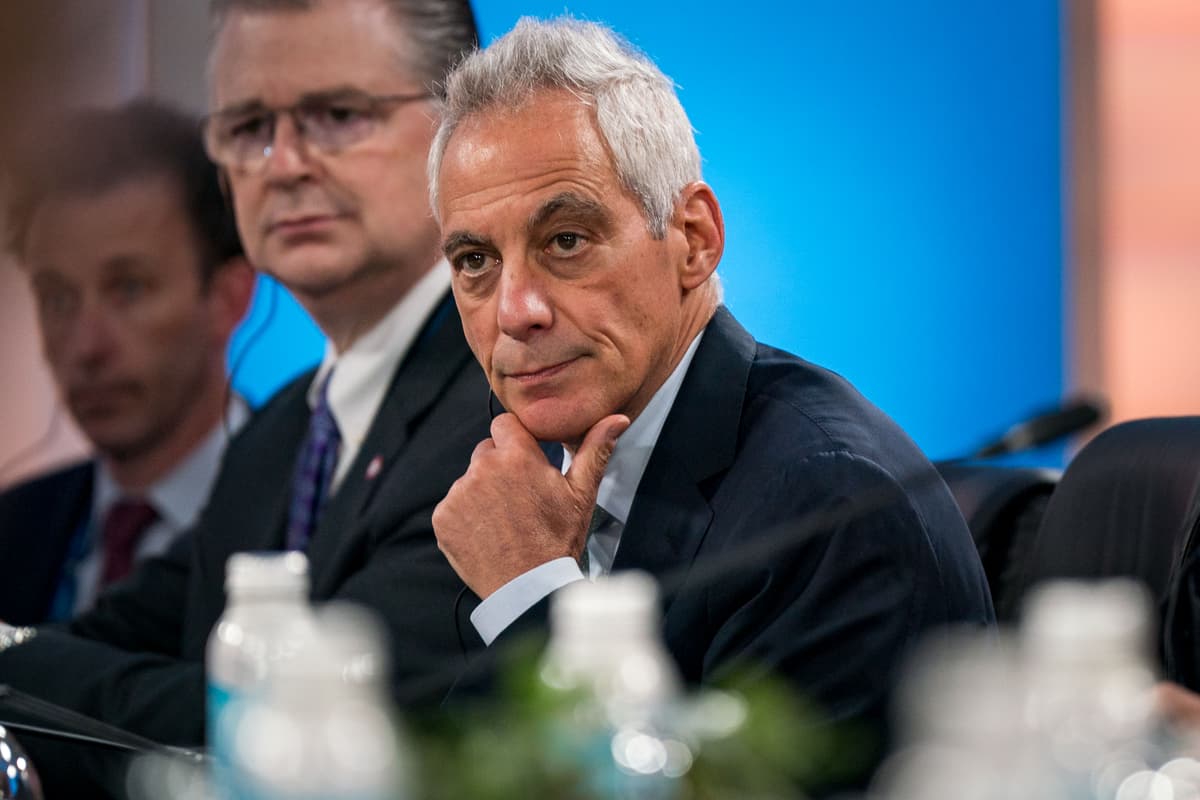
Implausible as it may seem, though, one such voice of reason is President Obama’s former chief of staff, Rahm Emanuel, the erstwhile Windy City windbag. In recent months Mr. Emanuel — who during the Obama years was hardly a moderating influence — has been offering sage counsel as to the Democrats’ lurch leftward. He told George Will that he frets over the party’s leaders sounding as if their thoughts have been “focus-grouped in a faculty lounge.”
Feature the left-wing activists who have tried to foist linguistic novelties like the term “Latinx” on the Hispanic community that prefers, in Mr. Will’s telling, to be called “Americans.” Mr. Emanuel, in his conversation with Mr. Will, suggests that members of the Democratic Party should be less focused on “a child’s right to pick his pronouns” and reflect instead on those “children who do not know what a pronoun is.”
Mr. Emanuel, in a parley with the Wall Street Journal’s Barton Swaim, laments that the Democrats are overly concerned with reflexive resistance to Mr. Trump. Mayor Emanuel is planning a run as the “centrist candidate” in 2028. Too many in the Democratic Party, he says, pointing to one side of the political debate, are “defining themselves” by the goal of “going to fight Trump.” By contrast, Mr. Emanuel avers, “I’m on this end, about how to fight for America.”
Although these columns lean to the right, there’s no glee over the Democrats’ floundering. A healthy two-party system, after all, is critical to the working of America’s democracy, and a functional opposition could help to steer the GOP away from the excesses of single-party control. All the more reason for the Democrats to heed the words of an analyst of voting trends, Tom Bonier, who calls the party’s latest registration numbers “a big flashing red alert.”

