

The End of Lawfare?
The criminal charges against Letitia James offer a moment to recall how the law that once gave us the independent counsels was ‘allowed to expire.’
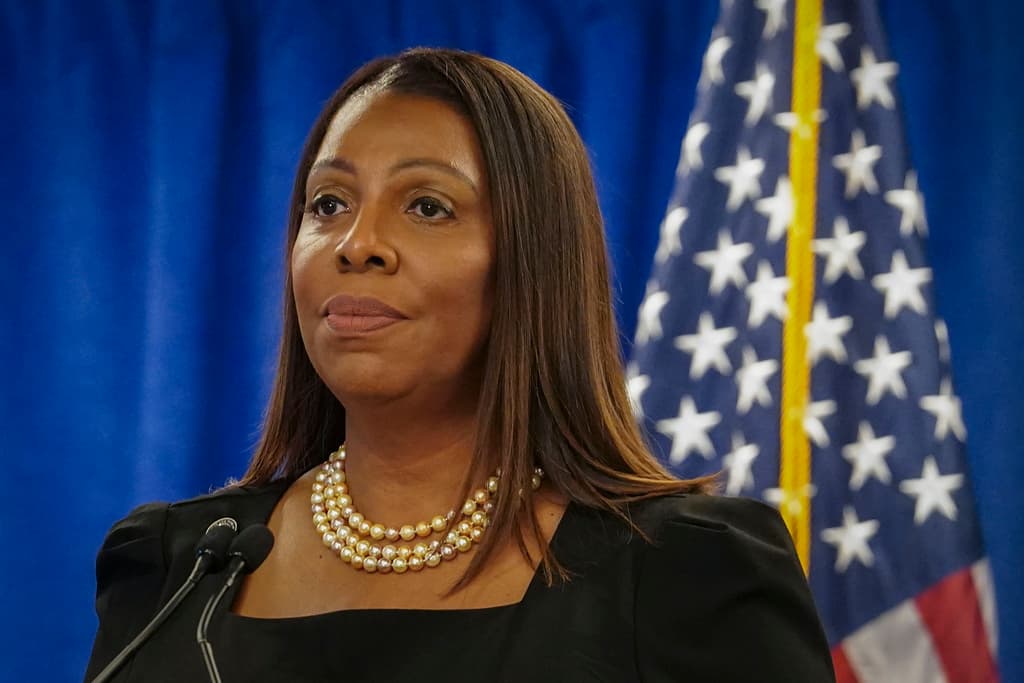
The New York Times is out late this morning with an editorial in respect of the Trump administration’s indictment of New York’s attorney general, Letitia James. It reckons that President Trump is “once again weaponizing the legal system to fulfill his personal vendettas.” That’s precisely what the rest of us reckon President Biden and other Democratic leaders, including Ms. James, were doing against Mr. Trump.
The way the Sun prefers to view the indictment of Attorney General Letitia James is as a first step toward the end of lawfare — the misuse of the law for political aims. We’ve reached that conclusion after years covering the use of special, independent, and regular prosecutors to pursue political leaders. This goes back to the special counsels who went after Presidents Nixon, Reagan, George H.W. Bush, and Clinton.
The Clinton years saw the constitutional contradiction of independent counsels come into focus. In 1988, the Supreme Court, in Morrison v. Olson, insisted that an independent counsel was constitutionally kosher. The one dissent, by The Great Scalia, made the case against prosecutorial independence with great force. Congress — both Republicans and Democrats — failed to renew the independent counsel act.
The rejection of independent counsels was enabled when Democrats and Republicans came to agree. The GOP was smarting over the abuse of the law against the Reagan and George H.W. Bush administrations. The Democrats saw the injustice of the law in the pursuit of Clinton. The result was that the Independent Counsel Act was, as NBC News put it, “allowed to expire.” There wasn’t even much controversy. It was unmourned by everyone.
Something similar, in our view, has been happening today about lawfare. Democrats won’t admit it — yet — but the use by the Biden administration of special prosecutors, heir to independent counsels, to go after Mr. Trump struck millions of Americans as political. The appointment of the leading special prosecutor, Jack Smith, no doubt a fine person, was named days after Mr. Trump announced he’d stand for a second term in 2024.
Democrats supported the prosecutor. Republicans didn’t. Mr. Trump won his second term, and suddenly the shoe is on the other foot, just like it was under a Democrat in the 1990s. Only this time it’s the Republicans pursuing and the Democrats being pursued. We oppose these kinds of political prosecutions whether they are being pursued by the left or right and regardless of whether special counsels are involved. They are poisoning our politics.
One of the reasons is that these political prosecutions, whether pursued by Democrats or Republicans, exemplify the practice Attorney General Robert Jackson warned against in 1940 in his famous speech to federal prosecutors — finding your target and then seeking a legal violation on which to pursue him. The case against Mr. Trump was civil mortgage fraud; Mr. Trump’s case against Ms. James also alleges mortgage fraud, though as a felony.
We wouldn’t have pursued the charges against either side. It was obvious when Mr. Trump faced four criminal cases and Ms. James’s civil one that politics was playing a role. Ms. James had campaigned on the hustings promising to “shine a bright light” into Mr. Trump’s business dealings. District Attorney Alvin Bragg’s case was tissue thin at the time it was brought and remains so now, even if it ended in 34 guilty verdicts.
The DOJ’s indictments against Ms. James and Mr. Comey appear, to our eyes, no more robust. It could be that more evidence has been adduced than the public has seen so far. The two defendants will have every opportunity, though, to contest the charges — both before opening statements and at trial. If they secure acquittals or dismissals, Mr. Trump will have to content himself with denunciations. Lawfare could end not with a bang but a whimper.