The Next Big Fight Over Abortion
Governor Hochul, in defying Louisiana’s attempt to extradite a New York abortion activist, is playing with fire and federalism.
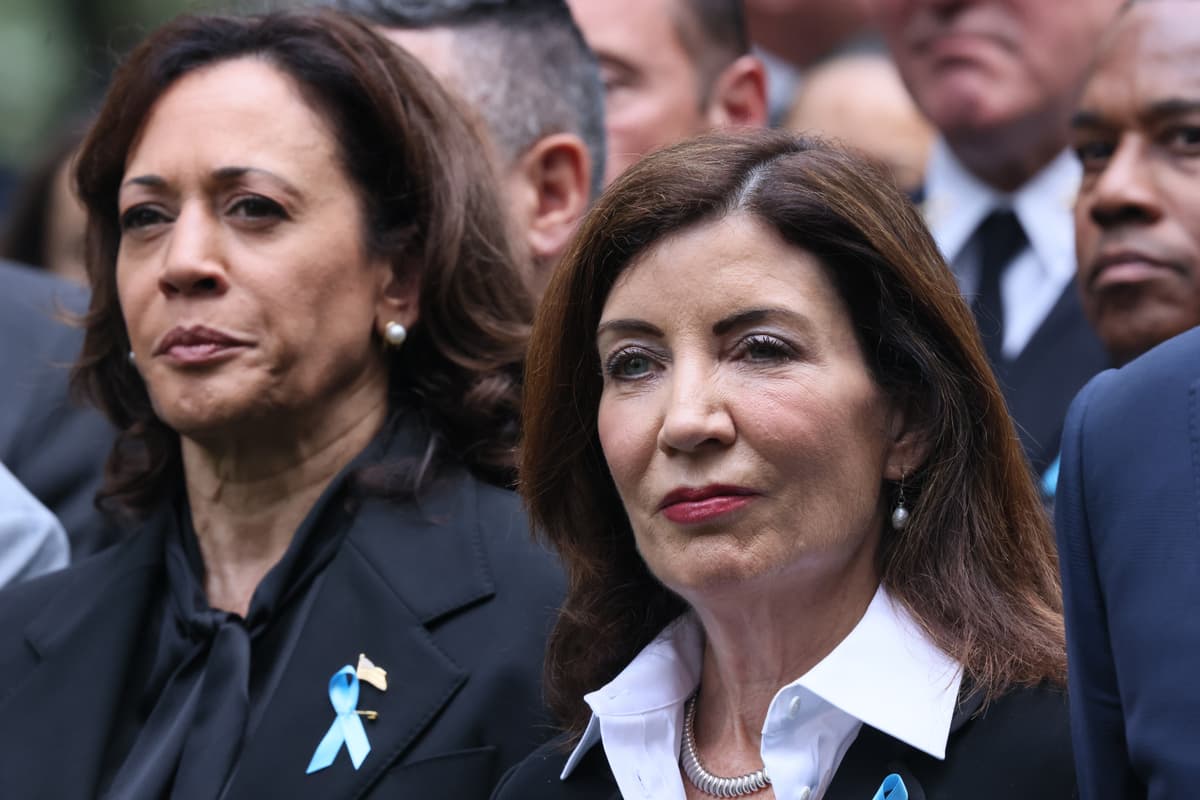

Feature this fact about our columnist Betsy McCaughey: She is one of the few such scribes in America who have a Ph.D. in constitutional history. Ms. McCaughey’s is from Columbia University. Which may, we speculate, be what gives her the savvy to fix on the prospect of a constitutional clash over Governor Hochul’s vow to make New York a sanctuary state in respect of abortion.
Ms. McCaughey’s latest column warns that abortion is emerging as a “new conflict between the states.” A dozen states, including Texas and Louisiana, have, she writes, enacted near-total bans on abortion. “Eight other states, including New York,” she notes, “are going on the offense against these anti-abortion states.” Governor Hochul reckons, Ms. McCaughy writes, that she can dictate abortion policy.
This, in our view, is a recipe for trouble. Governor Hochul signed in 2023 a shield law that, as Ms. McCaughey puts it, “promises legal protection to New York doctors who prescribe abortion drugs via telemedicine to patients in the anti-abortion states.” Ms. McCaughey reports that some doctors “are actually mailing the drugs to these patients.” Texas and Louisiana are pursuing such out of state doctors.
Louisiana, Ms. McCaughey reports, wants to extradite a New York abortion activist, Margaret Carpenter, and try her for violating Louisiana’s prohibition against abortion. Texas has hit Dr. Carpenter with a $100,000 civil fine. Ms. Hochul says there’s “no way in hell” that she would enforce the penalties or surrender Dr. Carpenter. The courts, though, could yet reach a different conclusion about what the Constitution requires.
Imagine that the issue were, say, guns. Imagine a gun dealer in, say, Louisiana, sending to a customer in New York guns that may not be sold or possessed in the Empire State. It would seem logical for New York state to file charges. Either way, where would Ms. Hochul stand in such a situation? Would she ignore such shipments of guns into New York while ignoring a New Yorker sending abortion pills to Louisiana?
What does the Constitution say? It establishes, in Article 4, Second 2, the power of extradition from one state to another. Says it: “A Person charged in any State with Treason, Felony, or other Crime, who shall flee from Justice, and be found in another State, shall on Demand of the executive Authority of the State from which he fled, be delivered up, to be removed to the State having Jurisdiction of the Crime.”
Then again, too, the doctors mailing abortion pills into an anti-abortion state may not have “fled” the anti-abortion state. They may never have been in, say, Louisiana. Would they still be vulnerable to an extradition request? Heritage’s annotated Constitution, citing a case called Roberts v. Reilly, suggests yes. “That the person sought was present in an asylum state before the indictment issued does not insulate him from rendition.”
Given Governor Hochul’s insistence on defying the anti-abortion states means that Texas and Louisiana will have to find a way to move the legal case into federal courts, which could assert authority over all the states involved. The Supreme Court, in Dobbs v. Jackson Women’s Health Organization, in reversing Roe v. Wade, purposely moved abortion out of federal law and returned it to the people of the several states.
So in turning to federal courts, at least in respect of Louisiana’s extradition effort and Texas’s attempt to fine the abortion activist in New York, the case would have a certain irony. Yet it might be the only way to avoid a stalemate. Ms. McCaughey recognizes that such a stalemate would throw into jeopardy the whole principle of extradition — and thus of America’s whole structure of federalism and freedom.