
The Perimeter of Presidential Immunity
Future presidents may yet come to appreciate President Trump’s willingness to defend the office in civil litigation against a president personally.
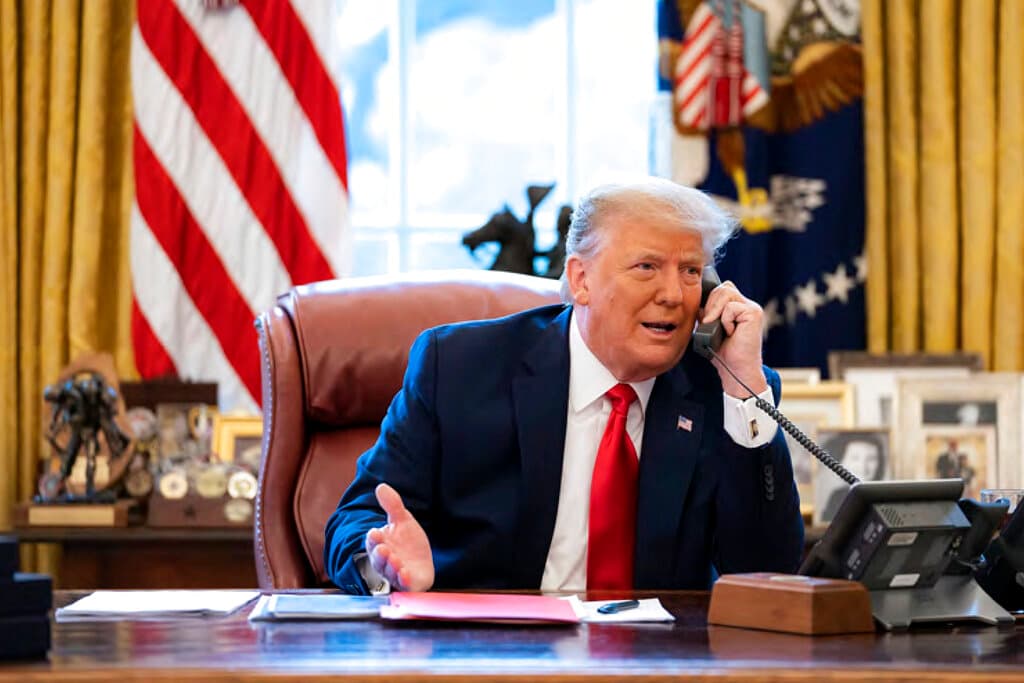
Some day years hence we like to imagine the 44 presidents who served in the Age Before Trump sitting down to write him a letter of appreciation. It would be for his assertion of the privileges, powers, and immunities for which he stood up while the law professors and other politicians snickered. As they will no doubt at President Trump’s latest claim of executive privilege in respect of thousands of records related to the events of January 6.
What prompts us to bring this up now is the latest filing in a lawsuit called Conrad Smith v. Trump. The case is being levied by Capitol police officers who are seeking to hold Mr. Trump, and others, personally liable for civil claims arising from the violence on January 6. It has prompted Mr. Trump to assert executive privilege in respect of some 4,000 of 7,000 documents related to the fray. We see the personal liability lawsuit as a threat to all presidents.
It’s not our intention here to weigh Mr. Trump’s conduct on January 6. It is our intention to mark the dangers posed in this case to the prerogatives of the presidency. Subjecting Mr. Trump to the kind of judicial attack envisioned in the Capitol officers’ suit amounts, we have warned, to an “attempt to undermine the doctrine of separated powers” that could well come back to haunt future White House occupants of either political party.
That hasn’t stopped the Capitol officers, along with Democratic members of Congress, from suing Mr. Trump over January 6, animated by what the Times called “frustration that he has faced no penalty for the riot.” In all, there are eight pending cases against the president, Politico has reported. The case filed by the officers, including Mr. Smith, prompts Mr. Trump to vow that he will “defend the office of the Presidency.”
To that end, he is rejecting the officers’ demand to turn over records about attempts to persuade Mr. Trump on January 6 “to issue statements regarding violence,” per a subpoena, as well as materials relating to “any strategy to overturn the results of the November 2020 Presidential Election.” Mr. Trump says the records are shielded by executive privilege, which enables the president “to receive candid and confidential advice in decision making.”
It’s hard to avoid the logic of the need for a sitting president to protect his or her deliberations from outside scrutiny — especially when they relate to official duties. When Mr. Trump, then a private citizen, made a similar argument against the January 6 Committee demand for his records, though, the Supreme Court in 2022 rejected his plea. Yet the Nine went on, in 2024, to vindicate Mr. Trump’s immunity, in most cases, from criminal prosecution.
In Trump v. United States, Chief Justice Roberts stated that “as for a President’s unofficial acts, there is no immunity,” adding that “the principles we set out in Clinton v. Jones confirm as much.” When it comes to civil suits, like the one brought by the Capitol officers, the high court held in 1982 in Nixon v. Fitzgerald that a president has “absolute” immunity for acts that fall within the “outer perimeter” of his or her “official responsibility.”
This explains why, after a 2023 appeals court ruling, the Capitol officers’ case was sent back down to the district court in order to sort out whether, and potentially which of, Mr. Trump’s deeds on January 6 amounted to official acts. That review is still under way. Chief Justice Roberts, in Mr. Trump’s immunity case, acknowledged that sifting through a president’s official and unofficial conduct “can be difficult.”
That’s an understatement. It suggests the merit in the judiciary giving presidents the benefit of the doubt. It reflects an understanding on Mr. Trump’s part of what’s at stake constitutionally. He himself avers that his concerns on January 6 related to his official duties. Ensuring an accurate vote count, he reckons, reflects his obligation to “take Care that the Laws be faithfully executed.” Presidential duties don’t get much more official than that.