The Trump-Putin Relationship Enters Uncharted Territory With Big Risks for Both
The president ‘has recognized he needs to teach Putin some respect,’ one analyst says.
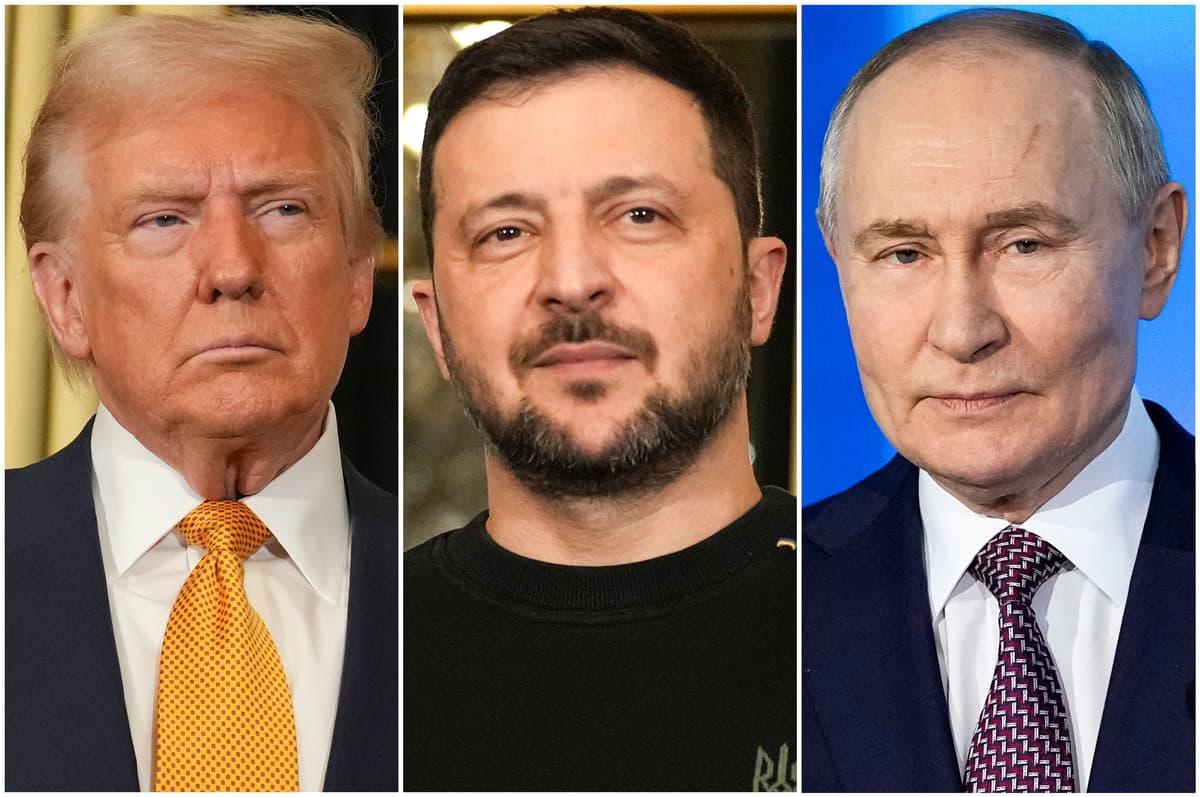
In a dramatic reversal of his long-held conciliatory stance toward President Putin, President Trump has unveiled a sweeping arms deal for Ukraine and issued a stark ultimatum to Moscow. The move — marking his most aggressive policy shift on the war to date — includes advanced missile systems and threats of severe economic retaliation.
It signals not only a potential turning point in the three-year conflict, but also a fundamental recalibration of Trump’s approach to Russian aggression.
So, what is behind the sudden change?
“Trump’s pivot is seismic — a masterclass in coercive diplomacy,” Managing Director of Nestpoint Associates, John Thomas, tells the New York Sun. “He started his term pushing for quick peace. But Putin’s refusal to budge flipped the script. This isn’t just frustration — it’s Trump proving he’s no pushover.”
Another unexpected driver of the shift: the First Lady.
Mr. Trump credited Melania Trump with urging him to reassess the Russian leader’s peace overtures. “She saw through the lies,” he said. “She told me to stop pretending Putin was ever serious.”
While Ms. Trump’s role in policy has typically been behind the scene, sources close to the White House say she has privately expressed concern over civilian casualties and what she views as Kremlin duplicity.
Trump’s Arsenal: Missiles and Market Pressure
On July 14, Trump announced a significant increase in military aid to Ukraine, pledging to send advanced weaponry, including the Patriot missile defense systems. The deal is designed to bolster Ukraine’s ability to defend its airspace against Russian attacks. It represents a substantial escalation beyond the mostly defensive support the United States has provided until now.
Mr. Trump also hinted at supplying long-range Tomahawk missiles, which would expand Ukraine’s offensive capabilities against Russian positions.
“Militarily, Patriots and potential Tomahawks give Ukraine a game-changer. Patriots can shield cities like Kyiv from Russia’s drone and missile barrages, and these systems could save lives and infrastructure,” explained Mr. Thomas.
“Long-range missiles might let Ukraine hit Russian supply lines deep inside their territory, shifting the war’s momentum. Diplomatically, it’s a gut punch to Putin, signaling Trump’s done with empty talks.”
Mr. Trump’s new posture isn’t limited to the battlefield.
The president also delivered a sharp ultimatum to his Russian counterpart: Moscow must cease hostilities in Ukraine within 50 days or face “unprecedented” economic consequences. Specifically, Mr. Trump threatened to impose 100 percent tariffs on all nations that continue trading with Russia, a move intended to economically isolate Moscow and pressure it into halting the war.
This sweeping economic threat extends beyond traditional sanctions, adopting a “secondary” approach and aiming to dissuade key trade partners, such as China, Brazil, and India, from providing Russia with vital economic lifelines.
“Oil exports to China and India fund Putin’s war machine. By threatening countries like Beijing, which buys billions in Russian crude, Trump is squeezing Moscow’s economy,” noted Mr. Thomas. “This could force Putin to negotiate, as Russia’s battlefield gains have been minimal.”
CEO and Founder of the Ukraine-based Institute for Conflict Studies and Analysis of Russia, Alexander Shulga, tells the Sun that the imposition of secondary sanctions “would be an important step in undermining Russia’s ability to continue the war.”
“But just as importantly, it would finally destroy the Russian elite’s hopes for Trump and the possibility of enduring a few more months,” he said. “This in turn would directly pose to the elite the question of where Putin personally is leading their country and whether he is maintaining a strategically rational vision of the situation.”
As Senior Research Fellow at the Jamestown Foundation, Sergey Sukhankin, tells the Sun, “China made it very clear that it cannot allow Russia to lose in Ukraine since this would allow the U.S. to fully switch its attention to China.”
The problem with sanctions, however, is the implementation.
“Russia uses a shadow fleet of hundreds of tankers, with disabled transponders using illegal foreign flags to evade sanctions and deliver oil to Russia and China,” former chief of staff in the U.S. House of Representatives and founder of the information and humanitarian charity, Ukraine Freedom Project, Steven Moore, tells the Sun. “Anything President Trump can do to shut down Russian oil will slow down Putin’s army.”
Moscow Dismisses Threats, But Kremlin Faces Pressure
Russia’s response to Mr. Trump’s ultimatum and arms package has been predictably dismissive. Deputy Foreign Minister Sergey Ryabkov called the demands “unacceptable” and rejected ultimatums as a basis for dialogue. Former President Dmitry Medvedev labeled the sanctions threat “theatrical” and declared that Russia would not be deterred by economic coercion or “blackmail.”
Moscow has since reiterated its commitment to continuing military operations until it achieves its objectives in Ukraine, signaling no immediate intention to engage in ceasefire talks.
Analysts, however, contend that Mr. Trump’s shift “is altering Putin’s end-game strategy.”
“Without access to hard currency through energy sales, the Kremlin will rapidly run out of money to finance the war,” adjunct senior fellow at the Foundation for Defense of Democracies, Peter Doran, tells the Sun. “The Kremlin will immediately face hard choices, which will all threaten his regime’s stability. That will change the trajectory of the war very fast.”
Turning Point or Tripwire?
The international community has reacted to Mr. Trump’s strategic shift with a mix of cautious optimism and concern. European leaders have welcomed the increased military aid to Ukraine, but are careful about further escalating tensions.
Yet, according to Mr. Moore, the “show of strength only gives President Trump more diplomatic leverage over Putin,” which will benefit the entire region.
“Putin has signaled he does not respect President Trump. Trump has recognized he needs to teach Putin some respect,” Mr. Moore continued.
“President Reagan brought down the Soviet Union with this economic and military pressure. Putin is dealing with 20% interest rates and crippling war-related debt. And a lot of soldiers in caskets. Sustained economic and military pressure on Russia by the president will create a willingness for Putin to negotiate.”
For Ukraine, the promise of more advanced weapons represents a critical boost amid a brutal and grinding conflict. The humanitarian cost of the war is staggering. Civilians in Ukraine continue to suffer from widespread bombardment and displacement, and the military situation on the ground is volatile.
The 50-day deadline Mr. Trump set creates a window for Russia to reconsider its course, but experts caution that Kremlin leaders appear prepared for a prolonged conflict.
“Escalation is the big risk. Supplying long-range missiles could provoke Putin to double down. Tariffs might backfire, too, straining ties with India or raising gas prices at home,” noted Mr. Thomas.
“But Trump’s not reckless — he’s banking on Russia’s weakened position, with massive losses and a strained economy, to force talks. If Trump didn’t make this move, the U.S. runs a greater risk of endless war draining U.S. resources.”
There is, however, one significant wild card that is not lost on the international community.
“The only serious escalation level left for Moscow is the use of tactical nuclear weapons,” Mr. Shulga said.