The Unresolved Cases of Presidential Immunity
The 47th president argues that courts have yet to reckon with the full extent of the protection he is owed.
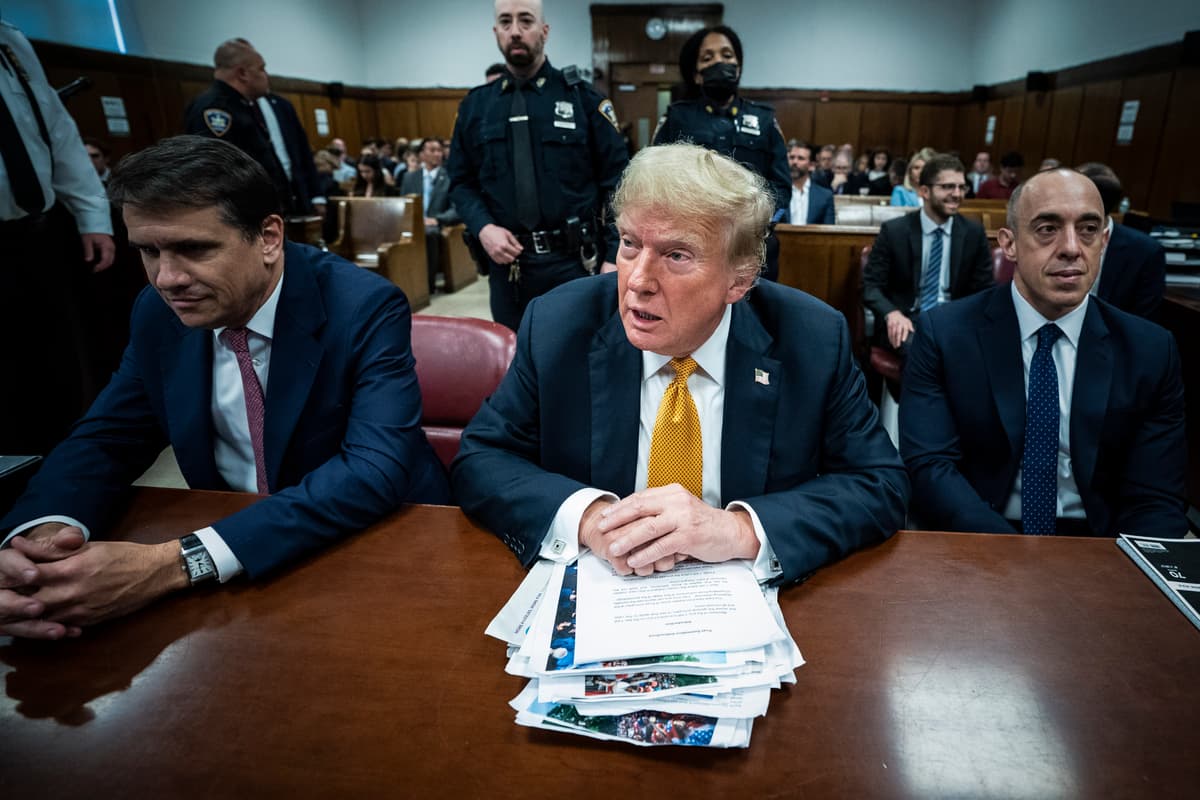

The Supreme Court’s landmark immunity decision in Trump v. United States is emerging as a centerpiece of the president’s appellate efforts to upend verdicts in two cases — the civil one brought by E. Jean Carroll and the criminal one that turns on payments to the adult film actress Stormy Daniels. Both appear likely to reach the high court, and in both the justices could accept the president’s invitation to extend the reach of Trump.
Meaning, we wouldn’t bet the family car against the president’s position, even if lower courts have been skeptical. That presidents are owed any protection at all was a notion rejected by a federal district court judge, Tanya Chutkan, and the vaunted District of Columbia Appeals Circuit. The special counsel, Jack Smith, prosecuting Mr. Trump, came to the high court with a head of steam. The justices, though, insisted on immunity.
Last month Mr. Trump argued that the core ruling of Trump — that official presidential acts are presumptively immune from prosecution, while unofficial ones are denied that protection — justifies overturning the $83 million defamation verdict against him secured by the writer E. Jean Carroll. Mr. Trump’s lawyer told the circuit riders that the civil verdict “severely damages the presidency” and that his client has been denied protection he is due.
Ms. Carroll’s lawyer, Roberta Kaplan, fired back that “presidential immunity can be waived, and that Trump waived it here.” The trial judge, Lewis Kaplan, found that Mr. Trump waived the protection. Ms. Kaplan contended, “If there were ever a case where immunity does not shield a president’s speech, this one is it.” Mr. Trump argues that since he denied Ms. Carroll’s accusations through official channels, he is protected from liability.
The Supreme Court held in Clinton v. Jones that sitting presidents are not immune from civil suits while in office, but that was a different court. This edition of the Nine appeared to endorse that position in Trump, though the president argues that there is room for nuance. During the Carroll case Mr. Trump’s lawyer — now America’s solicitor general — wrote in a brief to the Second Circuit: “Presidential immunity forecloses any liability.”
Mr. Trump would appear likely to make a similar argument in his appeal in a New York state court of his 34 convictions stemming from payments made to Ms. Daniels. Our A.R. Hoffman broke the news that his argument is due in September to the state’s Supreme Court, Appellate Division, First Judicial Department. The trial judge, Juan Merchan, sentenced Mr. Trump to an “unconditional discharge,” meaning no further punishment is prescribed.
If Mr. Trump, though, wants to undo his status as a convicted felon, he will have to persuade the appeals court to dismiss the conviction. A legal sage following the case, Seth Barrett Tillman, tells Mr. Hoffman that he would not be shocked if the president’s argument for reversal invoked presidential immunity — even if Judge Merchan already decided at an earlier juncture that the payments at issue were entirely “unofficial conduct.”
Judge Merchan’s ruling that the verdict against Mr. Trump “poses no danger of intrusion on the authority and function of the Executive Branch” could warrant raised eyebrows of the same justices who affirmed broad presidential immunity in the first place. That Mr. Trump’s conviction was secured in a state court by a state prosecutor — federalism concerns are implicated — could be all the more reason for the justices to intervene.