

The Word Secretary Bessent Dasn’t Utter
He wants to reconnect to Bretton Woods but shrinks from addressing the central feature of the Bretton Woods System.
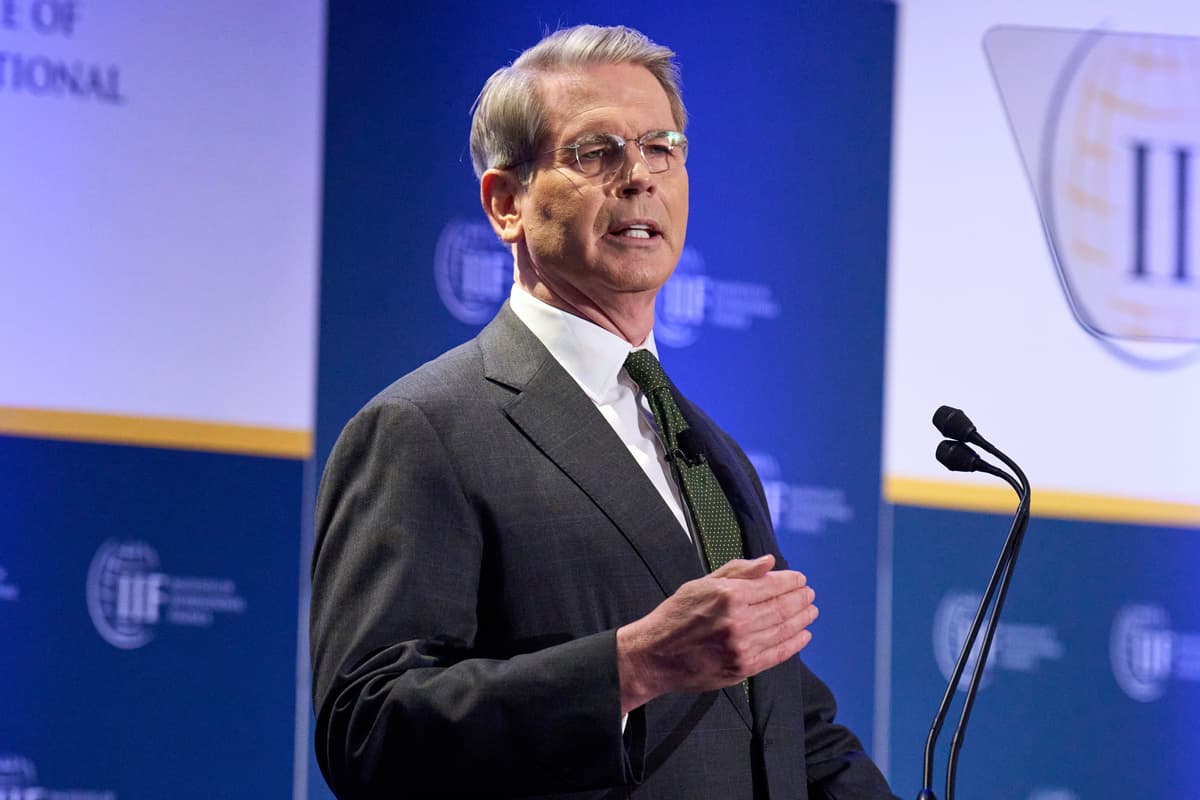
Secretary Bessent is urging the International Monetary Fund and the World Bank to “reconnect” with “their founding missions” and “restore order to the international system” forged by the Bretton Woods agreements. Yet Mr. Bessent, speaking to the Institute of International Finance, devoted some 2,400 words on a “blueprint to restore equilibrium to the global financial system” without mentioning the word at the heart of the Bretton Woods pact: gold.
“In the final months of World War II,” Mr. Bessent says, “Western leaders convened the greatest economic minds of their generation” to “build a new financial system.” At Bretton Woods, “a quiet resort high up in the mountains of New Hampshire, they laid the foundation for Pax Americana.” That foundation, though, cannot be understood without reference to the dollar, defined by a fixed weight in gold, that underpinned the entire Bretton Woods system.
That gold-backed dollar — a partial restoration of the gold standard that spurred more than a century of high growth and low inflation until it broke down during World War I — emerged as the global reserve currency after World War II in part because of the vows America made at Bretton Woods. Uncle Sam agreed to redeem in gold, at the rate of a 35th of an ounce, dollars other nations presented to it from time to time. That was the “gold window.”
America “had the responsibility of keeping the price of gold fixed and had to adjust the supply of dollars to maintain confidence in future gold convertibility,” the Fed’s Sandra Ghizoni explains. Mr. Bessent made no mention of the central role of gold. He mentioned only that the Bretton Woods system led to “global monetary cooperation and financial stability.” Under Bretton Woods, America saw decades of low-inflation growth and full employment.
It is true that the convertibility requirement drained America’s gold. That, though, was not the fault of gold. It was the fault of Congress, which overspent, including, but not only, for the Vietnam war, and economic competition from other countries. So Bretton Woods started to wobble in the 1960s amid “persistent U.S. balance-of-payments deficits” that “led to foreign-held dollars exceeding the U.S. gold stock,” Ms. Ghizoni explains.
Rather than reform the system, fix America’s trade and budget deficits, or adjust the dollar’s gold value, President Nixon in 1971 closed the gold window — the central feature of Bretton Woods, even if Mr. Bessent didn’t mention it. The closing of the gold window stunned the world and became known as the “Nixon shock.” That ushered in a decade of stagflation and the fiat currency system of gyrating paper money values that prevails to this day.
No wonder Mr. Bessent reckons that “everywhere we look across the international economic system today, we see imbalance.” While the IMF’s focus was once “global monetary cooperation and financial stability,” Mr. Bessent says, it now “devotes disproportionate time and resources to work on climate change, gender and social issues.” He laments that “mission creep has knocked” the Bretton Woods institutions “off course.”
Why won’t Mr. Bessent utter the word “gold”? Why won’t others? One World Bank president, Robert Zoellick, wrote a few years back a piece for the Financial Times urging some role for gold in the international system. The FT was so shocked that it wrote an editorial attacking the distinguished Mr. Zoellick for writing such a piece in the FT. Who is going to be bold enough to stand before the American people and utter the word Mr. Bessent dasn’t?