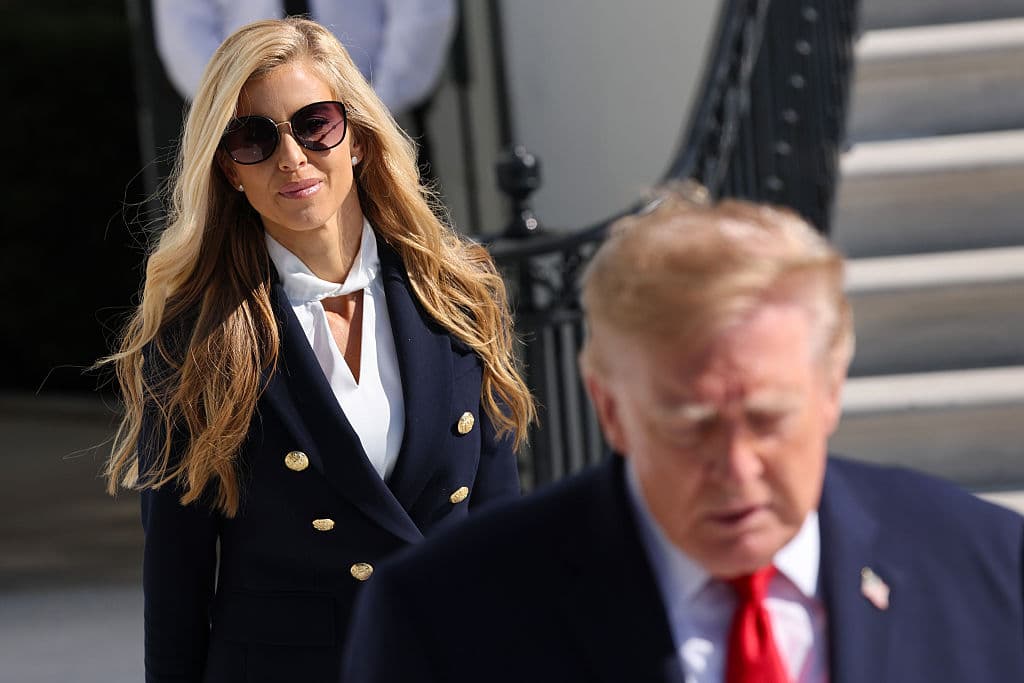
Trump Basks in the Glory of the Eighth Amendment 

President finds shelter under one of the oldest bulwarks of freedom in the Anglo-American legal tradition.
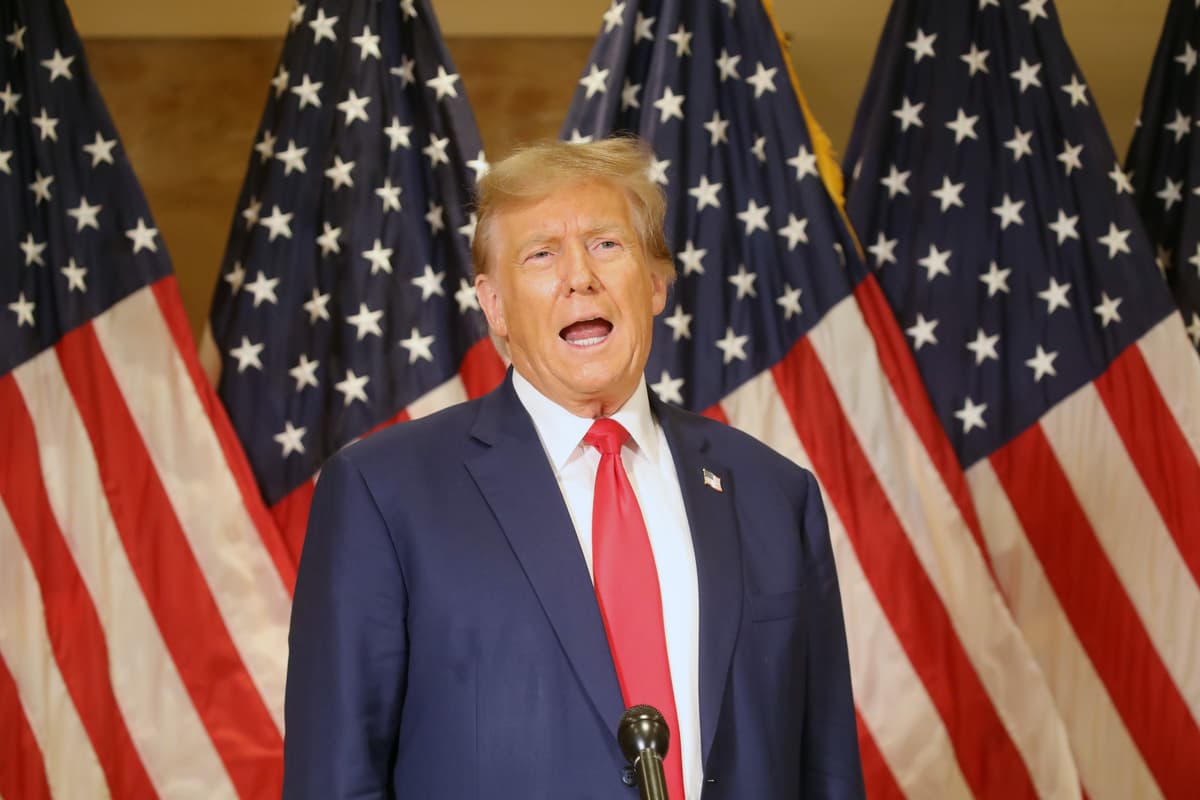

Spencer Platt/Getty Images
President Trump speaks to the press during his civil fraud trial at Manhattan, January 2024. Spencer Platt/Getty Images

A New York state appellate court’s reversal of the $515 million civil penalty against President Trump is a moment to mark the glories of the Eighth Amendment to the Constitution. The penalty emerged in a fraud case, tinted with partisan animus, brought by New York’s attorney general, Letitia James. While the appellate justices upheld the questionable holding that Mr. Trump committed fraud, they found that the vast penalty breached the Eighth Amendment.

The Eighth, which dates to 1791, is one of our oldest bulwarks of freedom under the Anglo-American legal tradition. The language of the amendment is all the more powerful for its brevity: “Excessive bail shall not be required, nor excessive fines imposed, nor cruel and unusual punishments inflicted.” The amendment’s wording, Justice Joseph Story has explained, is a near-duplicate of a provision* in Great Britain’s Bill of Rights of 1688.

The British version, part of a set of protections of liberty against infringement by the Crown, emerged as a landmark in the evolution of democracy in the West. So one can hardly begrudge the Framers for this historic plagiarism. Story notes that the amendment was “adopted, as an admonition to all departments of the national government,” so as to “warn them against such violent proceedings, as had taken place in England in the arbitrary reigns of some of the Stuarts.” 

In Story’s telling, the British measure was meant to kibosh royal abuses of that earlier era, when “a demand of excessive bail was often made against persons, who were odious to the court, and its favourites.” Those unable to pay “were committed to prison.” Story adds: “Enormous fines and amercements” — financial penalties — “were also sometimes imposed” by the kings of old, “and cruel and vindictive punishments inflicted.” 

Story’s appraisal reminds that state power can all too often be guided by favoritism and pique. Hence the need foreseen by Britons and the Framers to impose guardrails on the authority of the government when it comes to court-imposed punishments. Story, for his part, saw the Eighth Amendment as “wholly unnecessary in a free government,” because “it is hardly possible” that anyone in such a state could “authorize, or justify such atrocious conduct.”

One can forgive Story, though, who died in 1845, for this failure of imagination. After all, he never made the acquaintance of such figures as General James, nor the New York state judge who imposed the half-billion-dollar fine on Mr. Trump, Arthur Engoron. It’s hard to avoid the sense that the partisan tilt among these liberal legal practitioners led them to traverse the boundaries of blind justice.

Plus, too, the delay in handing down a ruling in Mr. Trump’s appeal — “more than 300 days,” our A.R. Hoffman reports, “in marked contrast to the month or so that these decisions usually take” — itself tested the limits of constitutional jurisprudence, including, say, the right to a “speedy” trial. Mr. Hoffman adds that because the tribunal declined to dismiss the case entirely, an appeal to New York’s highest court “appears inevitable.”

The civil case brought by General James, these columns have noted, seemed to bear a fatal defect from the outset in light of the failure to find that any of Mr. Trump’s dealings led to a financial loss for any of his business partners. So it’s hard to see the logic in the finding by one of the appellate judges, Peter Moulton, that “harm certainly occurred,” even if he concedes that “it was not the cataclysmic harm that can justify a nearly half billion-dollar award to the state.”

So while Judge Engoron’s ruling was “well crafted to curb defendants’ business culture,” the appellate judges ruled, the huge penalty was “an excessive fine that violates the Eighth Amendment.” Mr. Trump commends the court’s “Courage to throw out this unlawful and disgraceful Decision.” Trouble might await at the court of appeals, whose bench is filled by Democratic nominees who could lack as clear a ken of the Constitution. 

___________

* “That excessive Baile ought not to be required nor excessive Fines imposed nor cruell and unusuall Punishments inflicted,” the rights bill of 1688 states, with 17th-century spelling intact.


The New York Sun

© 2025 The New York Sun Company, LLC. All rights reserved.

Use of this site constitutes acceptance of our Terms of Use and Privacy Policy. The material on this site is protected by copyright law and may not be reproduced, distributed, transmitted, cached or otherwise used.

The New York Sun

Sign in or  create a free account

or
By continuing you agree to our Privacy Policy and Terms of Use