
Trump Gets a Second Look in Hush Money Case

Second Circuit wants a lower court to take another gander at whether the case should have been moved to a federal bench.
Steven Hirsch-Pool/Getty Images
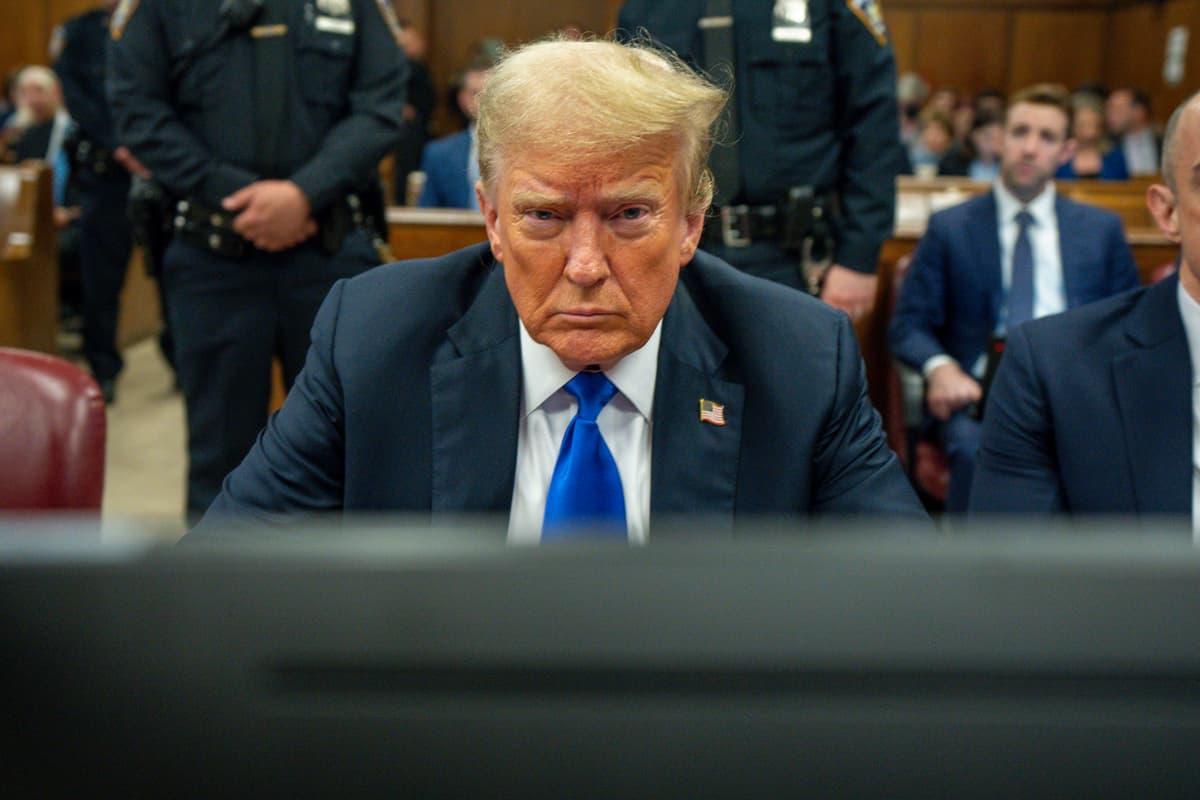
President Trump appears in court for his hush money trial at Manhattan Criminal Court on May 30, 2024, at New York City. Steven Hirsch-Pool/Getty Images

Score another constitutional win for President Trump on appeal. The latest comes from the Second United States Appeals Circuit. A three judge panel — all Democratic appointees, no less — allowed for the possibility that the Stormy Daniels hush money case belongs in federal court after all. In our view it would have been best if it never had been brought. That is also the view of federal prosecutors and District Attorney Alvin Bragg’s predecessor, Cyrus Vance Jr.

The hush money case was not only brought, but Mr. Trump was convicted. Judge Alvin Hellerstein of the Southern District of New York twice turned away his pleas to move the proceedings to federal court. The first time the venerable judge ruled that the payments were “private unofficial acts.” Judge Hellerstein also blocked Mr. Trump’s second request for removal, ruling that even presidential immunity was not a pass to a federal forum.

Now the Second Circuit wants Judge Hellerstein to revisit the question. The appellate court found that he did not “adequately considered issues relevant to the 
 inquiry so as to enable meaningful appellate review.” The circuit riders add that they “express no view and ‘neither rule nor imply’ that the District Court should resolve Trump’s motion 
  in any particular way.” Meaning that the question of fora is still an open one.

The appellate court found that Judge Hellerstein failed to inquire into “whether certain evidence admitted during the state court trial relates to immunized official acts or, if so, whether evidentiary immunity transformed the State’s case into one that relates to acts under color of the Presidency.” That hardly strikes us as small potatoes. It is an error of omission — if we may be so bold — that touches on the bedrock powers of the presidency.

The Supreme Court held in Trump y. United States that  Presidents cannot be indicted based on conduct for which they are immune from prosecution 
 Testimony or private records of the President or his advisers probing such conduct may not be admitted as evidence at trial.” Mr. Trump contends that the hush money case against him was built, at least in part, on protected evidence. The state judge, Juan Merchan, has denied that claim. 

The whole point of allowing removal to a federal forum, though, is that there are certain occasions where federal officials can credibly worry that they won’t get a fair shake in state court. The rules of criminal procedure mandate that removal is available only for  “any act under color” of federal office. The Second Circuit expresses “no view” on whether Mr. Trump has met that standard, but they do want Judge Hellerstein to take a searching second look.

The latest from Foley Square adds to a pattern of Mr. Trump prospering on appeal. From disqualification on the basis of the 14th Amendment to presidential immunity to the gigantic civil fraud verdict secured by New York Attorney General Letitia James, second looks have often been kinder to the 47th president than initial impressions. Mr. Trump has separately appealed his convictions in state court. We wouldn’t be shocked by a reversal.     


The New York Sun

© 2025 The New York Sun Company, LLC. All rights reserved.

Use of this site constitutes acceptance of our Terms of Use and Privacy Policy. The material on this site is protected by copyright law and may not be reproduced, distributed, transmitted, cached or otherwise used.

The New York Sun

Sign in or  create a free account

or
By continuing you agree to our Privacy Policy and Terms of Use