Trump Tones Down His Case Against the Times
One might call it the ‘illusion of libel.’

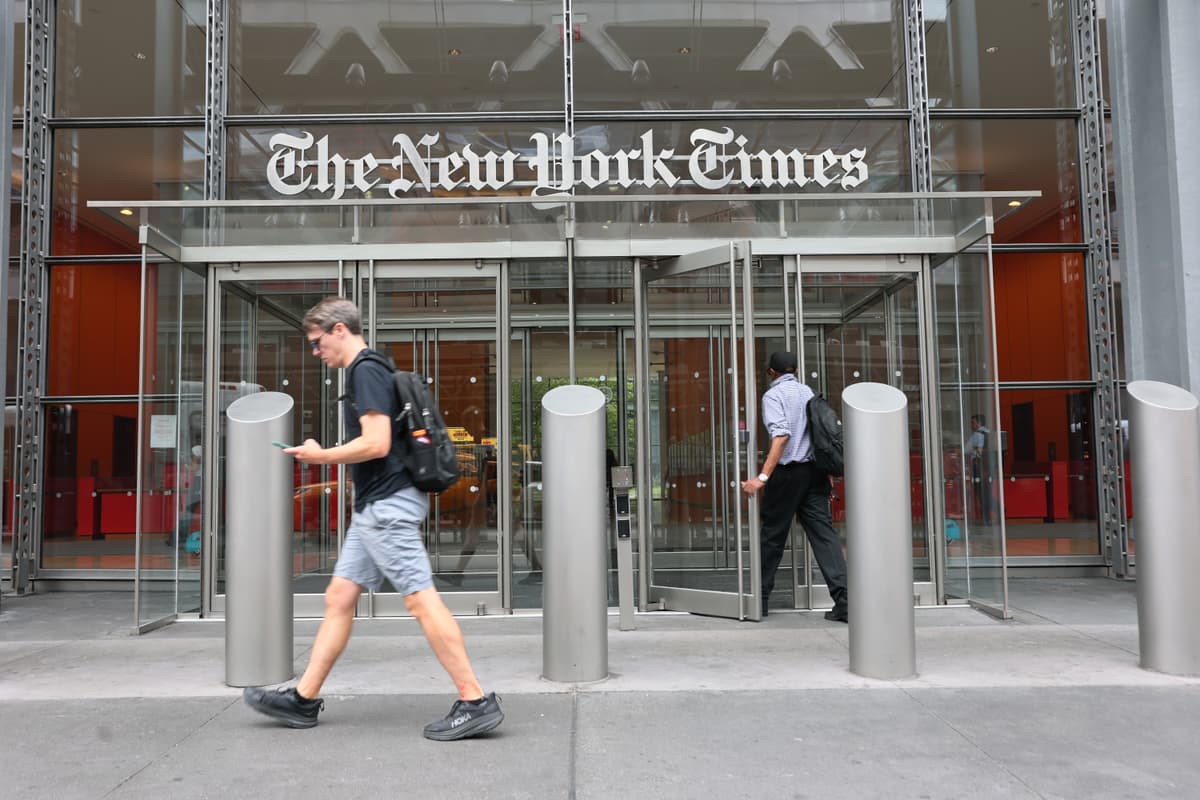
President Trump, it seems, is bowing, at least a bit, to the judge in his $15 billion libel lawsuit against the Times. The president’s initial complaint against the Grey Lady ran afoul of a federal judge who is a stickler for the rules of civil procedure, finding the suit was too long. “A complaint is not a public forum for vituperation and invective,” Judge Steven Merryday averred. Mr. Trump is back with a suit that tones down the verbosity without pulling punches.
The president’s lawsuit seeks to hold accountable the Times, along with two of its reporters and their publisher, Random House, for “false, malicious, and defamatory statements” made in newspaper articles and a book titled “Lucky Loser.” The tenor of the book, penned by Russ Buettner and Susanne Craig, is conveyed by its subtitle: “How Donald Trump Squandered His Father’s Fortune and Created the Illusion of Success.”
The defendants in Mr. Trump’s suit all acted with “actual malice,” the president contends, displaying “reckless disregard for the truth.” Yet the Times calls the revived lawsuit “an attempt to stifle independent reporting and generate P.R. attention” and vows not to be “deterred by intimidation tactics.” Random House says that the lawsuit is “meritless” and that it will “stand for the important fundamental principles of the First Amendment.”
So far, there’s no word from Judge Merryman as to whether the revised lawsuit — which is trimmed by about half in terms of page length — will pass muster. The judge, nominated to the bench by President George H.W. Bush, had described Mr. Trump’s first filing as “decidedly improper and impermissible” for failing to make “a short and plain statement of the claim.” The judge, too, stressed the importance of “a professional and dignified manner.”
By shedding some extraneous verbiage, Mr. Trump’s revised lawsuit offers an opportunity for a jury to weigh the merits of his case against the Times. The president accuses the paper and its scribes of following “an internal practice” that leads its coverage of Mr. Trump to “be written in an antagonistic and negative manner.” He adds that Times reporters “routinely resolve any factual ambiguities or uncertainties” in a way “that will harm President Trump.”
The Times’ policies, Mr. Trump adds, “go against widely accepted journalistic standards, such as deliberately ignoring potentially positive and exculpatory sources of information” and “incorrectly deeming statements by witnesses or insiders that tend to support President Trump” as unreliable or “not credible.” Plus, too, the Times relies on anonymous sources and publishes critical accounts “without verification of sources’ claims.”
In leveling these criticisms against the Times and its staff, the president’s suit is of a piece with his earlier lawsuits against mainstream press organizations. CBS News and ABC News have both paid millions of spondulix to settle cases brought by Mr. Trump over negative coverage. The president, too, is suing the board of the Pulitzer Prizes for honoring reporting that he contends falsely alleged collusion between his 2016 campaign and Russia.
Mr. Trump in June dropped a case against the Des Moines Register and pollster Anne Selzer, who had found — erroneously, it turned out — Vice President Harris was leading in Iowa polls against Mr. Trump before the 2024 election. Now that Mr. Trump has revised his suit against the Times, the case joins the roster of legal actions testing whether purported hostility to the president is shielded by the First Amendment’s guarantee of Freedom of the Press.
Mr. Trump’s lawsuit against the Times is likely to prove one of the most closely-watched cases of this stripe since Governor Sarah Palin’s game but failed case against the Grey Lady. It could turn out, as evidence is adduced, that the Times’ coverage meets the definition of libel. It looks to us, though, like a stretch too far. If newspapers can’t issue highly opinionated coverage about the president of the United States, it’s hard to think what they can do.