
Trump’s Abraham Accords at Critical Juncture as Gaza War Rages On
‘Existing members show no signs of leaving the accords but expanding them is now a much heavier diplomatic lift, at least until the (Gaza) conflict ends,’ one expert says.
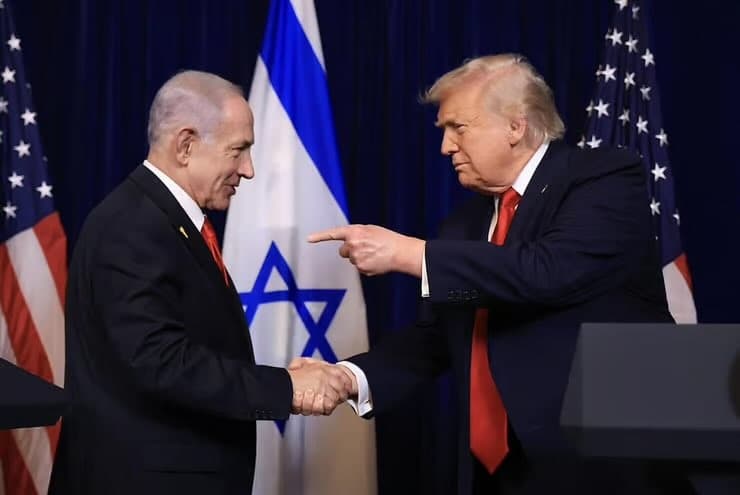
The Abraham Accords, initially signed by Israel, the United Arab Emirates, Bahrain, Sudan, and Morocco under the aegis of the Trump administration, promised to redraw the Middle East map by fostering normalized diplomatic relations between Israel and several Arab states.
Nearly five years on, however, the accords are at a critical juncture, buffeted by the ongoing Gaza war, shifting tides of public opinion, and the enigmatic role of Saudi Arabia, the region’s crown jewel yet to officially join the pact.
Gaza War: The Litmus Test for Regional Peace
Under Prime Minister Benjamin Netanyahu and United Arab Emirates Crown Prince Mohammed bin Zayed, the accords, which emerged during President Trump’s first term, fast-tracked diplomatic ties, trade deals, and security cooperation. Mr. Netanyahu’s current government has sought to keep the momentum alive despite political turmoil and regional instability. This continuity is vital as the accords face their most serious test in years.
“The war in Gaza has effectively suspended any expansion of the Abraham Accords,” Senior fellow at the Middle East Institute, Iulia-Sabina Joja tells the New York Sun. “No country has been willing to sign the accords until a permanent ceasefire has been agreed on.”
The ongoing Gaza war, marked by intense Israeli-Hamas hostilities, has sent shockwaves through the landmark pact as the conflict threatens to unravel the fragile peace.
While signatories expressed concern over civilian casualties, their support for Israel’s right to self-defense has stayed firm.
“Hamas and Iran hoped October 7 would thwart the accords by forcing pro-peace Arabs to choose between the Palestinians and Israel,” Director of Foreign Policy at the Jewish Institute for National Security of America, Jonathan Ruhe, tells the Sun. “Existing members show no signs of leaving the accords but expanding them is now a much heavier diplomatic lift, at least until the conflict ends and a new postwar future is clearly on the horizon.”
The war has stirred considerable unease, especially among populations sympathetic to Palestinians, threatening to weaken popular support for normalization.
Conversely, the conflict has underscored the strategic necessity of cooperation between Israel and its Arab partners to counter extremist threats — a key pillar of the accords from the start. Whether pragmatic alliances can withstand the emotional and political fallout is uncertain.
A critical question now is whether regional sentiment is shifting against Israel.
Despite some backlash, Israeli defense officials are confident the accords are intact and poised for growth, buoyed by new countries interested in joining and ongoing economic cooperation. Bipartisan United States congressional support, exemplified by recent arms sales bills targeting Abraham Accords partners, further strengthens the coalition.
“While Iran, Yemen, Qatar, and other countries wanted to use the Gaza conflict to bury the Abraham Accords, behind the scenes, the Abraham Accords countries mediated and diluted the rejectionist reactions,” senior fellow at the American Enterprise Institute, Michael Rubin, tells the Sun.
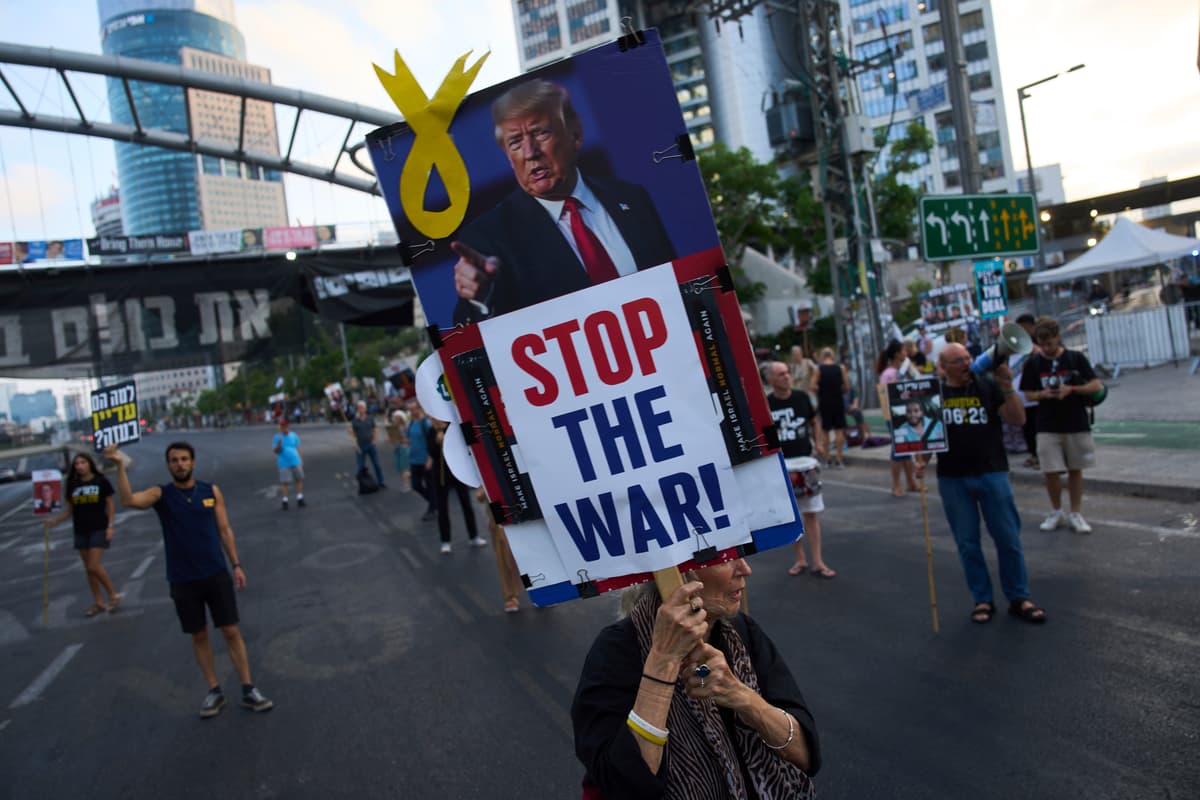
Mr. Trump continues to influence the regional diplomatic landscape and has publicly urged Israel to end the Gaza conflict quickly, arguing that prolonged violence undercuts the accords’ expansion.
The president has also teased adding several new nations to the Abraham Accords, stating a “Middle East shakeup” is underway that could redefine alliances and economic partnerships. His vision is rooted in a two-state solution framework and a broader coalition against Iran. Still, some caution that Trump’s controversial style could complicate diplomacy as new signatories weigh risks.
Pakistan’s Possible Entry
One of these potential new Abraham Accords signatories is Pakistan — long an adversary to Israel. The move could mark a dramatic shift that either solidifies or strains the fragile peace brokered under the United States.-led initiative.
“Its geopolitical impact would be profound: recognition by what could soon be the world’s biggest Muslim population, a large market for Israeli exports and technology on agriculture and water management, and surrounding Iran with another country at peace with Israel,” Ruhe says.
Long a vocal critic of Israel and staunch supporter of the Palestinian cause, Islamabad’s potential entry into the accords is seen as a strategic move to counter growing Iranian influence amid escalating regional tensions.
Ms. Joja underscored that Islamabad “normalizing ties with Israel through U.S. mediation would boost Pakistani trade, directly with Israel, but also indirectly with the United States.”
“Pakistan has been traditionally close to China, but signing the Abraham Accords would position Islamabad strategically closer to the United States,” she tells the Sun.
Pakistan’s need for economic revitalization, access to Israeli technology, and a strategic pivot away from Chinese dependence are all factors pushing Islamabad toward alignment. Still, analysts remain skeptical.
“Pakistan is among the world’s most antisemitic and anti-Israel countries,” Rubin says. “Pakistani leaders are used to playing their U.S. counterparts. Remember, they pretended to be anti-Taliban for two decades, collecting billions of dollars in counter-terrorism funds, while doing everything possible to bolster the group and also shelter Bin Laden for good measure.”
From his lens, so long as Islamabad “gives their American counterparts hope they might join, they believe they can have a ‘get-out-of-jail-free’ card on their terror support.”
Pakistan continues to face accusations of supporting terrorism due to its long-standing ties with militant groups operating in Afghanistan and India, including the Taliban and Lashkar-e-Taiba. Critics argue that elements within Pakistan’s military and intelligence services have historically used these groups as strategic assets, despite Islamabad’s claims of cracking down on extremism.
Pakistan’s Defence Minister Khawaja Asif suggested in a recent interview that the country might consider recognizing Israel under the Abraham Accords, but emphasized that any such move would be contingent on serving Pakistan’s national interests first.
The Pakistani Embassy in Washington, D.C., did not respond to a request for further comment.
Still, questions around Pakistan’s potential inclusion underscore the broader challenges — and geopolitical calculations — surrounding the future of the accords.
The Saudi Arabian Wild Card
Perhaps the most pivotal and unpredictable element in the Abraham Accords saga is Saudi Arabia. The Kingdom, the region’s economic powerhouse and most influential Sunni state, has stopped short of formally joining the accords but has quietly warmed relations with Israel.
According to Mr. Ruhe, Riyadh’s signature “would be the biggest prize.”
“It would create cover and legitimacy for many other Muslim countries to recognize Israel. Given the Kingdom’s wealth, ambitions, and central geographic position in the Middle East, it could supercharge regional trade and defense to sideline China and Russia,” he continued.
“Riyadh asks for a lot in return for such a big leap, including U.S. security guarantees, nuclear assistance, and progress on a two-state solution. Even then, forward movement has been very difficult and uncertain ever since October 7.”
Yet, Saudi Arabia’s caution is driven by domestic public opinion, the unresolved Palestinian question, and a delicate balancing act between Iran and Western allies. The Kingdom could serve as a critical juncture for the future expansion of the accords, either unlocking a new era of peace or deepening divisions if it stays on the sidelines.
Crown Prince Mohammed bin Salman’s willingness to engage depends heavily on progress toward a Palestinian state and easing Gaza tensions. His strategic patience also aims to maximize Saudi Arabia’s leverage in diplomacy and economics.
“A ceasefire agreement would unlock unleashing cooperation potential, with countries such as Saudi Arabia, Pakistan, and others, fostering diplomatic, economic, and cultural ties and the potential of innovation and technology-driven cooperation,” Ms. Joja said.
“Israel is economically and innovation-wise the most developed country in the Middle East. Free trade agreements with the European Union and the closest political ties to the United States help Israel develop.”
The Road Ahead: Fragile but Not Broken
While the Gaza war strains regional ties, new diplomatic openings offer hope for expanded peace. Supporters point to Washington’s backing and congressional support as signs of momentum, but critics warn of growing tensions and public pushback. Whether the accords can lead to lasting stability depends on leaders’ ability to manage shifting alliances, ongoing conflict, and volatile public sentiment.
“A ceasefire in Gaza is a necessary condition for the development of the Abraham Accords,” Ms. Joja added. “But a solution to Iran’s support of its proxies will be essential towards long-term stability and development in the Middle East.”