Trump’s Blue-Slip Blues
The president’s lawsuit to defeat a Senate rule blocking confirmation of his prosecutorial nominees faces steep constitutional hurdles.

President Trump v. United States Senate is not a controversy contemplated by the Constitution. Yet Mr. Trump today moots a suit against the upper chamber of Congress over the solons’ refusal to consider some of his nominees to executive branch posts. The sticking point is over what are known as “blue slips,” a custom in the World’s Greatest Deliberative Body that lets senators black-ball nominees in their home states for judicial and prosecutorial posts.
“I think it’s unconstitutional,” Mr. Trump says of the blue slips, which “make it impossible for me as president to appoint a judge or a U.S. attorney because they have a gentleman’s agreement.” He laments that “the only person I will be able to get approved in any of those states where you have a Democrat, I can’t get a U.S. attorney, I can only get a Democrat U.S. attorney.” Blue slips, Mr. Trump says, are “based on an old custom, it’s not based on a law.”
We don’t gainsay Mr. Trump’s frustration over the blue slips, a tradition traced to an old ideal of “senatorial courtesy,” as the Congressional Research Service puts it. Blue slips reflect the concern of senators to “continuously nurture their political support back home,” per political scientist Harold Chase. It is “enormously damaging to a senator’s prestige,” he adds, if a president makes an appointment against a senator’s wishes in his or her home state.
Senators saw that by banding “together against the president,” Mr. Chase adds, they can “protect their individual interests in appointments” and thwart unwanted nominations. The custom goes back to at least 1917, the CRS reports. That’s the same year the Senate codified its rule on filibusters, which originally could not be halted. By a two-thirds vote, senators could as of 1917 stop a filibuster. That threshold has since been lowered to three-fifths.
Both the blue slip, whose rigor has waxed and waned over the years, and the filibuster help make the Senate distinctive among legislative bodies. The custom, in a system based on the will of the majority, bolsters the rights of the minority. In the case of the blue slip, though, that can amount to a minority of one. Feature, say, Senator Charles Schumer’s use of the blue slip to block some of Mr. Trump’s nominees for United States attorney in New York state.
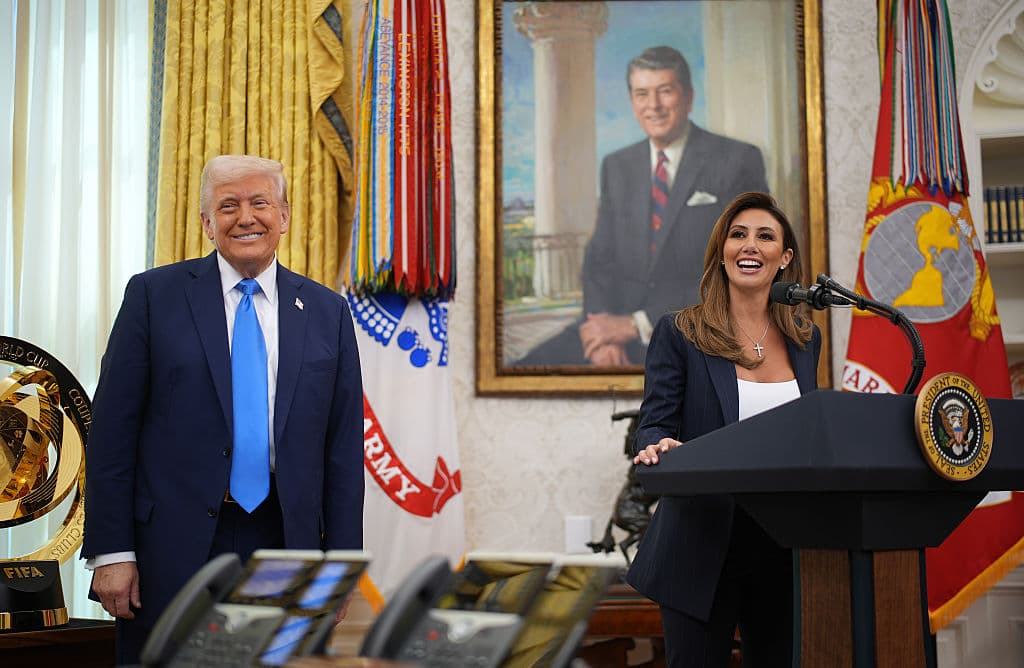
New Jersey’s Democratic senators, too, are thwarting a vote on Mr. Trump’s choice to serve as the United States attorney at Newark, Alina Habba. Echoing Mr. Trump’s lament, Ms. Habba avers that the blue slip “prevents anybody in a blue state from going through” the Senate “to then be voted on.” She reckons that “I had the right as the nominee to get” in front of the Senate “and to be voted on, to be vetted.” Yet GOP senators show no sign of yielding on the policy.
That may be because they have the constitutional upper hand. “Each House may determine the Rules of its Proceedings,” the parchment says. The Supreme Court hasn’t weighed blue slips but in 2014 declined a challenge to the filibuster. An appeals court found senators were shielded from suits by the Speech or Debate clause, which protects the solons in either house from, in their legislative doings, being “questioned in any other Place.”
That provision is “an absolute bar to suit,” the D.C. Circuit said, as the judges a while back held they lacked jurisdiction to take the case, brought by disgruntled House members and activists at Common Cause. That outcome speaks, too, to the Constitution’s bar on federal courts hearing any but concrete disputes per the Cases and Controversies Clause. This all suggests that Mr. Trump will have to take his blue slip gripe not to the courts but to the Senate itself.